Marketing tools reviews
Read in-depth reviews of the marketing tools in our database.
The reviews on findyourmartech.com combine data from our inhouse-database with aggregated feedback from external sources, providing a balanced perspective and real value for the user.
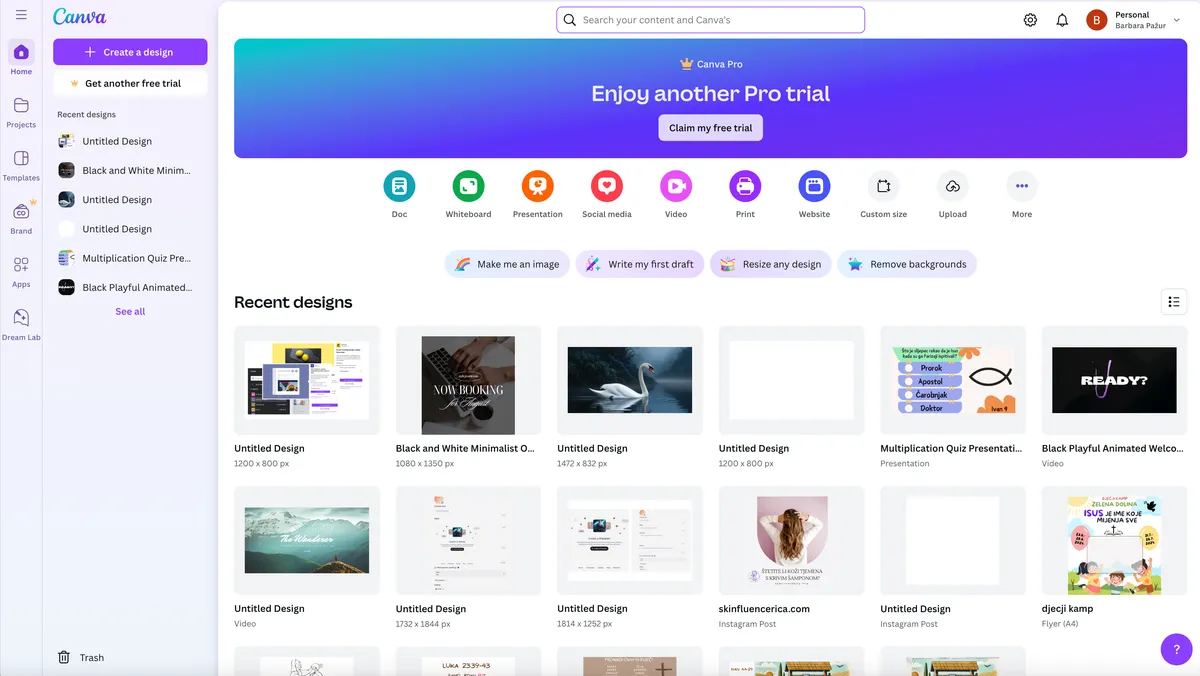
Canva Pro
A designer's dream for non-designers
February 2, 2026
Canva Pro is built to remove friction from everyday visual content creation in marketing teams.
Pros
- Extremely fast output for marketing teams
- Broad template and asset coverage for non-designers
- Strong brand consistency without design system overhead
Cons
- Not suitable for precise vector workflows or developer handoff
- Performance can degrade with complex or oversized projects
- Advanced motion and interaction features are limited
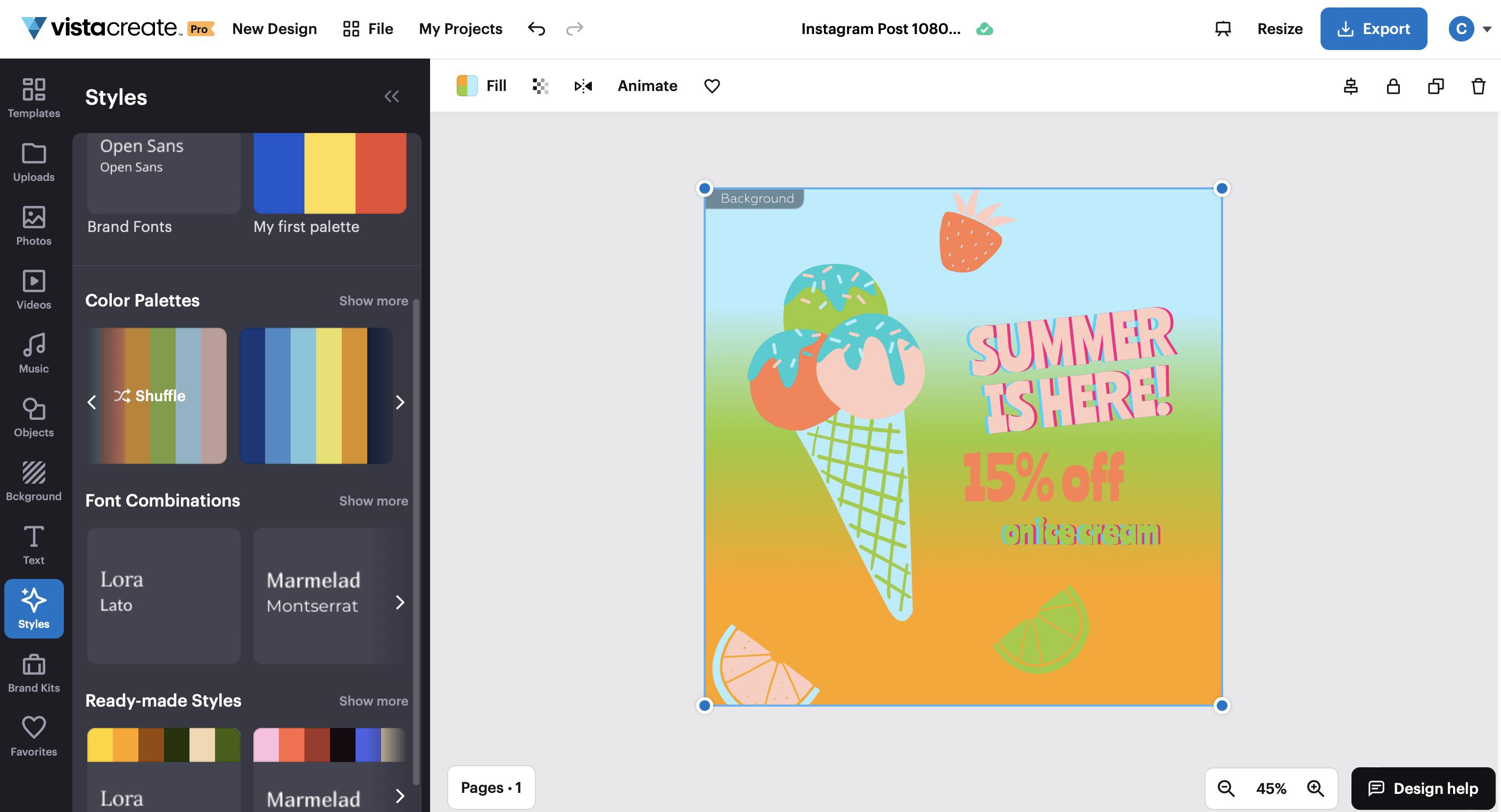
VistaCreate
Canva-like functionality at lower cost
By Find Your Martech February 2026
VistaCreate exists to undercut Canva on price while delivering similar template-based design functionality.
Pros
- Strongest value proposition in budget-friendly segment
- Generous free tier genuinely usable
- Good social media publishing integrations
Cons
- Template quality and design polish lag behind Canva and Adobe Express
- Limited collaboration features for team workflows
- Interface refinement and performance trail category leaders
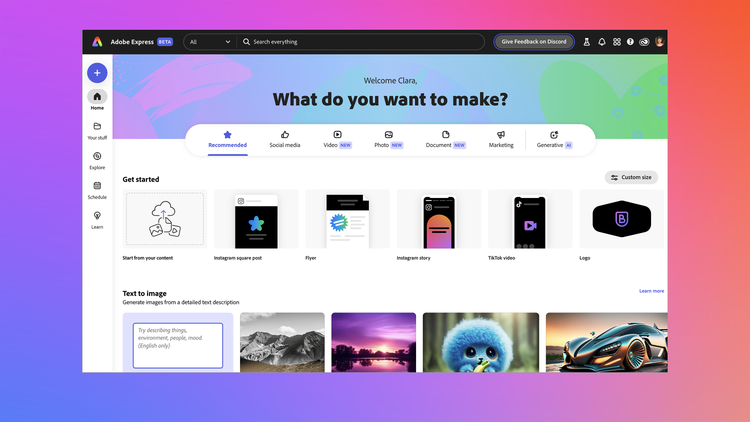
Adobe Express
Adobe polish without the learning curve
By Find Your Martech February 2026
Adobe Express positions itself as the accessible entry point to Adobe's design ecosystem. Its core purpose is to let teams create polished, on-brand content quickly without mastering Photoshop, Illustrator, or Premiere Pro.
Pros
- Strongest when integrated with Creative Cloud
- Professional-grade output quality
- Bridge product to escalate to Photoshop or Illustrator
Cons
- Less intuitive than pure template platforms like Canva
- Limited depth compared to professional Adobe tools
- Occupies awkward middle ground between accessibility and professional features
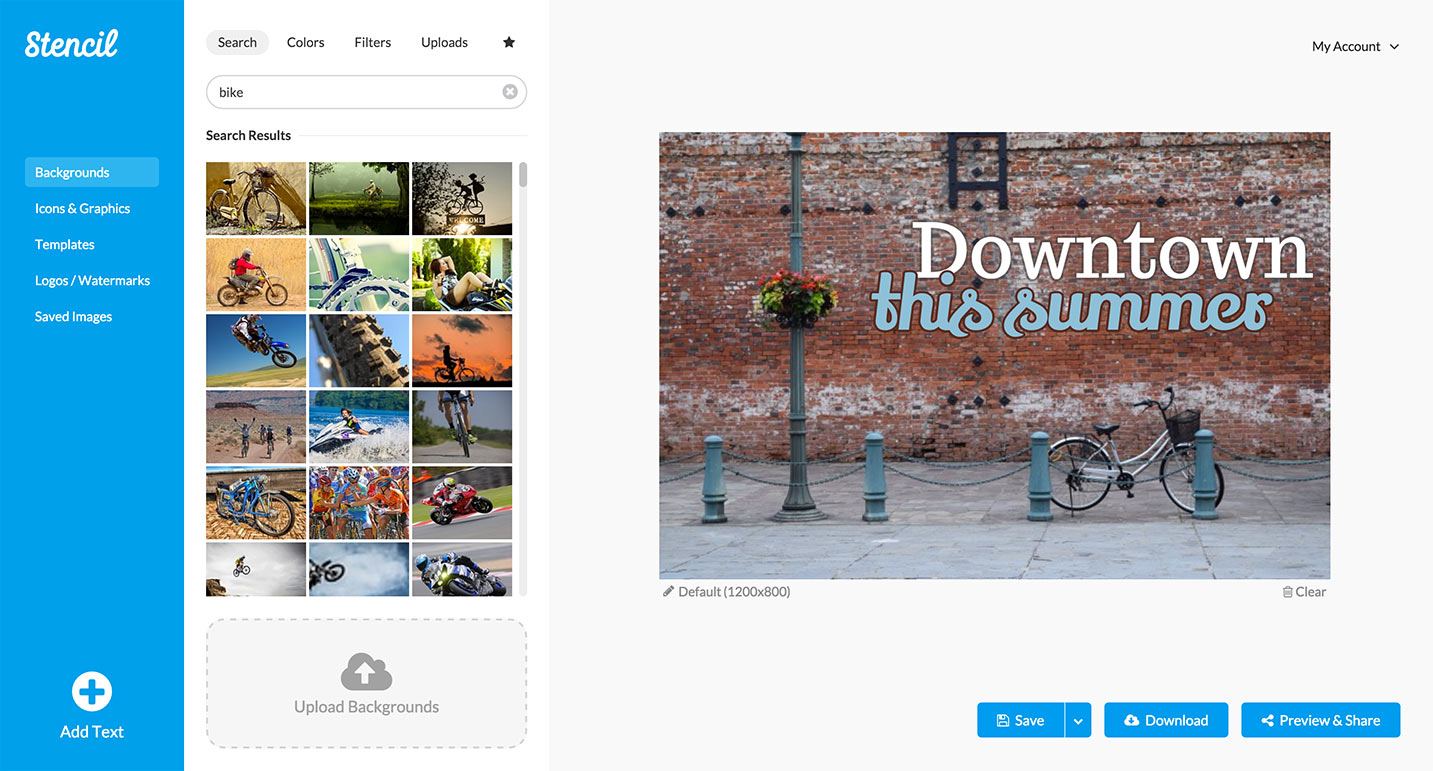
Stencil
Speed-first social media graphics tool
By Find Your Martech February 2026
Stencil is built for one job: getting social media graphics done fast. Its core purpose is not to be the most feature-rich design platform or the most beautiful template library.
Pros
- Fastest workflow for repetitive social media graphic creation
- Tight Buffer integration streamlines content scheduling
- Deliberately simple interface reduces decision fatigue
Cons
- Extremely limited scope beyond social media graphics
- Template quality and variety lag behind full-featured competitors
- No video, presentations, or complex layout capabilities

RelayThat
Template automation for design variations at scale
By Find Your Martech February 2026
RelayThat exists to solve a specific problem: creating hundreds or thousands of design variations from a single template. Its core purpose is not design creation but design automation for teams drowning in repetitive customization work.
Pros
- Unique automation capability in design space
- Excellent for multi-brand agencies
- Significant time savings for repetitive design work
Cons
- Steep learning curve for template system
- No freeform design capabilities
- Only valuable for high-volume variation workflows
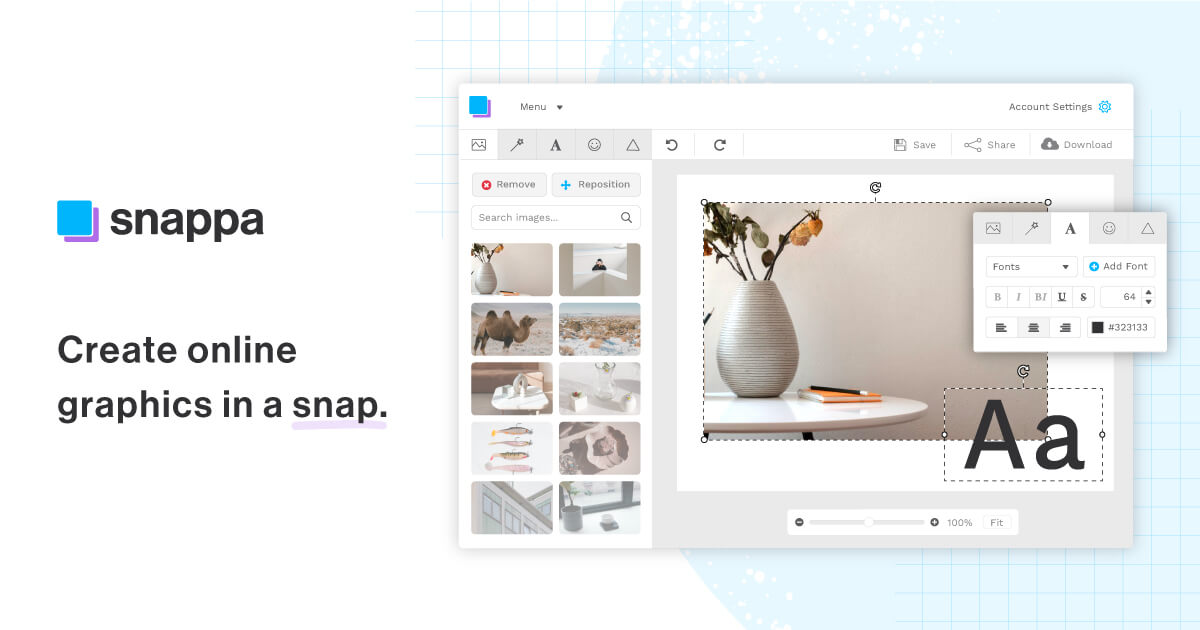
Snappa
Streamlined graphics for ads and social media
By Find Your Martech February 2026
A streamlined graphics tool for social media ads and display advertising.
Pros
- Fast workflow for ad creation
- Clean interface for non-designers
- Good stock photo library
Cons
- Limited scope beyond ads and social posts
- No video or animation capabilities
- Smaller template library than leaders

Fotor
Photo editing meets design templates
By Find Your Martech February 2026
Fotor attempts to bridge photo editing and graphic design in a single accessible platform.
Pros
- Strong AI photo enhancement capabilities
- Competitive pricing for photo editing
- Dual photo editing and design functionality
Cons
- Minimal team features
- Template quality below pure design platforms
- Limited scope beyond photo editing
Pitch
Collaborative presentations for modern teams
By Find Your Martech February 2026
Pitch is a collaborative presentation platform built for modern teams that create high-stakes decks frequently.
Pros
- Category-leading collaboration for presentations
- High-quality professional templates
- Strong brand controls and shared styles
Cons
- Smaller template ecosystem than Canva
- Limited creative depth for complex designs
- Value depends on team adoption
Gamma.app
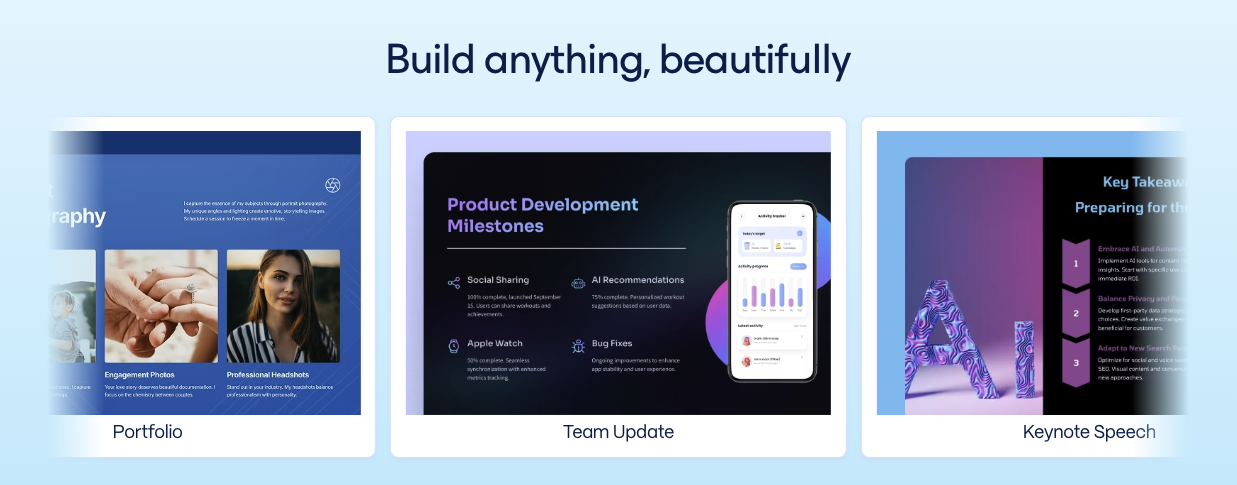
AI-powered presentations in seconds
By Find Your Martech February 2026
Gamma is an AI-first presentation and document creation platform positioned as an alternative to traditional slide software.
Pros
- Fastest time from idea to presentable output
- Modern web-native format for async sharing
- Strong AI content generation
Cons
- Intentionally limited design control
- Card-based format unfamiliar to some
- Not for complex visual storytelling

Pixlr
Browser-based Photoshop alternative
By Find Your Martech February 2026
Pixlr positions itself as a browser-based alternative to Photoshop for users who need layer-based photo editing but cannot access or afford desktop software.
Pros
- Strongest browser-based photo editing available
- Dual modes serve different skill levels
- Competitive pricing for photo editing
Cons
- Split experience can confuse users
- Limited team collaboration
- Design features are secondary to photo editing
Prezi
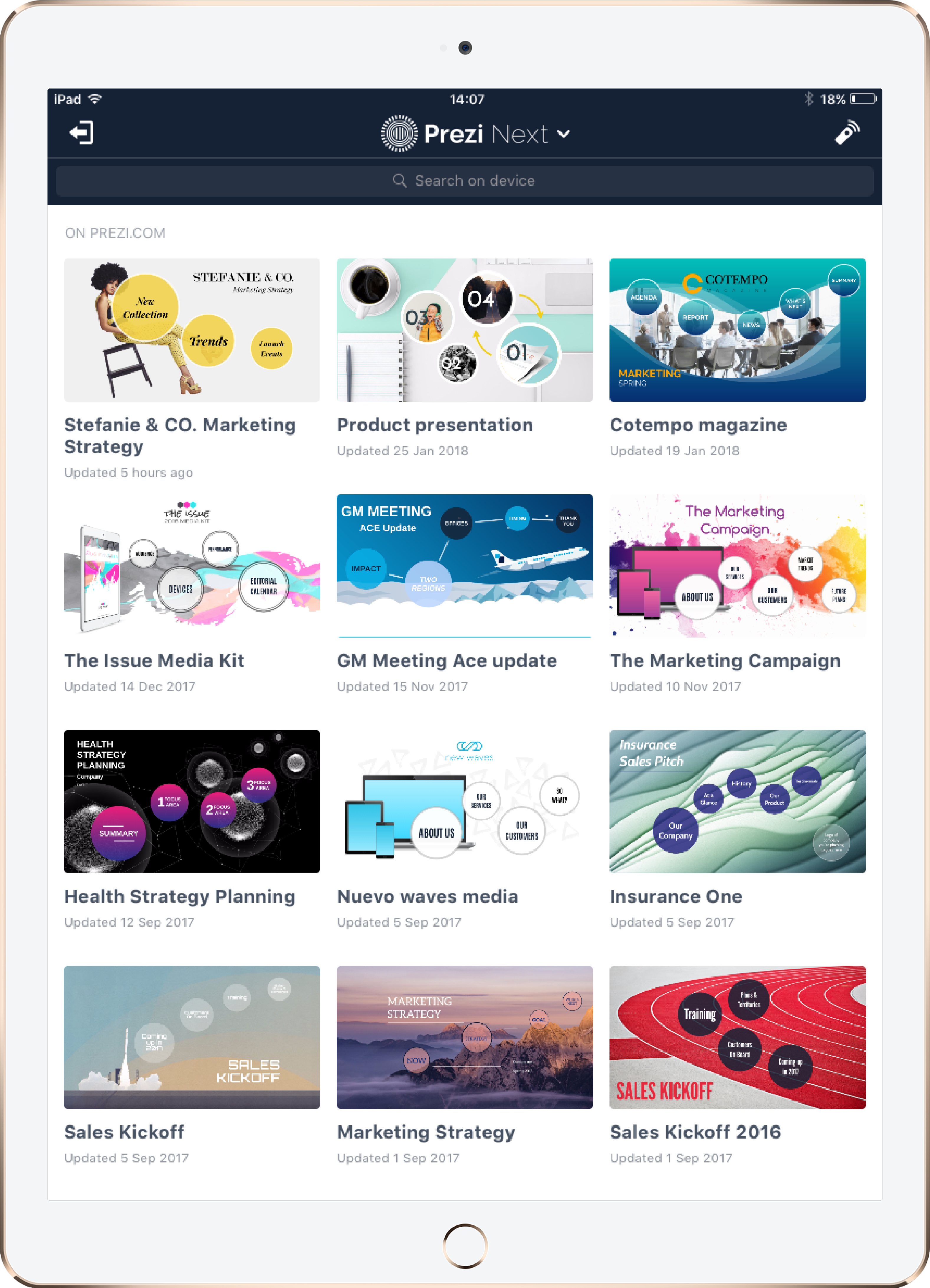
Dynamic zoomable presentations
By Find Your Martech February 2026
Prezi is a presentation platform built around zoomable, non-linear storytelling. Unlike slide-based tools, it uses a canvas-style interface where users move between topics dynamically.
Pros
- Unique visual differentiation from standard slides
- Strong for educational and keynote environments
- Dynamic spatial storytelling
Cons
- Motion-heavy transitions can distract in corporate settings
- Limited design customization depth
- Niche positioning limits broad adoption

Tome
AI-native storytelling platform
By Find Your Martech February 2026
Tome is an AI-native storytelling platform focused on narrative-driven presentations. It gained early traction through strong AI generation and visual storytelling features.
Pros
- Strongest AI narrative generation
- Clean modern aesthetic output
- Fast concept-to-presentation workflow
Cons
- Limited design customization
- Smaller template ecosystem
- Collaboration less mature than Pitch
Figma
The industry standard for interface design
By Find Your Martech February 2026
Figma is a browser-native interface design and prototyping platform that has become the standard for digital product design.
Pros
- Dominant real-time collaboration for design
- Comprehensive design system capabilities
- Strongest plugin ecosystem in category
Cons
- Slight learning curve for complete beginners
- Not for template-heavy marketing design
- Requires design knowledge for full value
- Very, very confusing and potentially fast scaling pricing
Framer
Design-native website builder
By Find Your Martech February 2026
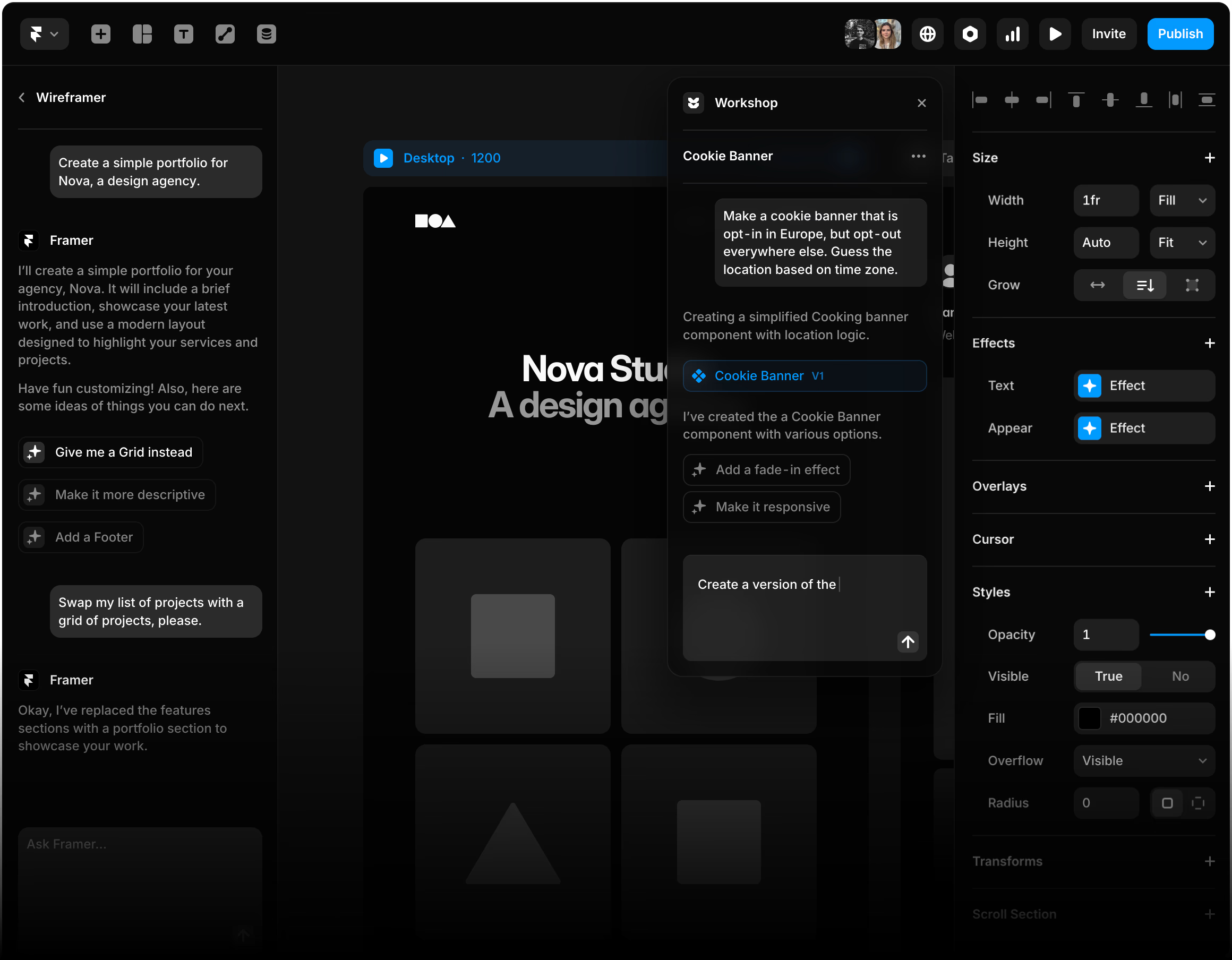
Framer is a visual website builder built for designers who want full creative control without writing production-level code. It evolved from a prototyping tool into a powerful no-code web publishing platform.
Pros
- Strongest design-to-website pipeline
- Advanced animation capabilities
- Pixel-level creative control
Cons
- Not a full-stack web development platform
- Complex backend logic needs external tools
- Steeper learning curve than template builders

Sketch
macOS-native vector UI design
By Find Your Martech February 2026
Sketch is a vector-based interface design tool that played a foundational role in modern UI design before browser-native competitors emerged.
Pros
- Desktop-native performance and precision
- Mature and reliable tool ecosystem
- Strong symbol and style systems
Cons
- macOS only limits cross-platform teams
- Collaboration functionality trails Figma
- Limited native AI capabilities

Figma FigJam
Collaborative whiteboard for product teams
By Find Your Martech February 2026
Figma FigJam is the collaborative whiteboarding and ideation layer within the Figma ecosystem. It is purpose-built for brainstorming, workshops, sprint planning, and cross-functional alignment.
Pros
- Most fluid collaborative ideation tool
- Seamless transition to Figma design files
- Playful and engaging interface
Cons
- Not a standalone design tool
- Feature depth below dedicated whiteboard tools like Miro
- Value tied to Figma ecosystem adoption

Adobe Illustrator
The gold standard for vector graphics
By Find Your Martech February 2026
Adobe Illustrator is the global benchmark for vector-based design. Across professional design communities and review platforms, it remains the dominant tool for scalable graphics, branding systems, typography, and print production.
Pros
- Industry-leading vector precision
- Deep Creative Cloud integration
- Enterprise-grade performance
Cons
- Steep learning curve
- Not browser-native
- Overkill for simple marketing graphics

Adobe After Effects
Professional motion graphics powerhouse
By Find Your Martech February 2026
Adobe After Effects is the industry standard for motion graphics, compositing, and visual effects. Across professional creative communities, its dominance in high-end motion design remains undisputed. Its defining strength is compositing depth.
Pros
- Unmatched motion graphics capabilities
- Industry-standard compositing
- Deep plugin ecosystem
Cons
- Very steep learning curve
- Resource-intensive rendering
- Not for quick or simple video editing

Adobe Photoshop
The industry standard for image editing
By Find Your Martech February 2026
Adobe Photoshop is the industry-standard raster graphics and photo manipulation software. Across professional design communities and review platforms, its dominance in image editing remains undisputed. Its defining strength is depth.
Pros
- Absolute industry benchmark for raster design
- Advanced generative fill and AI editing
- Proven enterprise-grade performance
Cons
- Steep learning curve for beginners
- Not collaboration-first
- Overkill for simple marketing graphics
CapCut
Social-first short-form video editing platform
By FYM Editorial 2025-01-15
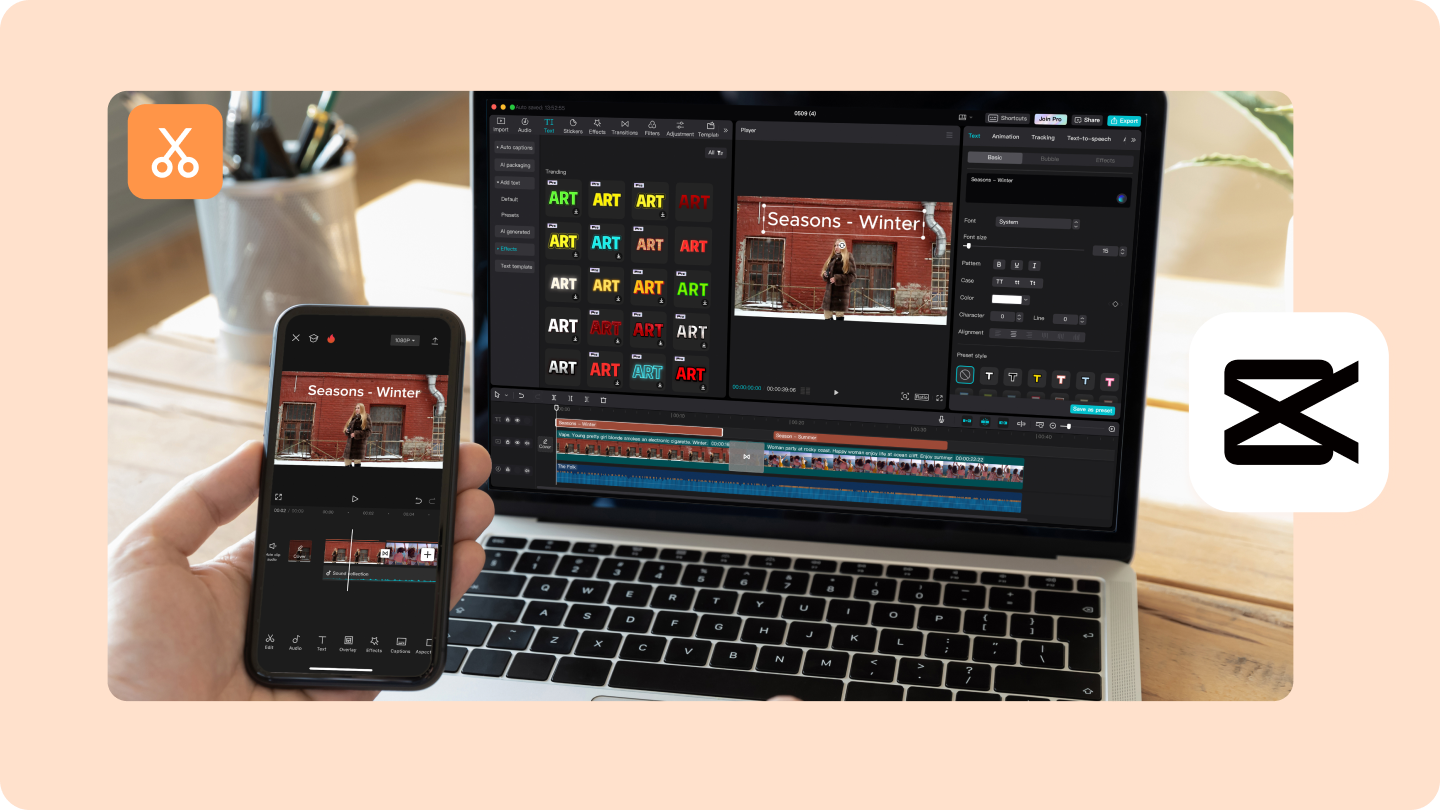
CapCut is a fast, social-first video editing platform built for short-form content creation. Originally mobile-native and closely associated with TikTok workflows.
Pros
- Extremely beginner-friendly interface
- Excellent social-first templates and effects
- Advanced auto-captions and AI editing tools
Cons
- Not built for broadcast-level editing
- Limited multi-track and color grading precision
- Limited team workflow depth

Beautiful.ai
AI-powered presentation software focused on automated slide design
By FYM Editorial 2025-01-15
Beautiful.ai is an AI-assisted presentation builder designed to eliminate poor slide design. The platform enforces structure and automates layout decisions to help non-designers produce clean decks quickly.
Pros
- Smart slide automation adjusts layouts as content is added
- Extremely simple onboarding with no design expertise needed
- Consistent, professional-looking slide outputs every time
Cons
- Creative control is restricted by predefined layout logic
- Collaboration features are functional but not category-leading
- No free permanent plan available

Adobe Premiere Pro
Professional non-linear video editing software
By FYM Editorial 2025-01-15
Adobe Premiere Pro is a professional non-linear video editing platform widely used in content production, broadcasting, and digital media.
Pros
- Professional-grade timeline editing depth
- Deep Creative Cloud integration with After Effects and Audition
- Industry-standard proxy and export workflows
Cons
- Steep learning curve for beginners
- Subscription-only pricing model
- Not suitable for quick social-first edits

VEED
Browser-based online video editing platform
By Find Your Martech Team 2025-01-15
VEED is a browser-based video editing platform designed for marketing teams, educators, and online creators. It emphasizes accessibility, subtitles, and AI-assisted editing.
Pros
- No installation required - fully browser-based
- Strong AI transcription and subtitle tools
- Accessible for non-editors
Cons
- Limited cinematic-level editing control
- Moderate template depth
- Not suited for advanced post-production

Descript
AI-driven text-based audio and video editing platform
By FYM Editorial 2025-01-15
Descript is an AI-driven audio and video editing platform built around text-based editing. Users edit transcripts, and the media updates automatically.
Pros
- Revolutionary text-based editing paradigm
- Leading AI transcription and voice tools
- Extremely intuitive for non-editors
Cons
- Limited visual depth for cinematic work
- Minimal motion capabilities
- Not suited for professional film pipelines

DaVinci Resolve
Professional video editing and color grading software
By FYM Editorial 2025-01-15
DaVinci Resolve is a professional video editing and color grading platform widely respected for its advanced post-production capabilities.
Pros
- Industry benchmark for color grading
- Powerful free version available
- Professional-grade performance and rendering
Cons
- Steep professional learning curve
- Less seamless cloud collaboration than Adobe
- Not positioned for casual social-first creators

Affinity Designer & Photo
Professional vector and raster design suite with one-time license model
By FYM Editorial 2025-01-15
Affinity Designer and Affinity Photo together form a professional-grade alternative to Adobe Illustrator and Photoshop with a one-time purchase model.
Pros
- Excellent vector and raster depth
- Extremely strong desktop performance
- One-time purchase — no subscription
Cons
- Limited native generative AI features
- Smaller plugin ecosystem than Adobe
- No real-time multiplayer collaboration

Runway
AI-powered generative video and image creation platform
By FYM Editorial 2025-01-15
Runway is an AI-native creative platform focused on generative video and image tools. It enables creators to generate video clips, modify footage, and apply AI-driven transformations.
Pros
- Category-leading generative video tools
- Intuitive AI-first interface
- Strong AI-driven motion generation
Cons
- Limited traditional editing depth
- Cloud rendering dependent performance
- Basic sharing and collaboration features

Google Analytics 4
Event-based web and app analytics for businesses tied to the Google ecosystem
By Find Your Martech Team 2025-02-13
GA4 delivers event-based analytics with machine learning capabilities for organizations willing to invest significant time mastering Google's analytics ecosystem.
Pros
- Unmatched Google ecosystem integration
- Free with no data limits
- ML-powered predictive insights
- Enterprise-grade scalability
- Flexible event tracking
Cons
- Steep learning curve
- Privacy concerns with Google data ownership
- Standard reports lack depth
- Data sampling on free tier
Plausible Cloud
Lightweight Privacy-First Hosted Analytics
By Find Your Martech Team 2025-02-13
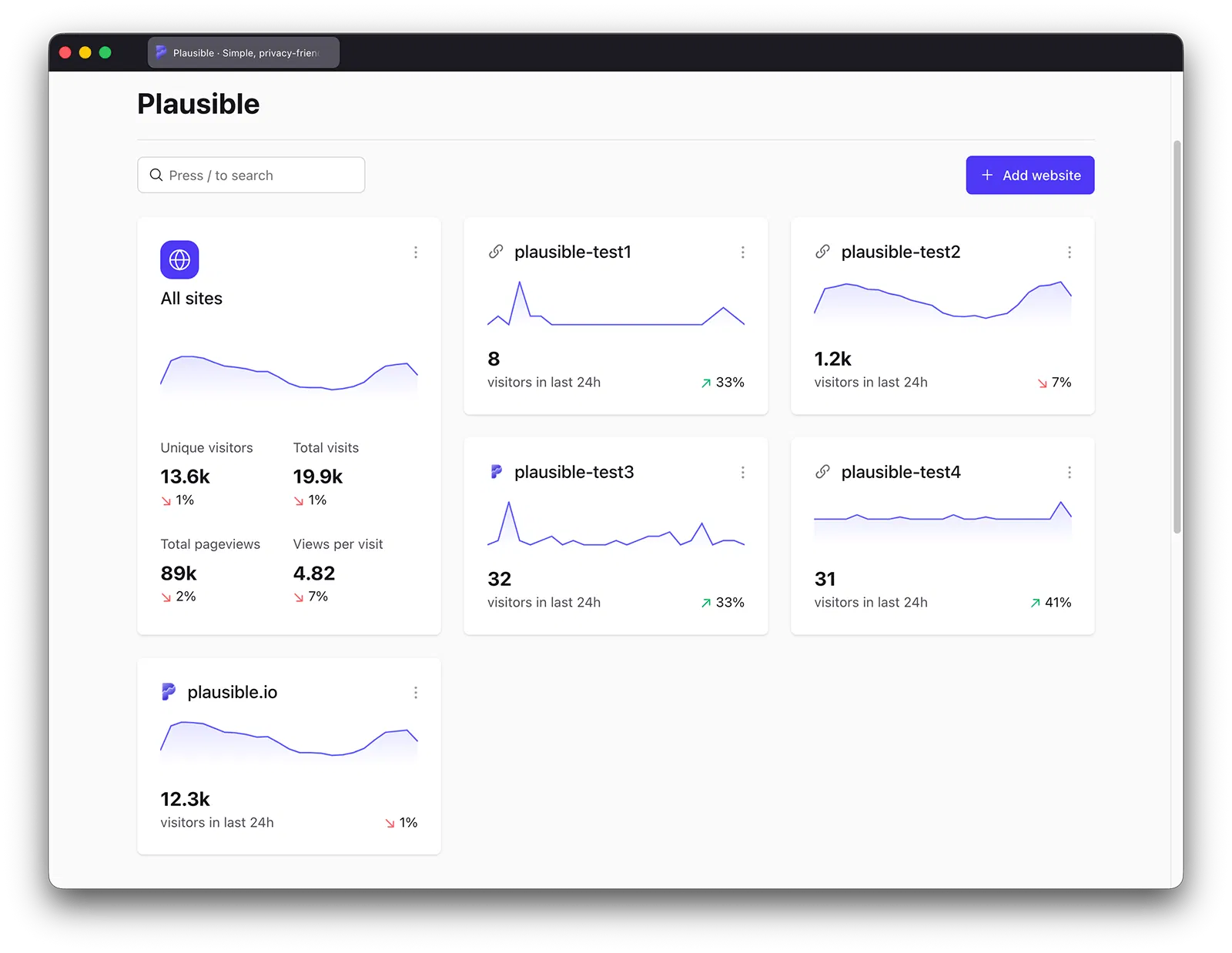
Plausible Cloud is built around simplicity and privacy. It offers a single-page dashboard with essential metrics such as traffic sources, pageviews, and goal conversions. The platform avoids cookies b
Pros
- Very fast implementation
- Clean and intuitive interface
- Predictable flat pricing model
Cons
- Limited advanced analytics features
- No heatmaps or session recordings
- Not suited for enterprise reporting needs

Plausible Self-hosted
Open-Source Lightweight Analytics
By Find Your Martech Team 2025-02-13
Plausible Self-Hosted delivers the same minimalist analytics experience as the cloud version but runs entirely on your own infrastructure. It is built for developers who value privacy, simplicity, and
Pros
- Full data control
- no recurring SaaS fees
- minimal resource usage
- privacy-centric architecture
Cons
- Requires technical deployment
- limited feature depth
- fewer integrations compared to larger analytics suites
Matomo Cloud
Hosted Privacy-First Web Analytics Platform
By Find Your Martech Team 2025-02-13
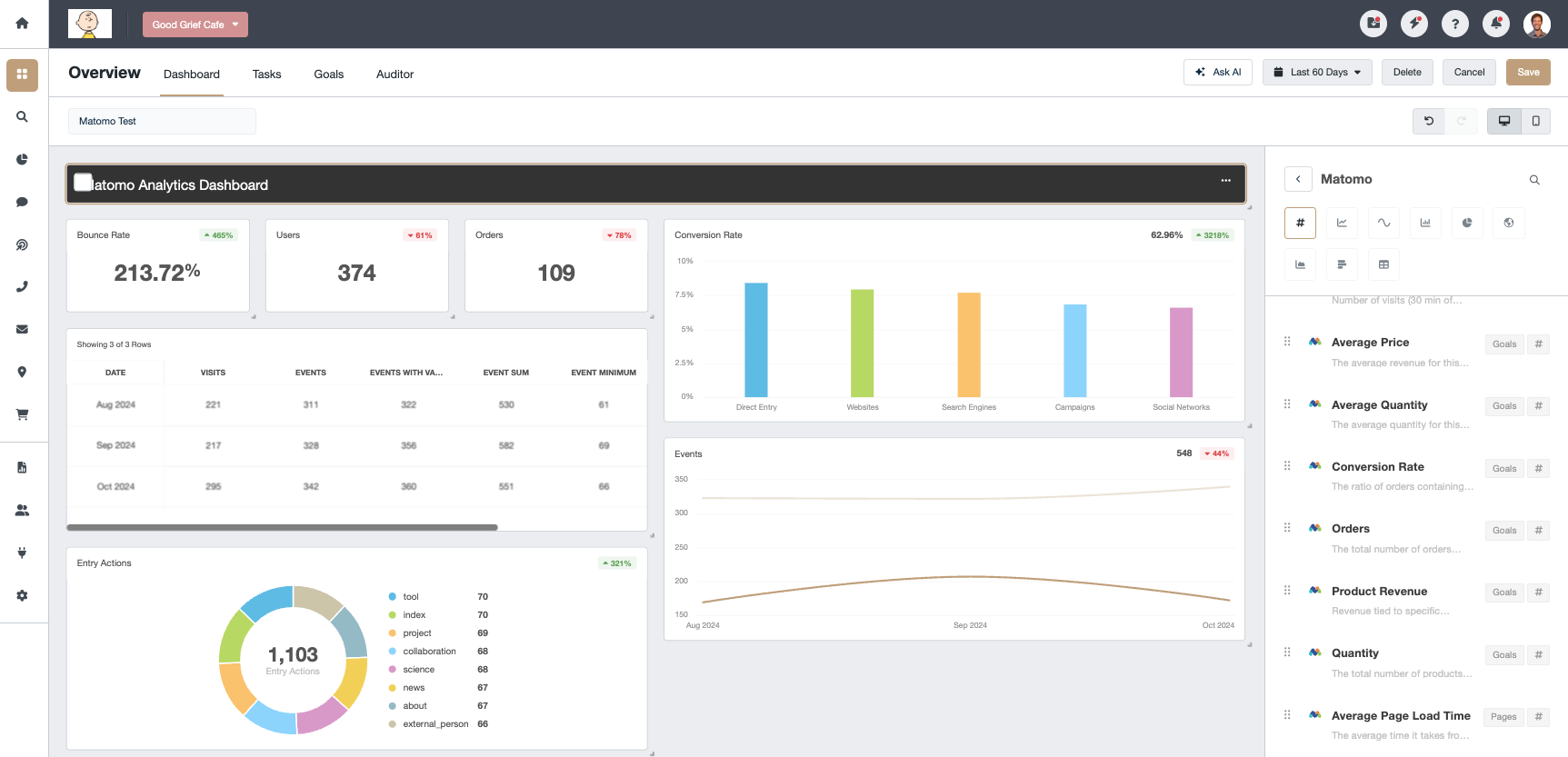
Matomo Cloud provides Google Analytics-comparable features with complete data ownership, housed on managed infrastructure for teams prioritizing privacy without technical overhead.
Pros
- Strong privacy positioning with EU hosting options
- Feature depth comparable to legacy Universal Analytics
- No data sampling and high customization flexibility
Cons
- Interface feels dated compared to modern tools
- Requires structured implementation effort
- Pricing scales with traffic volume
Matomo Self-hosted
Open-Source On-Premise Web Analytics
By Find Your Martech Team 2025-02-13
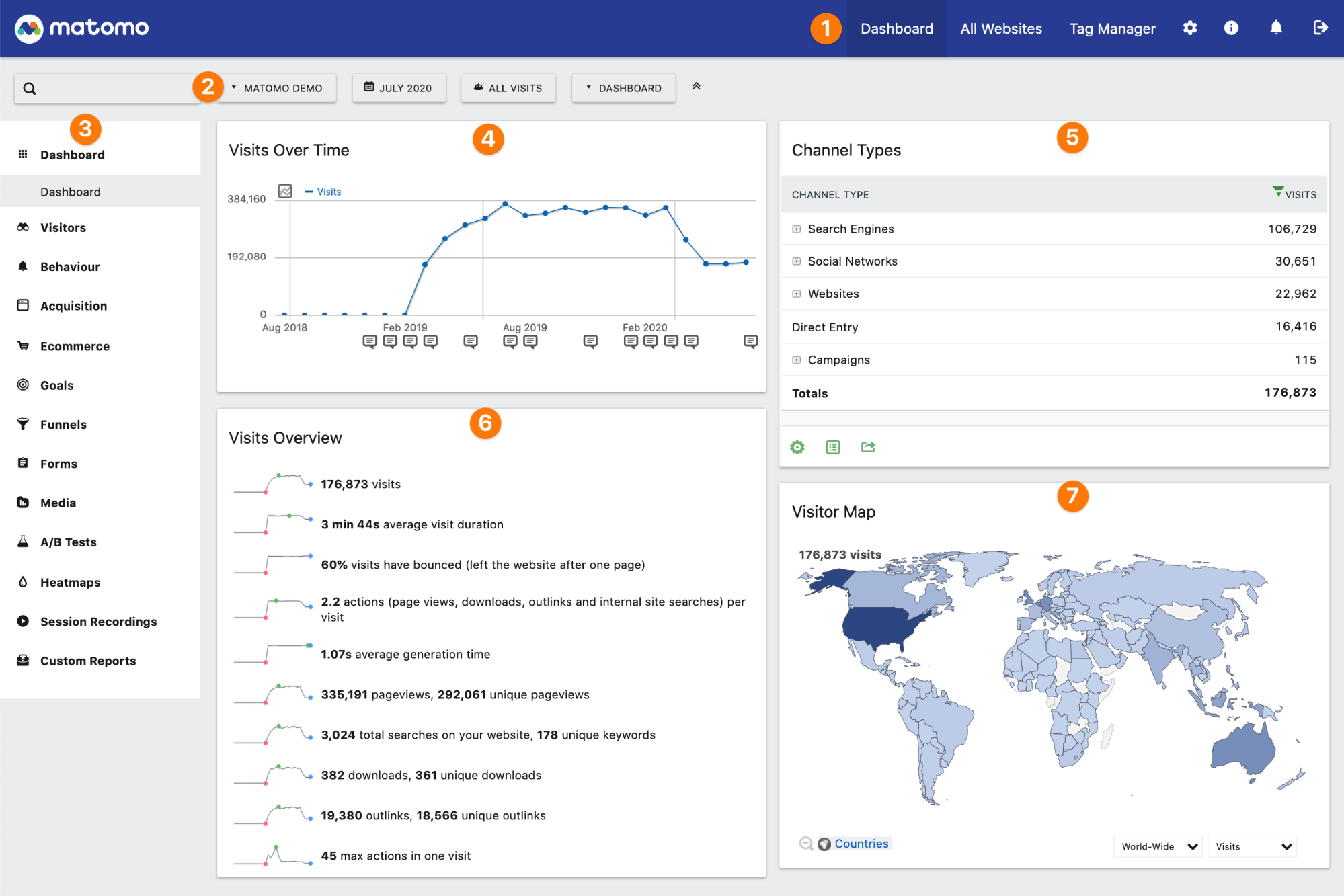
Matomo Self-Hosted exists for organizations that demand maximum data sovereignty. It provides the full Matomo analytics suite but runs entirely on internal infrastructure. Companies retain full owners
Pros
- Maximum compliance and infrastructure control
- No recurring SaaS traffic fees
- Highly extensible architecture
Cons
- Requires hosting and DevOps resources
- Scaling performance depends on server setup
- Steeper learning curve for non-technical teams

PostHog Self-hosted
Open-source product analytics suite for engineering teams wanting complete platform control and cost efficiency at scale
By Find Your Martech Team 2025-02-13
PostHog Self-hosted delivers a full product analytics and experimentation stack under internal infrastructure control. It supports event tracking, feature flags, retention analysis, and cohort reporti
Pros
- Complete data ownership
- Extensive customization potential
- No vendor data dependency
Cons
- Infrastructure maintenance required
- Complex deployment
- Higher operational overhead
Simple Analytics
Privacy-friendly web analytics for teams wanting straightforward insights with innovative automated event tracking
By Find Your Martech Team 2025-02-13
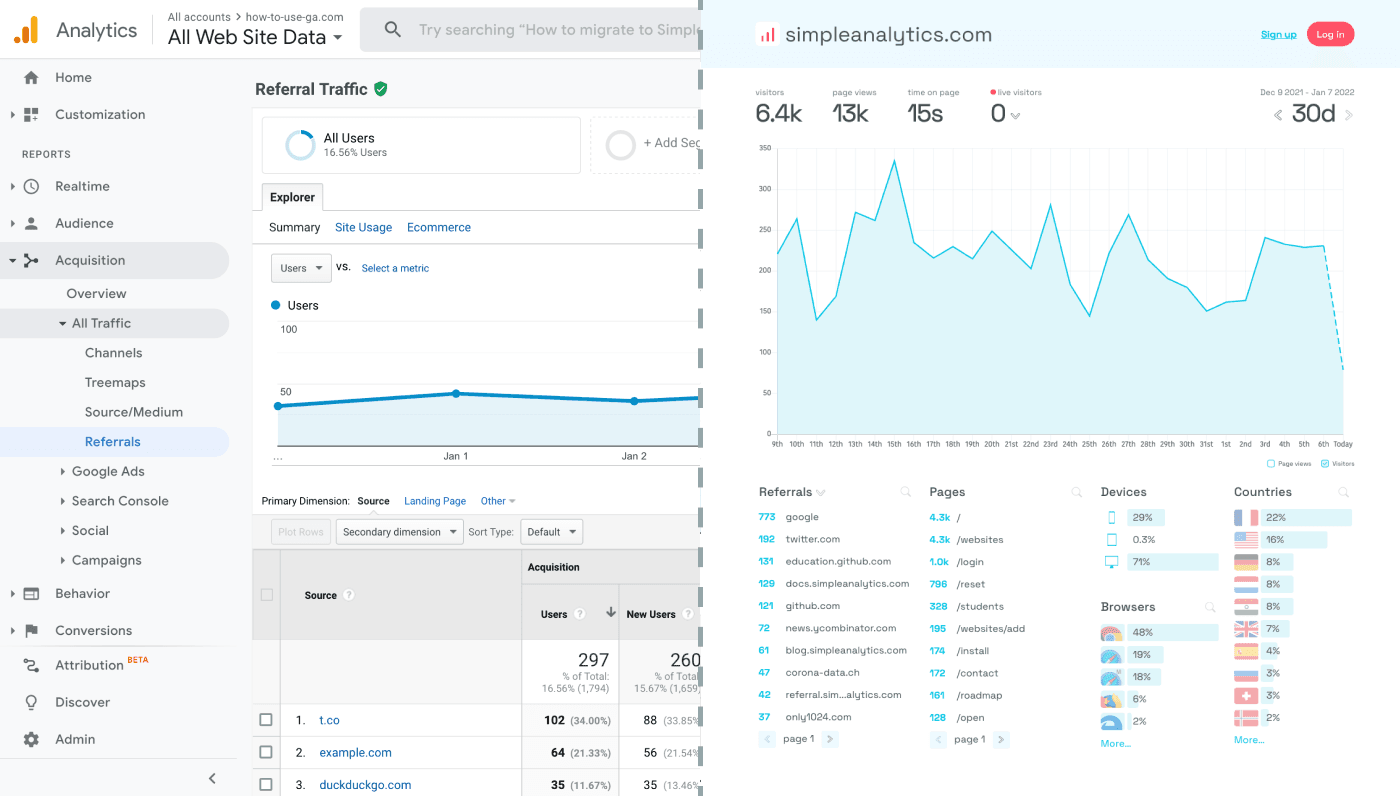
Simple Analytics provides understandable traffic data without invasive tracking or feature overload. The dashboard centers on pageviews, traffic sources, and basic events.
Pros
- Clear and understandable reporting
- Strong compliance alignment
- Minimal performance impact
Cons
- Restricted feature depth
- No behavioral replay tools
- Limited customization options

Fathom
Privacy-first website analytics for businesses prioritizing speed, simplicity, and ethical data practices
By Find Your Martech Team 2025-02-13
Fathom delivers essential website analytics in a privacy-first environment. It focuses on pageviews, referrers, and goal tracking inside a streamlined dashboard.
Pros
- Very easy implementation
- Strong privacy positioning
- Clean reporting experience
Cons
- Limited analytical depth
- No advanced attribution modeling
- Not built for enterprise-scale data teams

PostHog Cloud
All-in-one product analytics platform combining analytics, session replay, feature flags, and experimentation for product teams
By Find Your Martech Team 2025-02-13
PostHog delivers comprehensive product analytics with session replay, feature flags, and experimentation in one open-source platform, eliminating the need for multiple specialized tools.
Pros
- All-in-one product analytics
- Session replay included
- Feature flags built-in
- Generous free tier
- Open-source
Cons
- Complex for non-technical users
- Privacy concerns with session replay
- Expensive at scale
- Less polished than Amplitude

Umami Self-hosted
Open-source minimalist analytics for developers wanting the simplest self-hosted solution with zero ongoing costs
By Find Your Martech Team 2025-02-13
Umami positions itself as the anti-Google Analytics for privacy advocates and self-hosting enthusiasts. It strips web analytics down to essential metrics while eliminating tracking cookies, personal d
Pros
- Complete data ownership with no third-party dependencies
- Privacy-first approach eliminates cookie consent requirements
- Extremely simple interface focuses on core metrics
- Free and open source with active community development
- Minimal server resource requirements and fast page load impact
Cons
- Limited analytics depth compared to enterprise platforms
- No built-in funnel analysis, cohort tracking, or advanced segmentation
- Self-hosting requires technical knowledge and ongoing maintenance
- Lacks collaboration features like shared dashboards or user roles
- Community support only, no guaranteed SLA or vendor assistance

Umami Cloud
Ultra-minimalist open-source web analytics for users wanting the absolute simplest privacy-respecting tracking solution
By Find Your Martech Team 2025-02-13
Umami Cloud delivers privacy-conscious website analytics built on an open-source foundation. It focuses on essential metrics such as pageviews, referrers, and custom events inside a modern interface.
Pros
- Open-source credibility
- Fast setup process
- Clear reporting interface
Cons
- Limited advanced analytics
- No attribution modeling
- Not built for enterprise use

Adobe Analytics
Enterprise-grade analytics platform for large organizations requiring unlimited customization and sophisticated multi-channel attribution
By Find Your Martech Team 2025-02-13
Adobe Analytics exists to serve enterprise organizations demanding sophisticated analytics beyond what Google Analytics provides. It positions itself as the data intelligence layer for complex busines
Pros
- Unmatched depth for enterprise multi-channel analytics
- Powerful segmentation and calculated metrics capabilities
- Tight Adobe ecosystem integration creates workflow advantages
- Handles massive data volumes and complex organizational structures
- Strong data governance and compliance features for regulated industries
Cons
- Steep learning curve requires dedicated training and expertise
- Expensive with costs starting at six figures annually
- Complex implementation often taking months with consultants
- Interface feels dated compared to modern analytics platforms
- Overkill for organizations not needing enterprise-grade features

etracker Analytics
German privacy-first web analytics for EU businesses requiring cookieless tracking and strict GDPR compliance
By Find Your Martech Team 2025-02-13
etracker Analytics focuses on delivering compliant web analytics aligned with European and especially German regulatory standards. The platform provides traffic reporting, ecommerce tracking, and campaign analysis with strong privacy certifi
Pros
- Strong DACH market credibility
- Clear compliance positioning
- Solid ecommerce reporting
Cons
- Less modern interface design
- Limited product analytics depth
- Smaller international ecosystem
Piwik PRO
Enterprise privacy-first analytics platform for organizations requiring GDPR compliance with advanced marketing capabilities
By Find Your Martech Team 2025-02-13
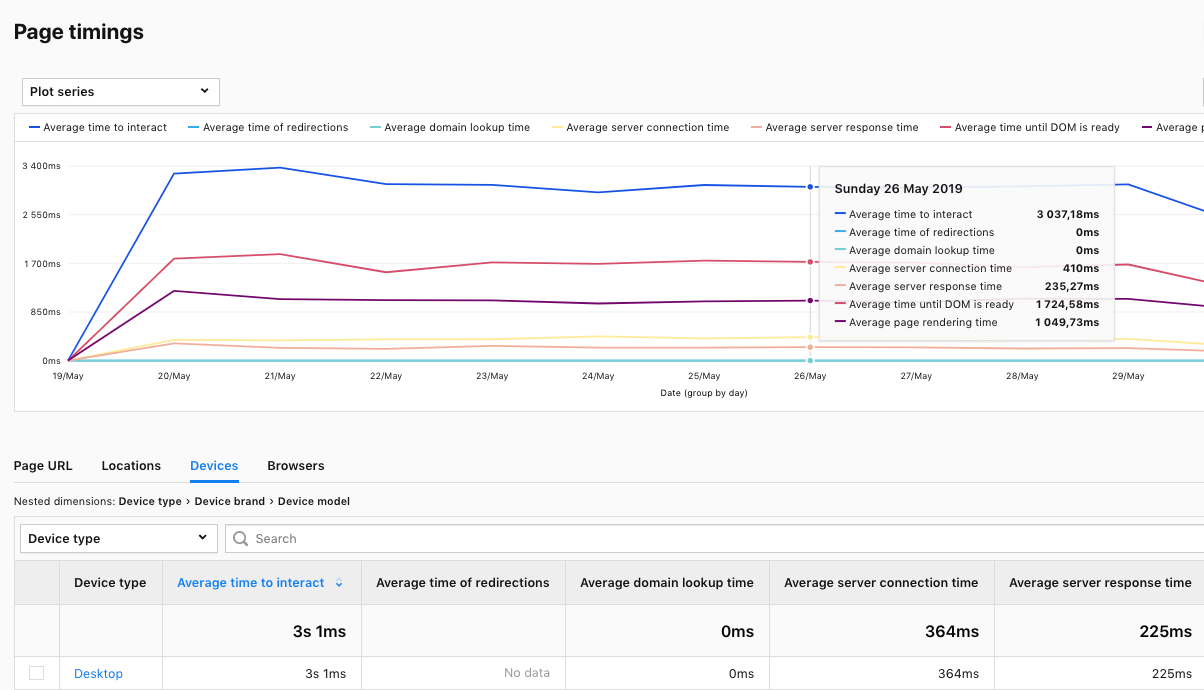
Piwik PRO positions itself as an enterprise analytics suite centered on privacy and governance. It combines web and app analytics with consent management, tag management, and customer data capabilitie
Pros
- Strong compliance framework
- Comprehensive enterprise feature set
- Flexible hosting options
Cons
- Higher pricing tier
- Implementation complexity
- Excessive for small businesses
Amplitude
Enterprise product analytics platform for companies requiring sophisticated behavioral cohort analysis and retention tracking
By Find Your Martech Team 2025-02-13
Amplitude positions itself as the retention-obsessed product analytics platform for growth teams. Unlike marketing analytics tools tracking campaigns, Amplitude focuses exclusively on understanding wh
Pros
- Best-in-class retention and cohort analysis capabilities
- Strong focus on product engagement versus marketing metrics
- Powerful behavioral segmentation for targeted experiences
- Excellent data visualization and exploration interface
- Generous free tier supports early-stage product analytics adoption
Cons
- Learning curve steeper than simpler analytics alternatives
- Pricing scales aggressively with monthly tracked users
- Marketing attribution and campaign tracking are weak points
- Requires manual event instrumentation, no automatic capture
- Advanced features often require analytics expertise to use effectively
Heap
Autocapture product analytics for teams wanting comprehensive event tracking without manual instrumentation effort
By Find Your Martech Team 2025-02-13
Heap exists to eliminate the analytics instrumentation burden that slows product teams. Its automatic event capture removes dependency on engineering for tracking implementation, letting product manag
Pros
- Zero engineering dependency for event tracking and changes
- Retroactive analysis eliminates missed data and redeployment waits
- Fast time to value with automatic capture from day one
- Session replay provides context missing in pure quantitative data
- Product teams can iterate on analysis without engineering bottleneck
Cons
- Expensive at scale with session-based pricing model
- Automatic capture creates performance overhead some teams avoid
- Less control over what gets tracked compared to explicit instrumentation
- Advanced analytics features lag specialized competitors
- Data volume can balloon without careful event management
Mixpanel
Product analytics platform for startups and mid-market companies needing intuitive event tracking and funnel analysis
By Find Your Martech Team 2025-02-13
Mixpanel bridges simple web analytics and complex enterprise platforms by focusing on event-based product tracking with accessible UX. It targets product teams wanting deeper insights than Google Anal
Pros
- Clean, intuitive interface easier to use than enterprise platforms
- Event-based pricing can be more economical than user-based models
- Strong mobile app SDK support alongside web tracking
- Generous free tier with meaningful feature access
- Faster time to value than complex enterprise analytics platforms
Cons
- Retention analysis less sophisticated than Amplitude
- No automatic event capture requires engineering for tracking
- Advanced features like behavioral cohorts trail specialized competitors
- Data governance and compliance tools less robust than enterprise options
- Event volume can make pricing unpredictable as usage scales

Snowplow
Behavioral data infrastructure platform for organizations building custom analytics on data warehouse architecture
By Find Your Martech Team 2025-02-13
Snowplow is not an analytics platform but behavioral data infrastructure for organizations demanding complete ownership of their data pipeline. It positions itself as the foundation layer beneath anal
Pros
- Complete data ownership eliminates vendor lock-in
- Unlimited data granularity and customization impossible with SaaS tools
- Feeds multiple downstream systems from single collection pipeline
- Strong data quality through schema validation and testing
- Self-hosting option satisfies strict compliance and governance requirements
Cons
- Requires significant data engineering investment to implement and maintain
- No built-in analytics dashboards or reporting interfaces
- Complex setup compared to turnkey analytics platforms
- Ongoing infrastructure costs and operational overhead
- Longer time to value than plug-and-play alternatives
Countly
Open-source product analytics with mobile-first heritage for organizations wanting privacy-focused tracking with deployment flexibility
By Find Your Martech Team 2025-02-13
Countly bridges product analytics and mobile application performance monitoring while offering deployment flexibility. It targets teams managing mobile apps who want deeper insights than Firebase prov
Pros
- Strong mobile app focus with comprehensive SDK coverage
- Deployment flexibility allows cloud or self-hosted based on needs
- Crash analytics integrated with behavioral data in single platform
- Push notifications and user engagement tools reduce tool sprawl
- Self-hosted option eliminates per-user pricing on large user bases
Cons
- Interface and UX trail modern product analytics leaders
- Documentation quality inconsistent across features
- Self-hosted version requires technical expertise to maintain
- Advanced analytics capabilities lag Amplitude and Mixpanel
- Cloud pricing becomes expensive as data volume scales

Discord (work use)
Community-oriented voice and text platform for remote team communication
By Find Your Martech Team 2026-02-14
Discord brings gaming-native communication patterns to work, emphasizing voice-first collaboration and community building.
Pros
- Exceptional voice quality and always-on voice channel model
- Free tier generous enough for small to medium teams
- Familiar and beloved by tech workers and younger demographics
- Strong community features blend team and external engagement
- Lower friction and formality than traditional business tools
Cons
- Gaming associations hurt credibility in traditional business contexts
- Limited enterprise features like compliance and data governance
- Business tool integrations sparse compared to Slack ecosystem
- Search and knowledge management weaker than purpose-built platforms
- No meaningful analytics or admin controls for larger organizations

Mattermost
Open source self-hosted team messaging for data sovereignty
By Find Your Martech Team 2026-02-14
Mattermost positions itself as the open source, self-hosted answer to Slack for organizations where data control trumps convenience.
Pros
- Complete data sovereignty satisfies strict regulatory requirements
- Self-hosting eliminates vendor lock-in and recurring SaaS costs
- Open source model allows customization and extension
- Enterprise features available without per-user SaaS pricing
- Strong DevOps and technical team adoption and community
Cons
- Self-hosting requires significant infrastructure and operational expertise
- Third-party integrations and apps far fewer than Slack marketplace
- User experience refinement lags proprietary alternatives
- Smaller community and ecosystem than established SaaS platforms
- Enterprise features require paid licensing despite open source core

Microsoft Teams
Enterprise collaboration hub bundled with Microsoft 365
By Find Your Martech Team 2026-02-14
Microsoft Teams positions itself as the comprehensive collaboration platform for enterprises already invested in Microsoft 365.
Pros
- Bundled with Office 365 makes marginal cost essentially zero
- Deepest Microsoft ecosystem integration in category
- Enterprise-grade security, compliance, and governance controls
- Unified platform reduces tool sprawl and context switching
- Strong video conferencing without requiring separate Zoom license
Cons
- User experience and interface lag Slack in refinement and speed
- Third-party app ecosystem narrower than Slack marketplace
- Performance issues and complexity frustrate users compared to alternatives
- Notification management less sophisticated than dedicated chat tools
- Learning curve steeper due to feature breadth and Office integration complexity
Google Chat
Workspace-native team messaging integrated with Gmail and Drive
By Find Your Martech Team 2026-02-14
Google Chat exists as the straightforward messaging layer for Google Workspace organizations.
Pros
- Bundled with Google Workspace at no additional cost
- Seamless integration with Gmail, Drive, and Calendar
- Simpler and less overwhelming than Slack or Teams
- Respects existing Google Drive permissions and sharing
- Familiar interface for teams already using Google products
Cons
- Feature set trails Slack and Teams significantly
- Third-party app ecosystem minimal compared to competitors
- Search and organization less powerful than dedicated chat tools
- Limited workflow automation and advanced collaboration features
- Feels like afterthought compared to Google focus on other products
Slack
Premium team messaging platform with extensive app integrations
By Find Your Martech Team 2026-02-14
Slack exists to replace email and fragmented point solutions with organized, searchable team communication.
Pros
- Best-in-class user experience and interface design
- Deepest third-party integration ecosystem in category
- Superior search functionality finds old conversations reliably
- Strong async communication culture with threads and channels
- Continuous innovation on features and user experience
Cons
- Expensive compared to bundled alternatives from Microsoft and Google
- Native document collaboration weaker than Office 365 or Workspace
- Information overload and notification fatigue remain common complaints
- Video calling features lag dedicated tools like Zoom
- No self-hosted option for organizations requiring data sovereignty

Rocket.Chat
Open source team communication with omnichannel customer engagement
By Find Your Martech Team 2025-01-01
Rocket.Chat bridges team communication and customer engagement in an open source, self-hosted package. Unlike Mattermost focusing purely on team chat or Slack ignoring customer service, Rocket.Chat assumes organizations want unified communication infrastructure.
Pros
- Combines team communication and customer engagement in single platform
- Open source model allows unlimited customization and extension
- Self-hosting satisfies data sovereignty and compliance requirements
- Federation enables inter-organization communication securely
- More feature-rich than Mattermost while remaining open source
Cons
- Interface and UX refinement lag polished SaaS alternatives
- Self-hosting requires significant technical expertise and resources
- Feature breadth creates complexity for teams wanting simple chat
- Smaller community and ecosystem than established platforms
- Documentation quality inconsistent across features and versions
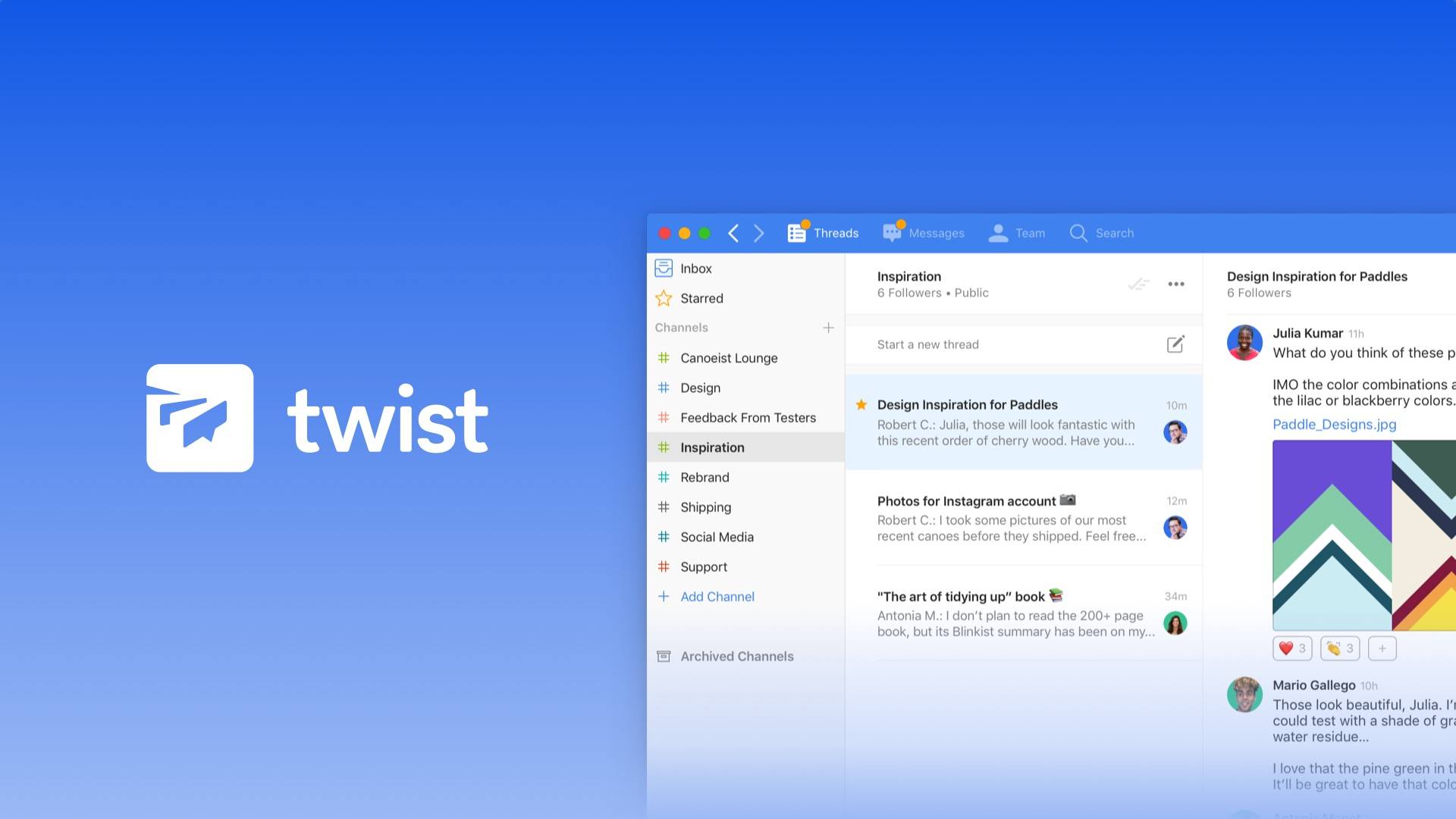
Twist
Async-first team communication organized by threads
By Find Your Martech Team 2025-01-01
Twist exists as the anti-Slack for teams rejecting always-on culture and real-time pressure. It positions async communication as superior to instant messaging, organizing everything into threads that discourage immediate responses.
Pros
- Reduces notification fatigue and always-on pressure effectively
- Thread organization keeps conversations searchable and structured
- Async-first design supports distributed teams across time zones
- Encourages thoughtful communication over rapid-fire responses
- Clean, distraction-free interface focused on reading and writing
Cons
- Async-only model frustrating when real-time coordination is needed
- Limited integrations compared to mainstream chat platforms
- No video calling or voice channels for synchronous communication
- Smaller user base means less community support and resources
- Thread-required structure feels rigid for casual quick exchanges
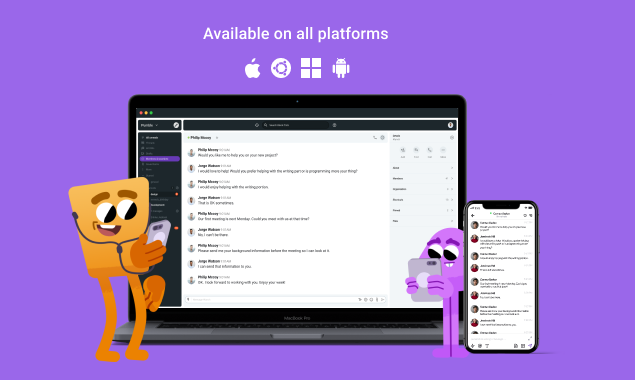
Pumble
Budget team chat with Slack-like features at lower cost
By Find Your Martech Team 2025-01-01
Pumble exists to undercut Slack on price while delivering adequate team chat functionality for budget-conscious organizations. It assumes many teams need basic channels, threads, and file sharing without premium features.
Pros
- Significantly cheaper than Slack with similar basic features
- Unlimited message history without premium tier requirement
- Clean interface avoiding extreme feature bloat
- Generous free tier for very small teams
- Native integration with Clockify time tracking
Cons
- User experience and polish lag established platforms
- Minimal third-party integrations beyond CAKE.com suite
- Limited innovation and feature development compared to leaders
- Smaller user base means less community and support resources
- Enterprise features and governance tools essentially nonexistent

Confluence
Enterprise wiki and documentation platform integrated with Atlassian suite
By Find Your Martech Team 2025-01-01
Confluence exists as the enterprise documentation layer for organizations already committed to Atlassian ecosystem. Unlike flexible modern tools like Notion, Confluence embraces traditional wiki structure optimized for large organizations.
Pros
- Best-in-class Atlassian ecosystem integration for engineering workflows
- Enterprise-grade permissions, governance, and compliance features
- Structured wiki approach scales to large organizations effectively
- Strong search and organization for finding information across spaces
- Mature platform with extensive enterprise features and support
Cons
- Interface and UX feel dated compared to modern collaboration tools
- Limited flexibility and customization versus platforms like Notion
- Expensive and complex overkill for small teams and simple wikis
- Editing experience clunky compared to modern document editors
- Requires Atlassian ecosystem investment to justify standalone costs
Notion
Convenient Notion publishing for simple public docs and lightweight sites when you already live in Notion
By Find Your Martech Team 2026-02-17
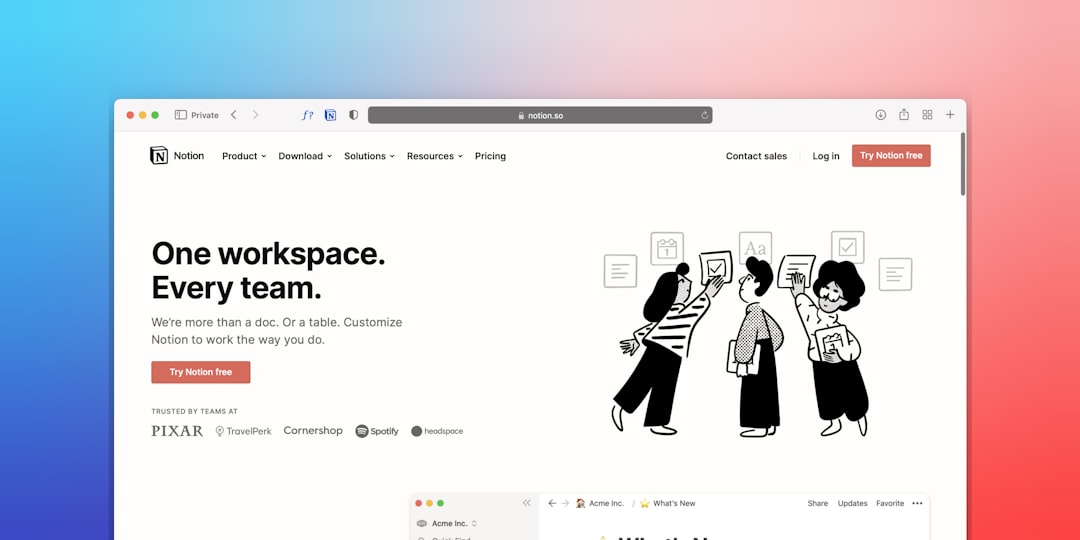
Notion as a website exists less by design and more by convenience — teams already living in Notion naturally want to make pages public without switching tools. Unlike purpose-built site builders, Notion publishing trades design quality and SEO control for zero friction when you already use Notion daily. It assumes the marginal cost of a separate website is not worth it for simple public documentation or light external pages. Notion site publishing excels when speed and consolidation matter more than design, performance, or discoverability. It struggles the moment professional appearance, SEO, custom domains without third-party tools, or any real web functionality is required.
Pros
- Zero friction for teams already using Notion daily
- Fast to publish without learning new tools
- Databases and linked pages enable structured content
- Free to publish at no additional cost
- Keeps internal and external content in one workspace
Cons
- Notion.so subdomain and branding without third-party tools
- No SEO control, metadata, or structured data
- Slow page load speeds compared to purpose-built sites
- No forms, e-commerce, or interactive functionality
- Design completely constrained by Notion formatting
Nuclino
Lightweight collaborative wiki for team knowledge sharing
By Find Your Martech Team 2026-02-14
Nuclino positions itself as the deliberately simple wiki for teams overwhelmed by feature-heavy platforms like Confluence and Notion.
Pros
- Extremely simple to start using without configuration or training
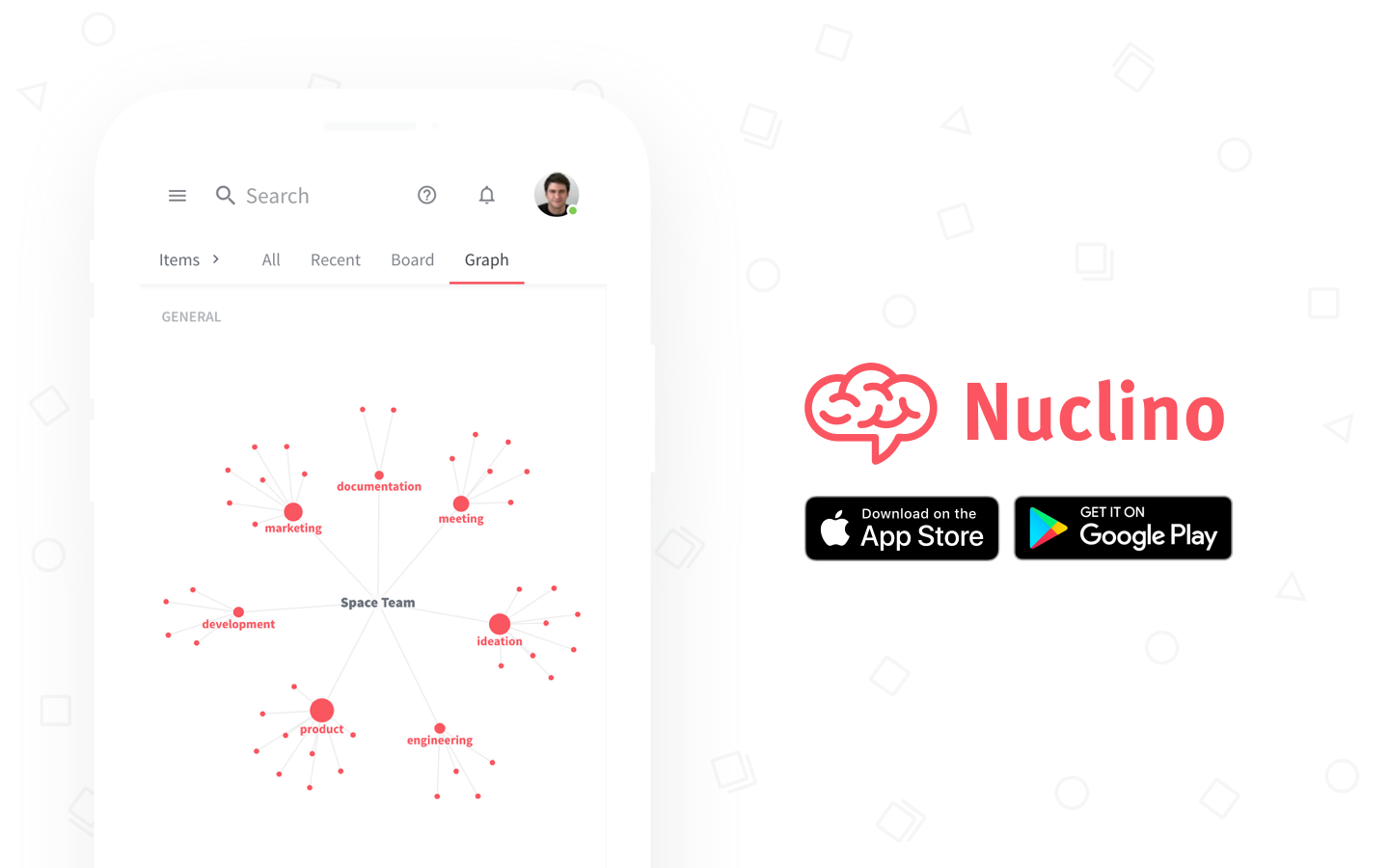
- Graph view provides unique visual perspective on knowledge
- Fast and lightweight compared to feature-heavy alternatives
- Real-time collaboration works smoothly for small teams
- Affordable pricing for small team knowledge base needs
Cons
- Limited features compared to Notion, Confluence, or Coda
- No databases, workflows, or advanced customization options
- Minimal integration ecosystem beyond basic connections
- Lacks enterprise features like advanced permissions
- Simple design becomes limiting as team needs grow complex
Slab
Modern team knowledge base with unified search
By Find Your Martech Team 2026-02-14
Slab positions itself as the anti-sprawl knowledge base that solves information fragmentation through unified search.
Pros
- Unified search across multiple tools solves information fragmentation
- Modern, fast interface prioritizes finding answers quickly
- Topic verification prevents outdated information from spreading
- Analytics reveal which documentation actually gets used
- Cleaner and simpler than Confluence without losing essential features
Cons
- Limited customization compared to flexible platforms like Notion
- No public documentation hosting for customer-facing content
- Smaller integration ecosystem than established enterprise platforms
- Pricing can be expensive for small teams needing basic wiki
- Less feature-rich than comprehensive knowledge management systems
Outline
Open source team wiki with self-hosted deployment option
By Find Your Martech Team 2026-02-14
Outline exists as the open source, self-hosted alternative to Notion for teams prioritizing data ownership and avoiding vendor lock-in.
Pros
- Open source model eliminates vendor lock-in concerns
- Self-hosting provides complete data sovereignty and control
- Fast performance and clean, modern interface
- Active development and responsive community
- Straightforward Markdown workflow familiar to developers
Cons
- Self-hosting requires technical expertise and infrastructure
- Limited features compared to comprehensive platforms like Notion
- Smaller integration ecosystem than established SaaS platforms
- Markdown requirement creates friction for non-technical users
- Community support only without vendor SLA guarantees

GitBook
Polished documentation publishing with Git workflows and version control for customer-facing docs
By Find Your Martech Team 2026-02-17
GitBook exists to make documentation beautiful and accessible without requiring custom site development. It targets teams needing polished public documentation rather than internal wikis, assuming Git-based workflows align with technical audiences. GitBook prioritizes publishing quality and version control over flexibility and real-time collaboration. The platform excels when professional documentation sites and Git integration matter more than workspace versatility or non-technical user friendliness. It struggles when teams need internal collaboration tools or when Markdown and Git workflows create barriers for non-technical contributors.
Pros
- Professional documentation sites without custom development
- Git-based workflows match engineering team mental models
- Version control and branching for managing documentation changes
- Clean, fast reader experience for documentation consumers
- Strong for technical documentation and API references
Cons
- Not designed for internal wiki and team collaboration use cases
- Real-time collaboration features limited compared to wikis
- Markdown requirement creates friction for non-technical contributors
- Pricing can be expensive for simple documentation needs
- Less flexible than general-purpose workspace platforms
BookStack
Free self-hosted wiki with structured book organization
By Find Your Martech Team 2026-02-14
BookStack exists as the completely free, self-hosted wiki for organizations rejecting subscription costs and vendor dependencies.
Pros
- Completely free with no licensing costs or user limits
- Self-hosting provides full data control and sovereignty
- Structured book organization intuitive for documentation
- Granular permission controls for access management
- Active open source community and regular updates
Cons
- Interface and UX feel dated compared to modern platforms
- Self-hosting requires technical skills and ongoing maintenance
- Limited real-time collaboration features
- Mobile experience and offline access weak
- Fewer features than comprehensive knowledge platforms
Nextcloud
Open source self-hosted file sync and collaboration platform
By Find Your Martech Team 2025-01-15
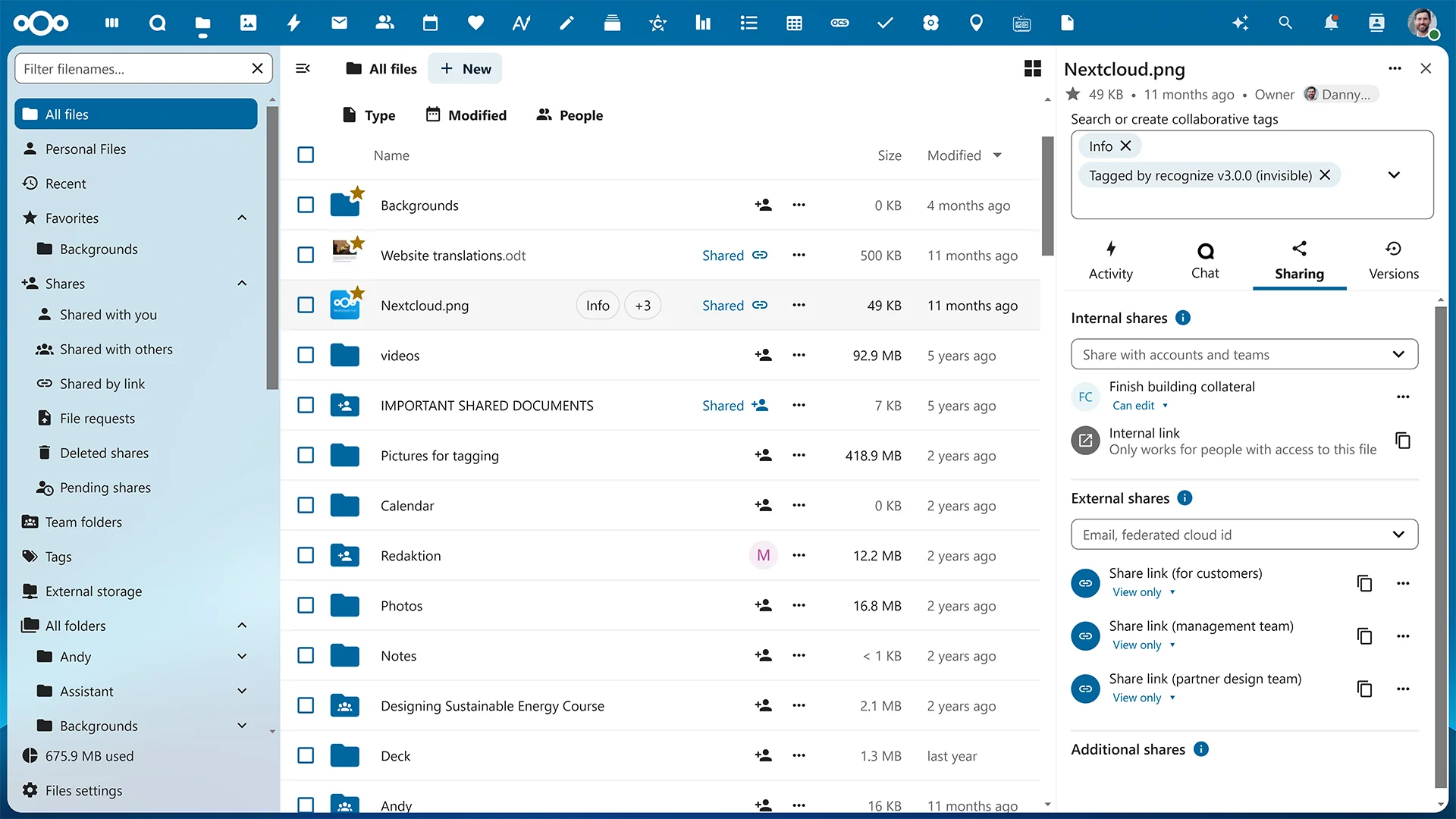
Nextcloud positions itself as the self-hosted, privacy-first answer to Google Drive and Dropbox for organizations unwilling to trust third-party cloud providers with their data.
Pros
- Complete data ownership eliminates third-party cloud dependencies
- Open source model allows unlimited customization and extension
- Self-hosting satisfies strict compliance and data residency requirements
- No per-user storage limits beyond server capacity
- Active community and robust app ecosystem
Cons
- Self-hosting requires significant technical expertise and infrastructure
- Mobile app quality and sync reliability trail commercial cloud services
- Performance depends heavily on server resources and configuration
- User experience less polished than dedicated cloud providers
- Ongoing maintenance and security updates require technical resources
SharePoint
Enterprise content management and collaboration platform
By Find Your Martech Team 2025-01-15
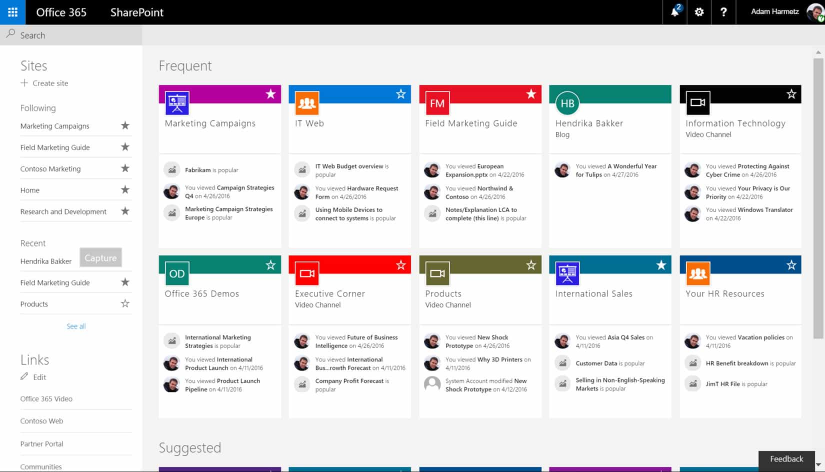
SharePoint exists as the enterprise document and content management backbone for Microsoft 365 organizations. Unlike simple file sharing tools, SharePoint handles complex permission structures, metadata, workflows, and governance at massive scale.
Pros
- Unmatched enterprise document management capabilities at scale
- Deep Microsoft 365 integration creates unified productivity environment
- Robust governance, compliance, and audit features
- Handles complex permission structures across large organizations
- Bundled with Office 365 makes marginal cost essentially zero
Cons
- Steep learning curve for both users and administrators
- Configuration complexity requires dedicated SharePoint expertise
- User experience dated and clunky compared to modern alternatives
- Overkill for simple file sharing and small team collaboration
- Performance issues and sync problems frustrate end users
Zulip
Open source team chat with topic-based threading
By Find Your Martech Team 2025-01-15
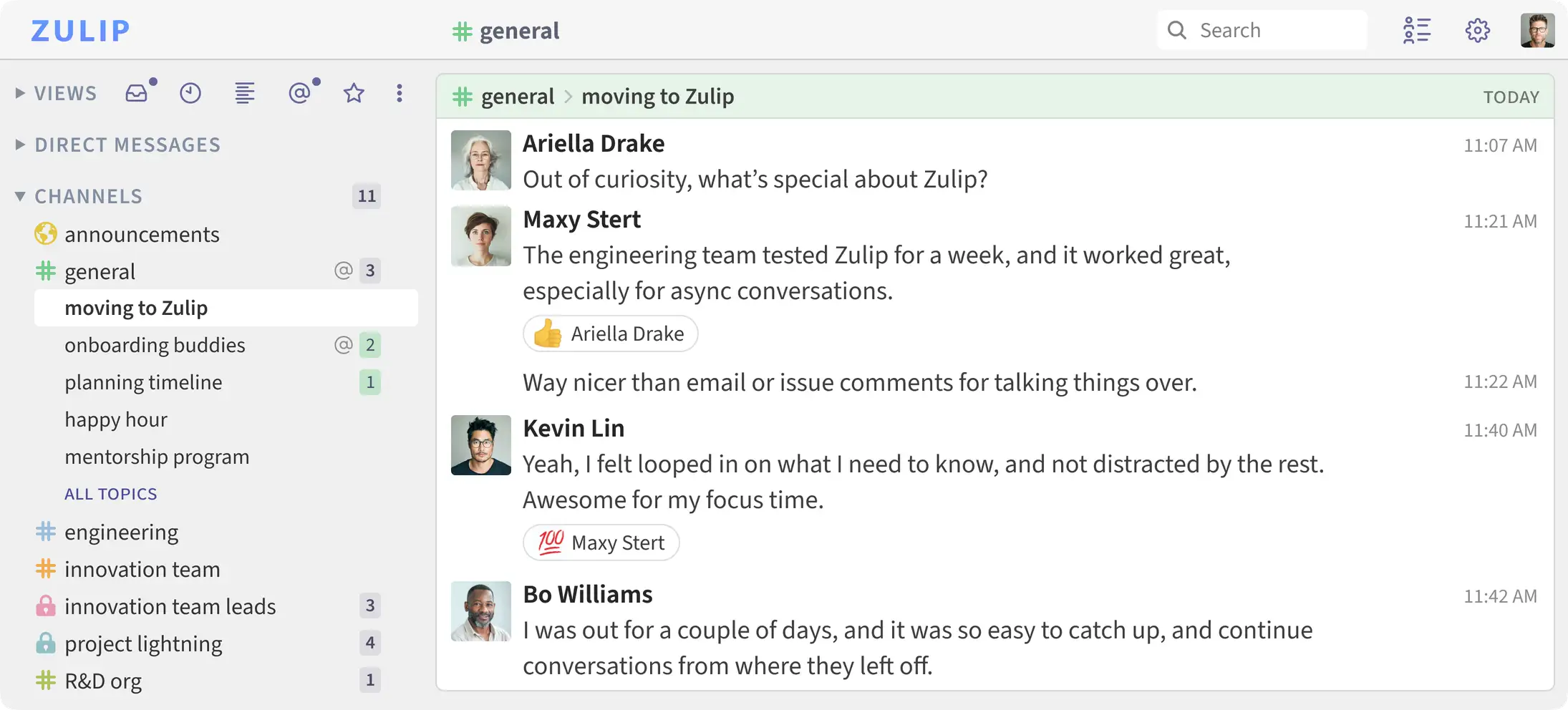
Zulip exists to fix what it sees as fundamental flaws in Slack and Discord through unique topic-based threading. Unlike channel-based chat where conversations intermingle, Zulip requires every message belong to a topic.
Pros
- Topic threading prevents conversation chaos in busy channels
- Better for async communication across time zones than Slack
- Open source with both cloud and self-hosted options
- Excellent for technical discussions with code formatting
- Strong keyboard shortcuts and power user features
Cons
- Required topic structure feels rigid for casual conversations
- Smaller integration ecosystem than Slack or Teams
- Less intuitive for users familiar with traditional chat
- Limited voice and video capabilities compared to competitors
- Smaller community means fewer resources and integrations
Basecamp
Opinionated all-in-one project management and team collaboration platform
By Find Your Martech Team 2025-01-15
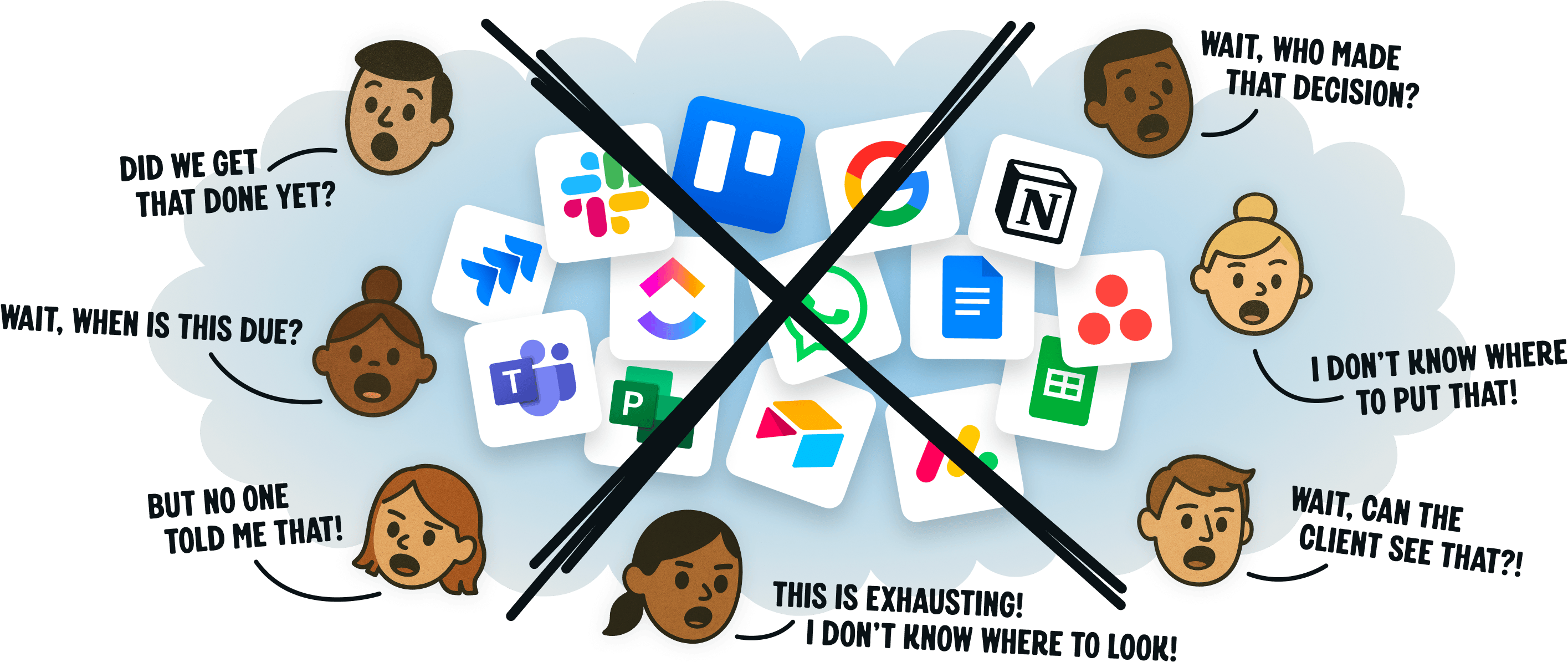
Basecamp exists as the anti-complexity project management tool rejecting customization and feature accumulation for opinionated simplicity.
Pros
- Radical simplicity reduces onboarding and training time
- Flat pricing becomes economical as teams grow
- Consolidates multiple tools reducing context switching
- Strong async communication culture reduces meeting overload
- Opinionated design prevents feature bloat and complexity
Cons
- Limited customization frustrates teams wanting flexibility
- No advanced PM features like dependencies or Gantt charts
- Real-time chat basic compared to dedicated messaging tools
- Integrations limited compared to open ecosystems
- Opinionated approach does not fit all team workflows

Fleep
Team messenger bridging email and chat
By Find Your Martech Team 2025-01-15
Fleep positions itself as the bridge between email and modern team chat, assuming many teams still collaborate with external partners through email.
Pros
- Unique email integration bridges traditional and modern communication
- Simple, straightforward interface without overwhelming features
- Unlimited message history without premium tier requirement
- GDPR-compliant with European data center hosting
- Affordable for small teams needing basic collaboration
Cons
- Very limited third-party integrations compared to major platforms
- Smaller user base means less community support and resources
- Feature set trails Slack, Teams, and other established tools
- Email integration niche becomes less relevant as teams modernize
- Limited innovation and development compared to well-funded competitors
Zoho CRM
Affordable CRM platform with deep features for cost-conscious businesses
By Find Your Martech Team 2026-02-15
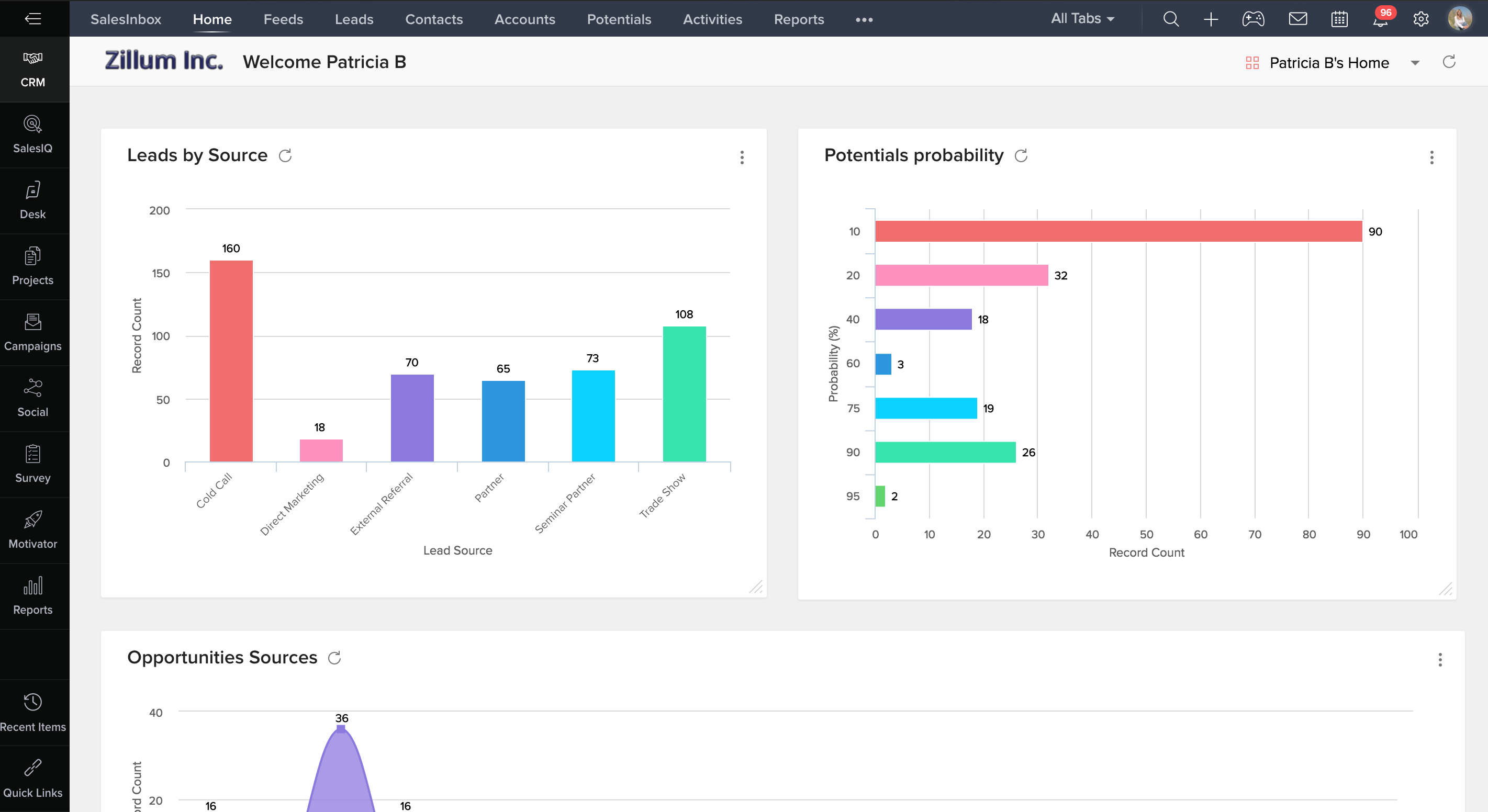
Zoho CRM positions itself as the feature-rich, affordable alternative to Salesforce for businesses rejecting premium pricing. Unlike simplified CRMs sacrificing features for ease, Zoho provides extensive capabilities matching enterprise platforms at fraction of cost.
Pros
- Significantly cheaper than Salesforce and comparable CRMs
- Feature-rich with capabilities matching enterprise platforms
- Extensive customization options for tailoring to business needs
Cons
- User interface dated and less intuitive than modern CRMs
- Integrations outside Zoho ecosystem limited and less robust
- Learning curve steep due to feature density and customization options

ActiveCampaign
Customer experience automation platform with powerful marketing automation
By Find Your Martech Team 2026-02-15
ActiveCampaign positions itself as affordable enterprise automation for businesses priced out of HubSpot and Marketo. Unlike simple email tools or comprehensive platforms, ActiveCampaign focuses specifically on marketing automation depth and CRM basics.
Pros
- Sophisticated automation features at fraction of enterprise platform costs
- Powerful email marketing with strong deliverability reputation
- Visual automation builder accessible for non-technical users
Cons
- Interface less polished than HubSpot and modern alternatives
- Platform breadth limited compared to all-in-one solutions
- Sales CRM features basic compared to dedicated CRM platforms

Brevo
Affordable email marketing and transactional email platform
By Find Your Martech Team 2026-02-15
Brevo (formerly Sendinblue) exists to undercut Mailchimp and established players on price while offering adequate email marketing and transactional delivery. Unlike premium platforms charging per contact, Brevo uses email volume pricing benefiting businesses with large lists.
Pros
- Significantly cheaper than Mailchimp and competitors
- Transactional email included unlike pure marketing platforms
- Email volume pricing better for large contact lists
Cons
- Marketing automation features trail sophisticated platforms
- Interface and templates less polished than premium alternatives
- Limited integrations compared to established ecosystem players
HubSpot CRM
All-in-one inbound marketing, sales, and CRM platform
By Find Your Martech Team 2026-02-15
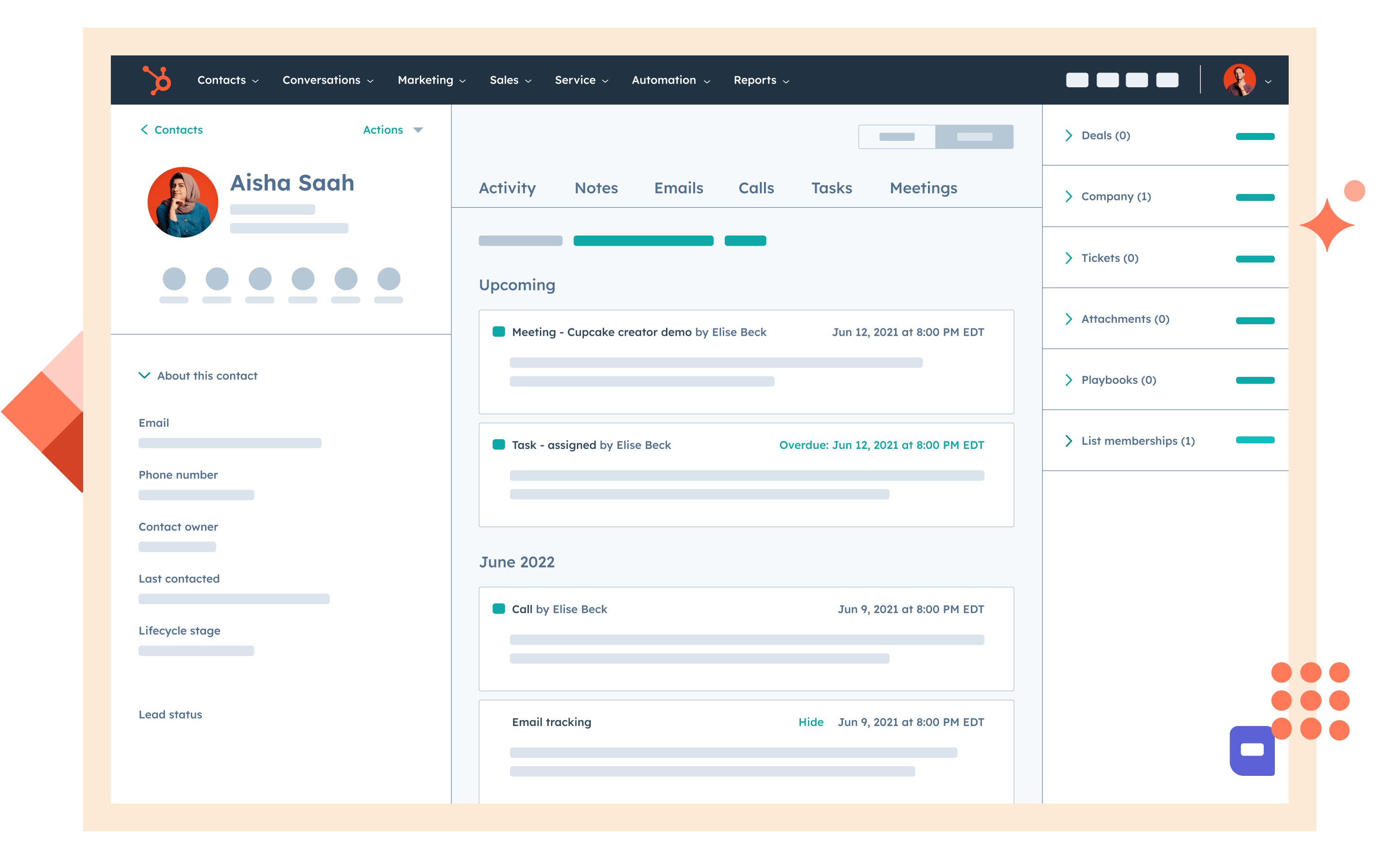
HubSpot exists to democratize inbound marketing and sales alignment for growing companies unable to afford enterprise marketing stacks. Unlike complex enterprise tools requiring consultants, HubSpot prioritizes usability and integrated workflows.
Pros
- Best-in-class ease of use for marketing automation platforms
- Free CRM provides genuine value and eliminates entry barrier
- Unified platform eliminates integration complexity between tools
Cons
- Pricing scales aggressively becoming expensive for growing contact databases
- Limited customization compared to enterprise platforms like Salesforce
- Feature depth in individual modules trails specialized best-of-breed tools

Mailchimp
Email marketing platform for small businesses and content creators
By Find Your Martech Team 2026-02-15
Mailchimp built its reputation as the friendly, accessible email marketing platform for small businesses intimidated by complex marketing tools. Unlike enterprise automation platforms, Mailchimp prioritizes approachability and small business workflows.
Pros
- Extremely approachable for email marketing beginners
- Strong brand recognition and trusted by small businesses
- Extensive template library and design resources
Cons
- Pricing has increased significantly becoming less competitive
- Marketing automation features basic compared to specialized platforms
- Platform expansion creates feature bloat without depth
Freshsales
Modern AI-powered CRM at competitive pricing for growing teams
By Find Your Martech Team 2025-06-01
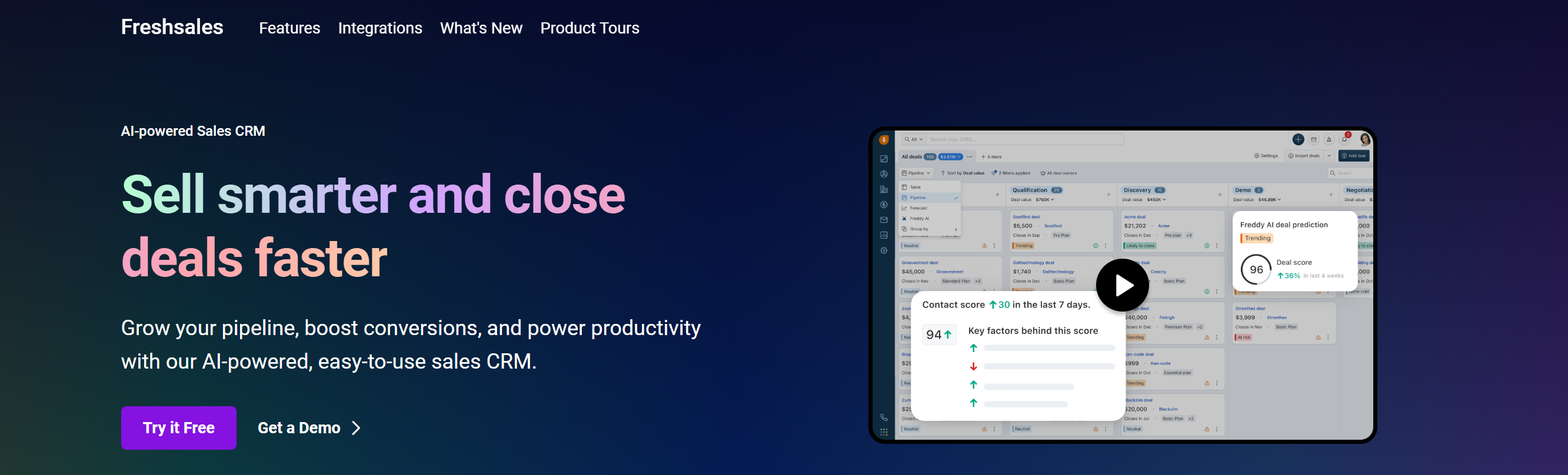
Freshsales positions itself as the modern, affordable alternative to Salesforce and HubSpot for growing sales teams. It prioritizes sales features with contemporary UX.
Pros
- Modern, clean interface easier to use than legacy CRMs
- AI-powered features at accessible price points
- Competitive pricing compared to Salesforce and HubSpot
- Strong mobile app for sales teams on the go
- Unified Freshworks suite for sales and support alignment
Cons
- Smaller integration ecosystem than established CRM leaders
- Less customization depth than Salesforce or enterprise platforms
- Marketing automation basic compared to HubSpot or Marketo
- Newer platform means less mature feature set and community
- Limited third-party apps and marketplace extensions

Keap
CRM and automation combo for service businesses and solopreneurs
By Find Your Martech Team 2025-06-01
Keap (formerly Infusionsoft) targets service-based small businesses and solopreneurs needing CRM and automation without enterprise platform complexity.
Pros
- Combines CRM, automation, and payments for service businesses
- Strong automation capabilities for small business budgets
- Payment processing integration simplifies client billing
- Opinionated workflows guide small business owners through setup
- Appointment scheduling built into platform
Cons
- Interface dated and less intuitive than modern alternatives
- Pricing expensive relative to features and user experience
- Steep learning curve despite targeting small business users
- Limited flexibility outside prescribed Keap methodology
- Better alternatives exist at similar or lower price points
Klaviyo
E-commerce marketing automation built around purchase data
By Find Your Martech Team 2025-06-01
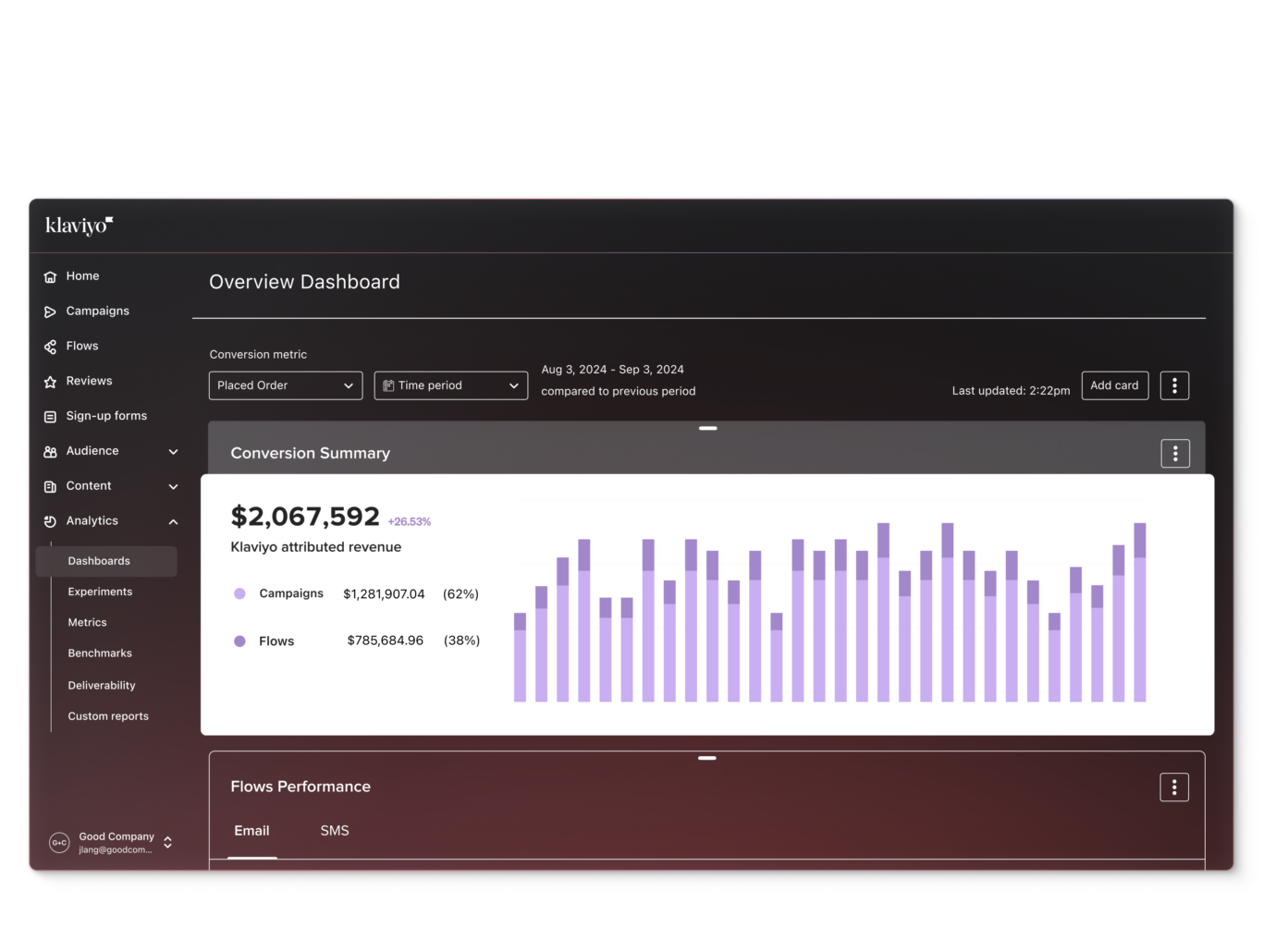
Klaviyo exists specifically for e-commerce businesses wanting to own customer relationships and maximize lifetime value through sophisticated marketing automation.
Pros
- Best-in-class e-commerce marketing automation capabilities
- Deep integration with major e-commerce platforms
- Sophisticated segmentation based on purchase behavior
- Customer data ownership versus platform dependencies
- Direct revenue attribution showing marketing ROI clearly
Cons
- Expensive at scale with contact and email volume pricing
- Not suitable for non-e-commerce businesses
- Steeper learning curve than simple email marketing tools
- Limited capabilities outside email and SMS channels
- Technical setup and data management require expertise
Close CRM
The CRM built for inside sales teams who live on the phone
By Find Your Martech Team 2025-06-01
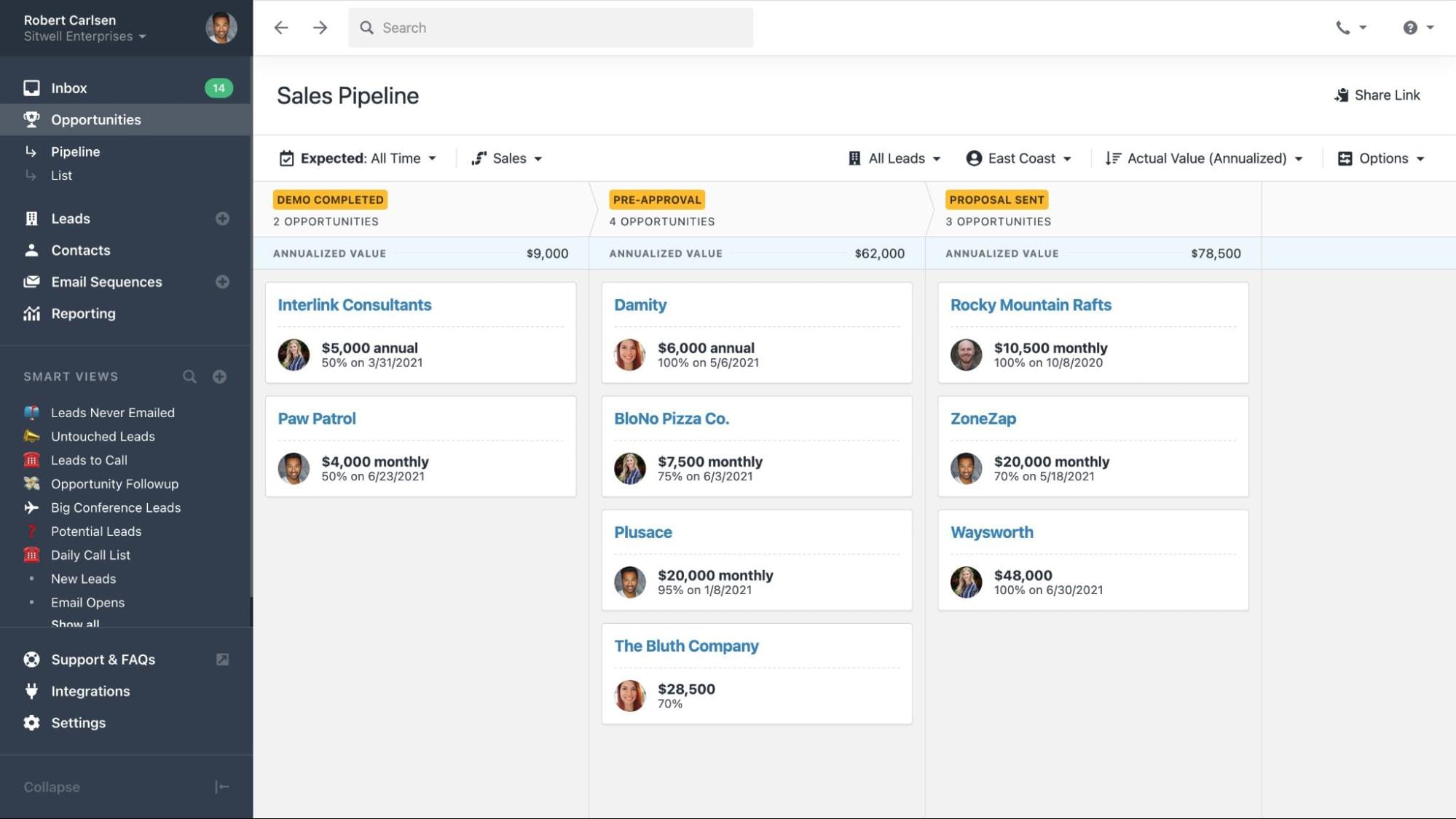
Close CRM exists specifically for inside sales teams who live on the phone prospecting and qualifying leads. Unlike traditional CRMs treating calling as feature, Close makes communication the central workflow.
Pros
- Best-in-class built-in calling functionality for inside sales
- Communication-first design matches outbound sales workflow perfectly
- Fast, simple interface optimized for sales velocity
- Strong for high-volume prospecting and SDR teams
- No need for third-party calling integrations or plugins
Cons
- Limited marketing automation beyond basic email
- Customization options restricted compared to flexible CRMs
- Not ideal for complex enterprise sales cycles
- Customer service features essentially nonexistent
- Smaller integration ecosystem than comprehensive platforms

Pipedrive
The CRM built for salespeople who hate CRMs
By Find Your Martech Team 2025-06-01
Pipedrive exists as the CRM built specifically for salespeople who hate traditional CRMs. Unlike comprehensive platforms trying to serve marketing, sales, and service, Pipedrive focuses exclusively on helping sales teams close deals faster.
Pros
- Exceptional user experience drives sales team adoption
- Visual pipeline makes deal status immediately clear
- Activity-focused approach ensures consistent sales follow-through
- Simple enough for quick onboarding without extensive training
- Pricing competitive compared to comprehensive CRM platforms
Cons
- Limited marketing automation capabilities compared to all-in-one platforms
- No customer service or support ticket management features
- Customization options restricted compared to Salesforce or HubSpot
- Reporting and analytics less sophisticated than enterprise CRMs
- Integration ecosystem smaller than established platform leaders

Campaign Monitor
Design-focused email marketing platform emphasizing beautiful templates and brand consistency for agencies and creative teams
By Find Your Martech Team 2026-02-15
Campaign Monitor exists for marketers who believe email design quality directly impacts brand perception and campaign success.
Pros
- Superior email design tools and template customization
- Clean, professional templates reflecting design focus
- Strong agency features for managing multiple client accounts
Cons
- Marketing automation limited compared to specialized platforms
- Pricing premium compared to feature-rich alternatives
- E-commerce capabilities minimal versus dedicated tools
Insightly
CRM with integrated project management designed for professional services and agencies
By Find Your Martech Team 2026-02-15
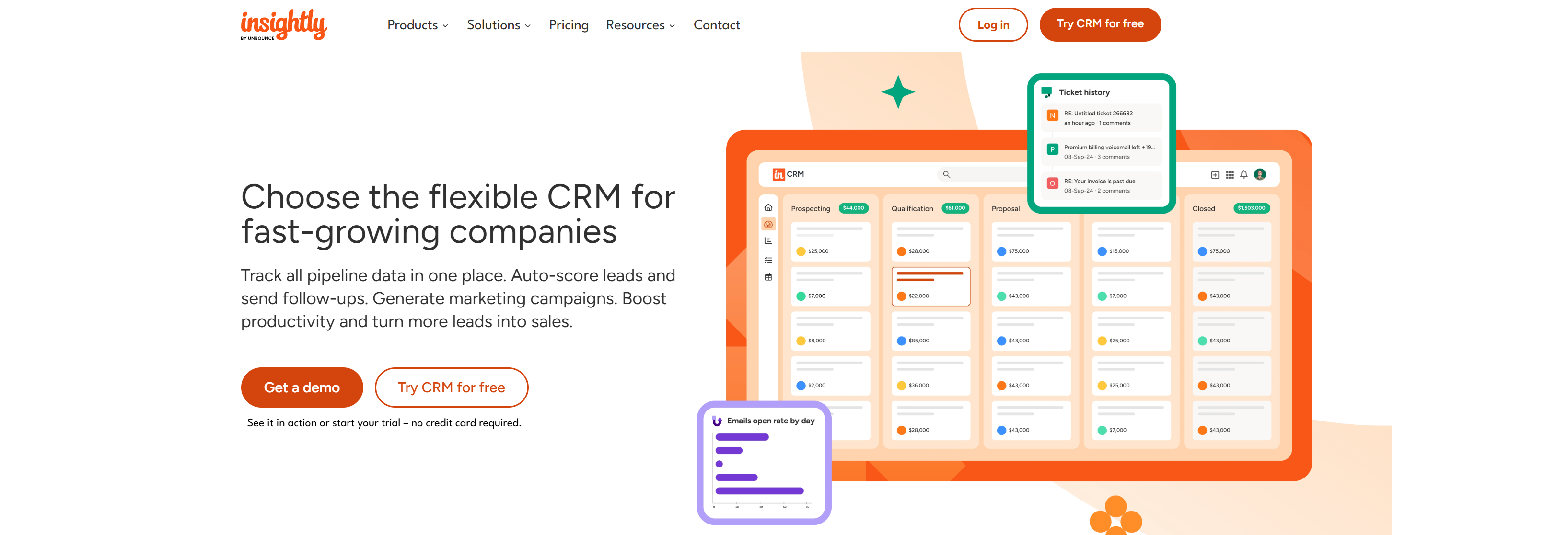
Insightly exists for professional services firms and agencies where sales pipeline naturally flows into project delivery.
Pros
- Unique CRM and project management integration in single platform
- Workflow automation connects opportunities to projects smoothly
- Affordable compared to separate CRM and PM tool subscriptions
Cons
- CRM features limited compared to dedicated platforms like Salesforce
- Project management basic versus specialized PM tools
- Marketing automation minimal compared to comprehensive platforms

GetResponse
All-in-one marketing platform combining email marketing, webinars, and landing pages for small business growth
By Find Your Martech Team 2026-02-15
GetResponse positions itself as the affordable all-in-one marketing platform for small businesses wanting webinar hosting alongside email marketing.
Pros
- Webinar hosting included differentiates from pure email platforms
- Comprehensive feature set at competitive pricing
- All-in-one approach reduces tool sprawl for small businesses
Cons
- Email deliverability reputation trails industry leaders
- Webinar features basic compared to dedicated platforms like Zoom
- Automation capabilities less sophisticated than ActiveCampaign

Drip
E-commerce CRM focused on customer relationships rather than just transactional emails
By Find Your Martech Team 2026-02-15
Drip positions itself as the e-commerce CRM focused on customer relationships rather than just transactional emails.
Pros
- Visual automation builder powerful and intuitive
- Flexible tagging system enables sophisticated segmentation
- Strong focus on customer relationships versus transactional emails
Cons
- Email-only focus lacks SMS and push notification channels
- Pricing competitive with Klaviyo without clear advantage
- Smaller customer base means less community and resources

Omnisend
E-commerce marketing automation platform offering Klaviyo-like features at more accessible pricing for growing online stores
By Find Your Martech Team 2026-02-15
Omnisend positions itself as the affordable e-commerce marketing automation alternative to Klaviyo for growing online stores.
Pros
- More affordable than Klaviyo with similar e-commerce focus
- Omnichannel capabilities include SMS and push notifications
- Pre-built workflows accelerate e-commerce automation setup
Cons
- Advanced features and analytics trail Klaviyo depth
- Segmentation capabilities less sophisticated than premium tools
- Deliverability reputation not as established as category leaders

Salesforce Marketing Cloud
Enterprise marketing automation for large organizations
By Find Your Martech Team 2026-02-15
Salesforce Marketing Cloud exists as the enterprise marketing automation layer for large organizations already committed to Salesforce ecosystem. Unlike mid-market tools, Marketing Cloud handles massive scale and channel breadth requiring dedicated teams to manage.
Pros
- Unmatched multi-channel capabilities for enterprise marketing
- Deep Salesforce ecosystem integration creates unified platform
- Handles massive scale and data volumes enterprise requires
- AI and personalization capabilities industry-leading
- Comprehensive feature set covers virtually all marketing needs
Cons
- Extremely expensive with six-figure annual costs typical
- Complex implementation requires consultants and months of work
- Steep learning curve demands dedicated marketing ops expertise
- Overkill for SMB and mid-market organizations
- Forced Salesforce ecosystem lock-in for maximum value

Nimble
Social CRM for relationship-focused professionals
By Find Your Martech Team 2026-02-15
Nimble exists for professionals who build businesses through relationships not transactional sales processes. Unlike pipeline-focused CRMs, Nimble emphasizes contact enrichment through social media and relationship context over deal tracking.
Pros
- Social media enrichment provides valuable relationship context
- Simple interface easy to use without extensive training
- Relationship-first approach suits service professionals perfectly
- Affordable for individuals and small teams
- Unified view of email and social interactions helpful
Cons
- Limited sales pipeline and forecasting capabilities
- No marketing automation or campaign management
- Social features feel dated as platforms have evolved
- Small user base means limited integrations and community
- Not suitable for structured sales teams needing process enforcement

Zendesk Sell
Sales CRM for Zendesk ecosystem teams
By Find Your Martech Team 2026-02-15
Zendesk Sell exists as the sales CRM component completing Zendesk customer experience platform for organizations already using Zendesk Support. Unlike standalone CRMs, Sell prioritizes integration with Zendesk suite over feature comprehensiveness.
Pros
- Seamless integration with Zendesk Support ecosystem
- Simple, modern interface easy for sales teams to adopt
- Strong mobile experience for field sales
- Unified customer data across sales and support
- Reasonable pricing for SMB sales teams
Cons
- Limited marketing automation compared to full platforms
- Advanced CRM features trail dedicated solutions
- Less valuable without existing Zendesk investment
- Smaller integration ecosystem than category leaders
- Feature development slower than pure-play CRM vendors
SugarCRM
Open source CRM for customization and data control
By Find Your Martech Team 2026-02-15
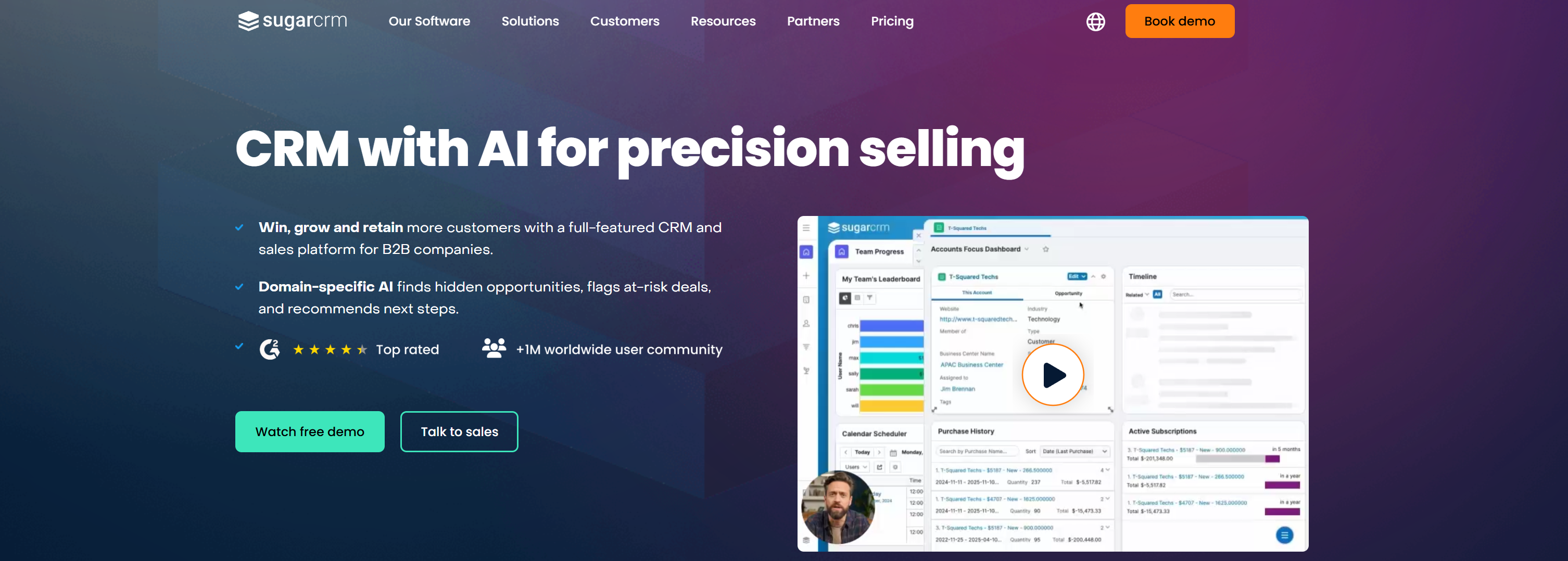
SugarCRM positions itself as the open source alternative to Salesforce for organizations unwilling to accept SaaS vendor lock-in or unable to meet data sovereignty requirements with cloud platforms.
Pros
- Open source provides ultimate customization flexibility
- Self-hosting option satisfies data sovereignty requirements
- No vendor lock-in with proprietary platforms
- Can be more cost-effective than per-user SaaS at scale
- Active community and commercial support available
Cons
- Implementation and customization require significant technical expertise
- User interface dated compared to modern cloud CRMs
- Self-hosting creates operational overhead and maintenance burden
- Smaller ecosystem than Salesforce or Microsoft Dynamics
- Cloud version loses some benefits versus self-hosted deployment
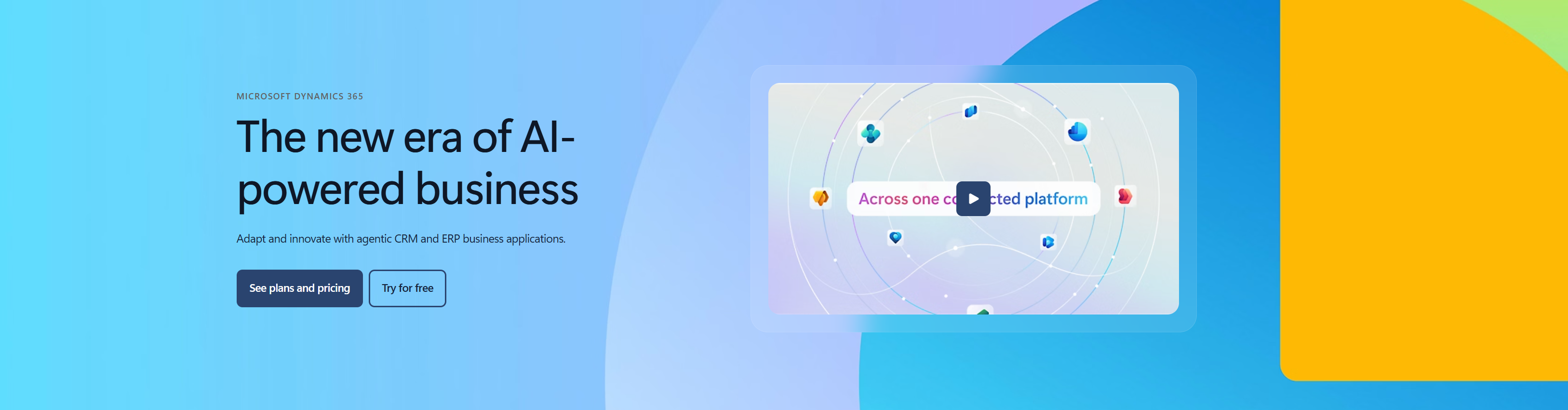
Microsoft Dynamics 365
Unified CRM and ERP for Microsoft ecosystem enterprises
By Find Your Martech Team 2026-02-15
Microsoft Dynamics 365 exists as the comprehensive business applications platform for enterprises standardized on Microsoft ecosystem. Unlike point solution CRMs, Dynamics combines sales, service, operations, and ERP assuming organizations want unified Microsoft platform.
Pros
- Comprehensive Microsoft ecosystem integration unmatched
- Unified platform covering CRM, ERP, and operations
- Power Platform enables extensive customization
- Industry-specific solutions for verticals
- Enterprise-grade security and compliance features
Cons
- Complexity and learning curve steep for users and admins
- Expensive with enterprise licensing and implementation costs
- CRM features trail Salesforce in some areas
- Requires Microsoft ecosystem commitment for full value
- Implementation projects lengthy and require consultants
Trello
The simplest visual task board for teams who value ease over power
By Find Your Martech Team 2026-02-16
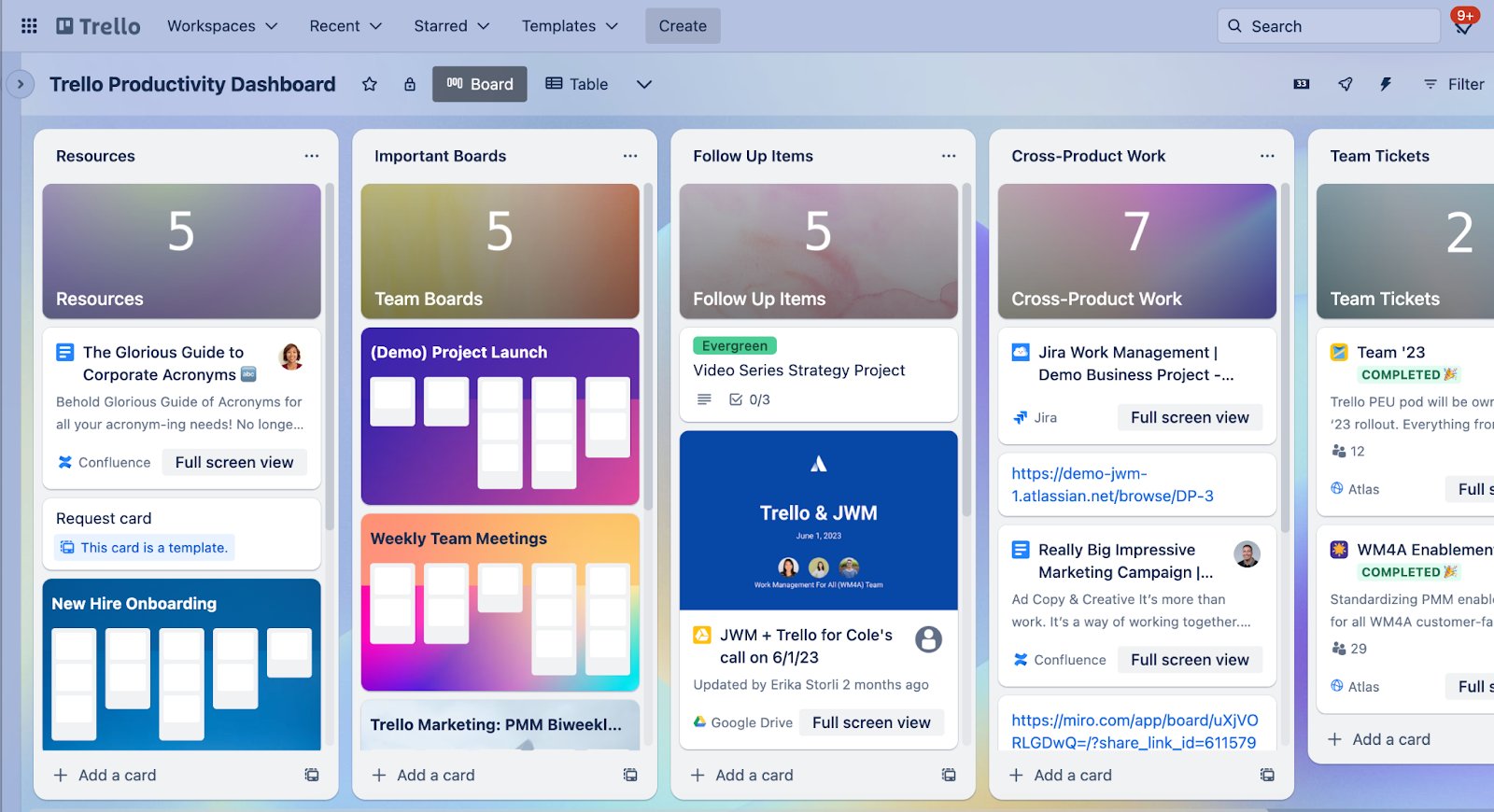
Trello pioneered the digital Kanban board as the simplest possible project visualization. Its power is brutal simplicity: boards, lists, and cards that anyone understands instantly without training. Teams choose Trello when they want visual organization without complexity, making it ideal for creative workflows, personal productivity, and small teams allergic to heavy software. The platform deliberately avoids enterprise features, keeping the interface clean and accessible. While this simplicity limits scalability, it makes Trello unbeatable for quick setup and intuitive collaboration, especially for teams where ease of use matters more than advanced functionality.
Pros
- Zero learning curve - anyone can start using immediately
- Free tier is genuinely useful for small teams indefinitely
- Beautiful, distraction-free interface focuses on visual simplicity
Cons
- Lacks native time tracking, dependencies, or Gantt views
- Limited reporting makes it hard to track team performance
- Power-Ups are required for basic features, inflating cost
Asana
Structured work management for teams who need visibility and accountability
By Find Your Martech Team 2026-02-16
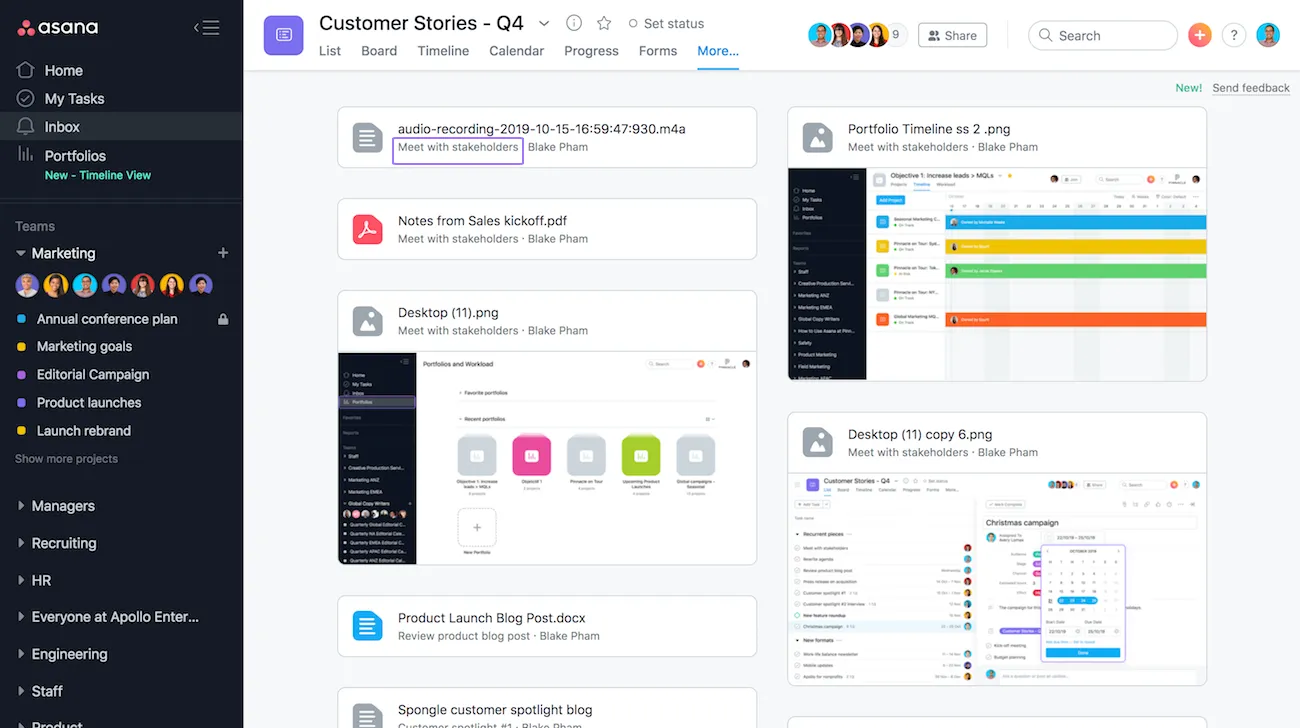
Asana positions itself as the work management platform for teams who need structured workflows with high visibility. Built for operational excellence rather than simplicity, it excels at coordinating complex, multi-stakeholder initiatives where dependencies, timelines, and accountability matter. Teams choose Asana when they're scaling past basic task lists and need automation, custom fields, and portfolio views to manage work strategically. The platform shines in cross-functional environments where marketing, operations, and product teams collaborate on campaigns and launches requiring clear ownership and progress tracking.
Pros
- Exceptional onboarding and help resources make adoption smooth
- Powerful automation rules eliminate manual status updates
- Portfolio view provides executives real-time visibility across initiatives
Cons
- Pricing becomes expensive as team grows ($10.99-$24.99/user)
- Feature overload can overwhelm teams wanting simple task management
- Limited native time tracking requires third-party integrations
Jira
The industry standard for agile software development teams
By Find Your Martech Team 2026-02-16
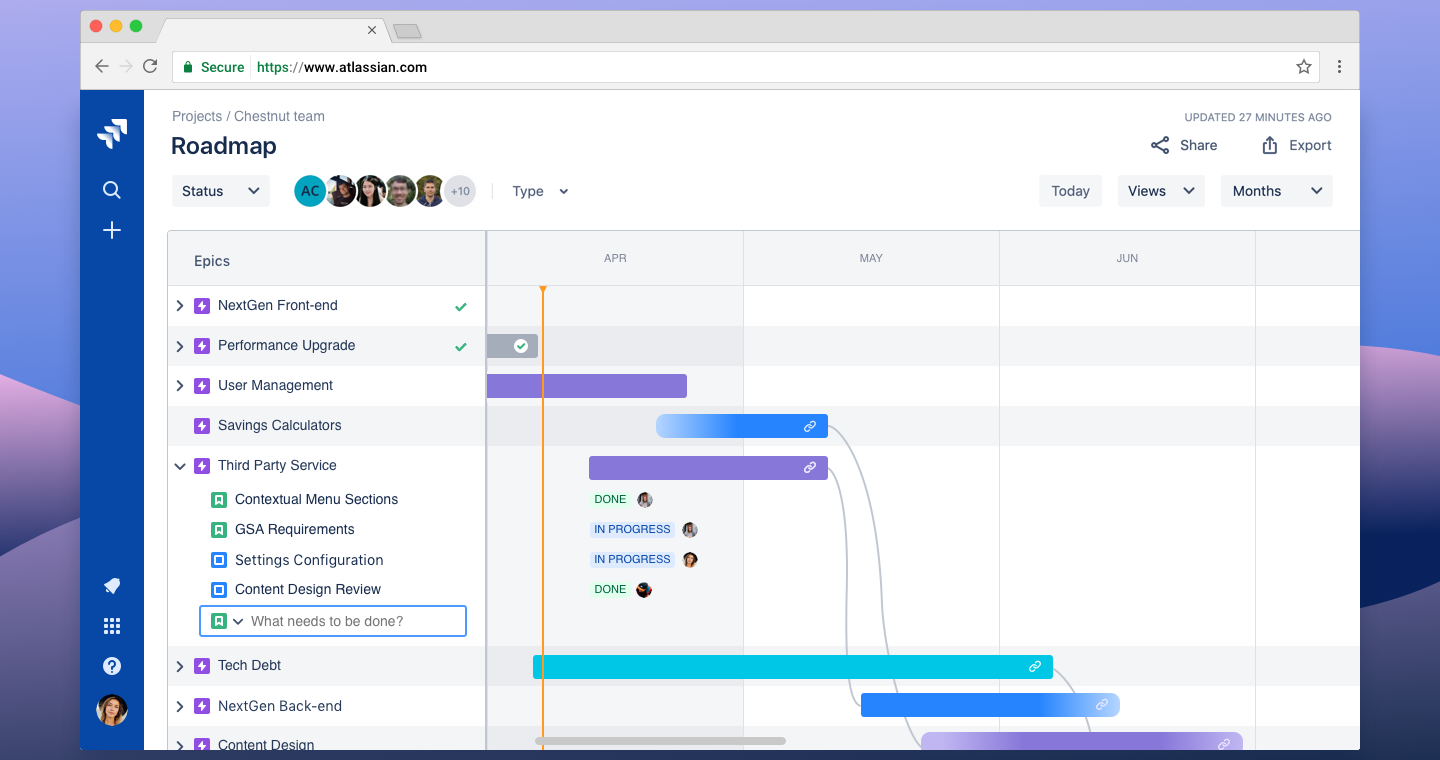
Jira is the industry standard for software development teams running agile methodologies. Purpose-built for engineering workflows, it provides unmatched depth in sprint planning, backlog grooming, and release management. Teams adopt Jira when they need robust issue tracking with custom workflows that map to their development process. The platform excels at connecting code commits, pull requests, and deployments to user stories, giving technical teams full traceability from idea to production. While powerful for developers, its complexity and technical orientation make it challenging for non-technical teams, reinforcing its position as a specialized tool for engineering organizations.
Pros
- Unmatched depth for agile software development workflows
- Powerful JQL (Jira Query Language) for advanced filtering
- Extensive marketplace with 3000+ apps and integrations
Cons
- Steep learning curve intimidates non-technical users
- Interface feels dated and cluttered compared to modern tools
- Performance degrades with large datasets (10,000+ issues)
Wrike
Enterprise work management with compliance and governance built in
By Find Your Martech Team 2026-02-16
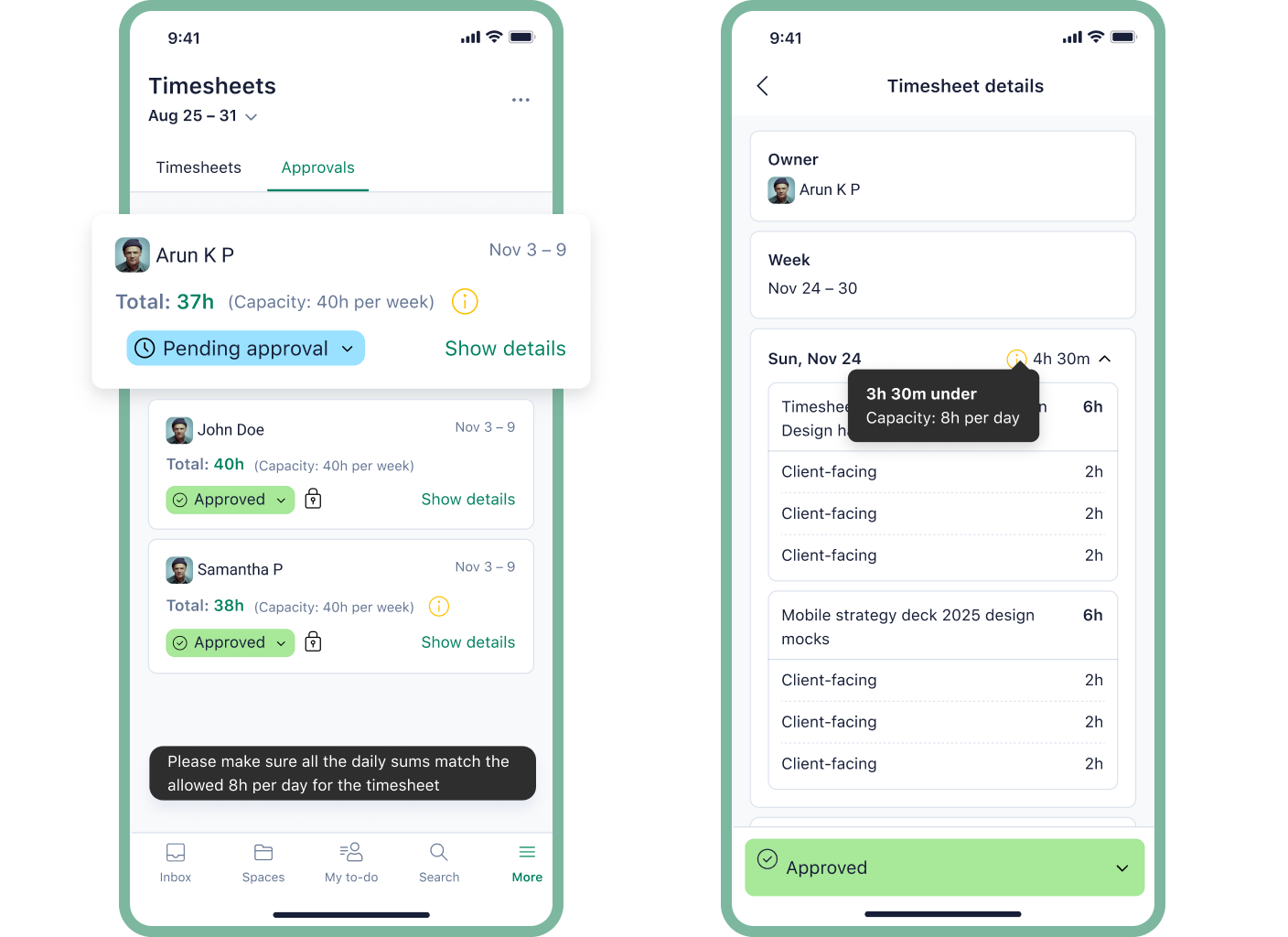
Wrike targets mid-market and enterprise organizations requiring robust work management with enterprise-grade security, compliance, and governance. Unlike startup-friendly tools, Wrike emphasizes control, auditability, and structured workflows that satisfy IT, legal, and compliance requirements. Teams choose Wrike when they need advanced resource management, budget tracking, and approval workflows that scale across departments and geographies. The platform excels in professional services and regulated industries where project profitability, utilization rates, and compliance documentation are critical. While powerful for enterprises, its complexity and pricing make it overkill for small teams.
Pros
- Exceptional resource management and capacity planning
- Powerful approval workflows eliminate email bottlenecks
- Strong Adobe Creative Cloud integration for design teams
Cons
- Dated interface feels clunky compared to modern alternatives
- Expensive pricing ($9.80-$24.80/user) with limited free tier
- Steep learning curve requires extensive training programs
Monday.com
A visual Work OS where non-technical teams build custom workflows
By Find Your Martech Team 2026-02-16
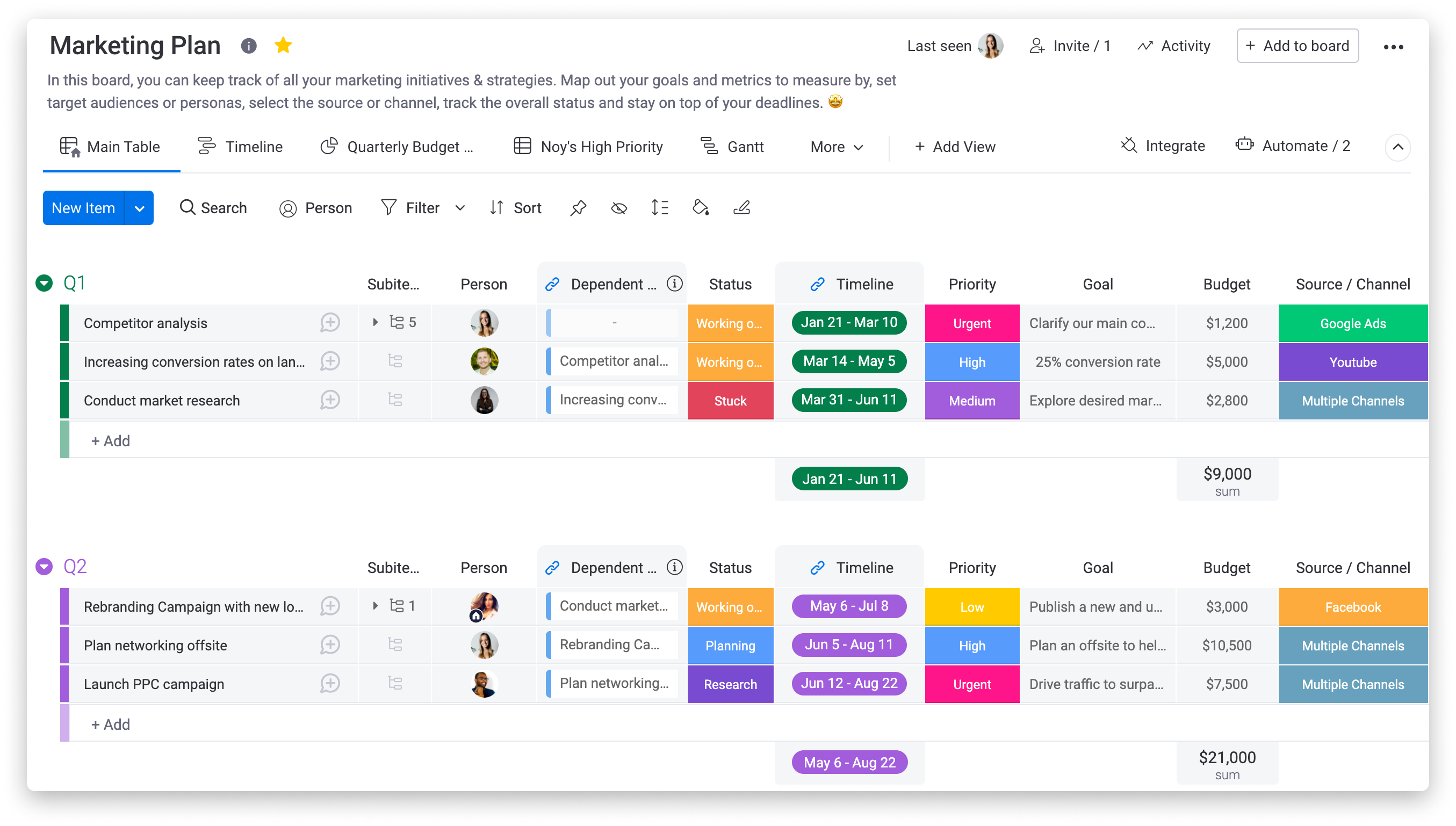
Monday.com markets itself as a Work OS—a visual platform where teams build custom workflows without technical expertise. Unlike rigid project management tools, Monday emphasizes infinite customization through boards, columns, and automations that adapt to any workflow. Teams choose Monday when they want powerful flexibility with visual appeal, making complex processes comprehensible through color-coding and dashboards. The platform excels in environments where diverse teams (marketing, sales, HR) need different workflows on one platform. Its no-code approach democratizes customization, though this flexibility creates complexity as boards multiply and governance becomes challenging.
Pros
- Exceptional visual design makes data comprehension effortless
- No-code customization empowers non-technical teams
- Strong mobile apps with full editing capabilities
Cons
- Pricing jumps quickly ($9-$19/user, features locked behind tiers)
- Notification overload without careful configuration
- Steeper learning curve than advertised for advanced features
ClickUp
One app to replace them all — maximum features at aggressive pricing
By Find Your Martech Team 2026-02-16
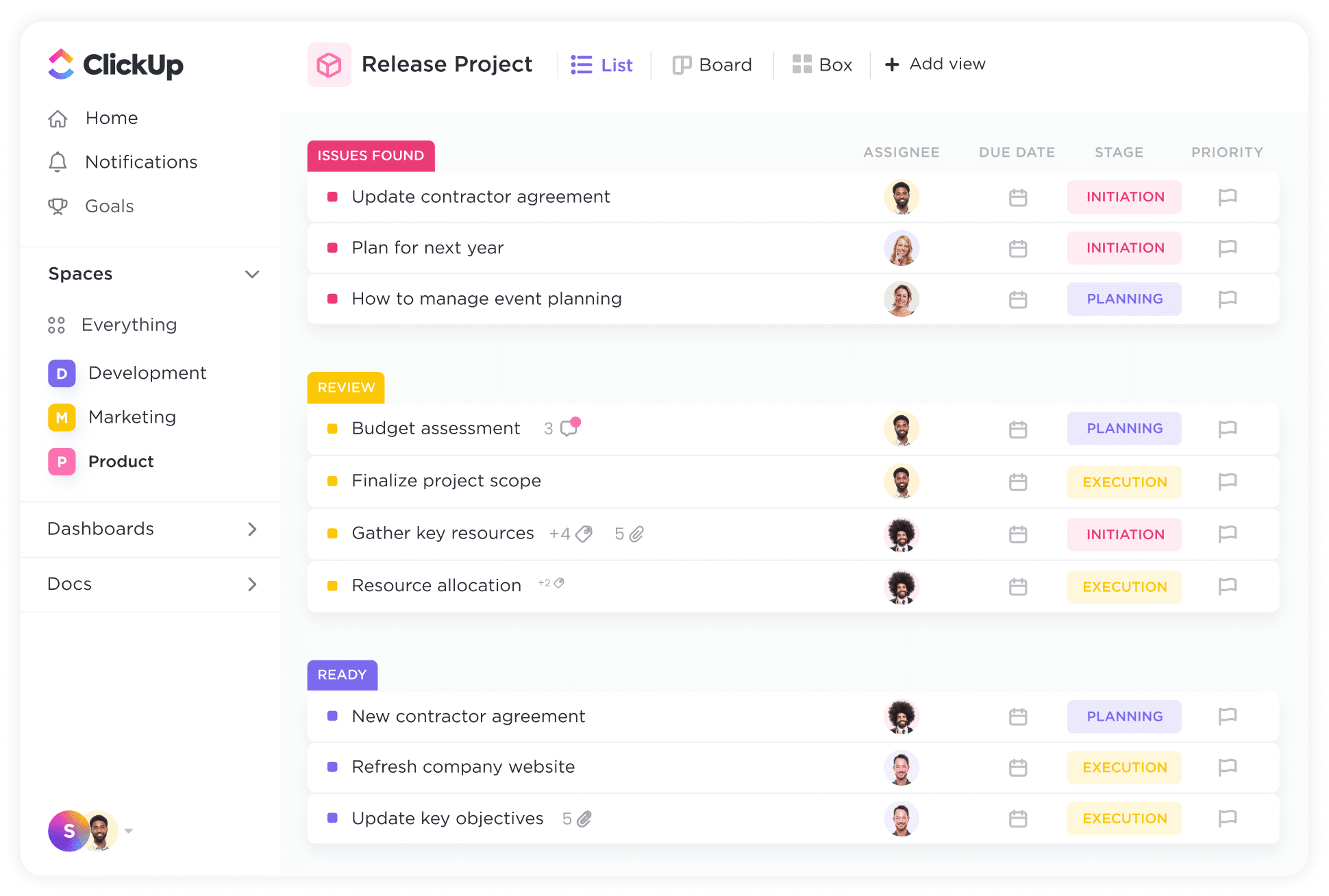
ClickUp's ambitious mission is "one app to replace them all"—consolidating project management, docs, wikis, goals, time tracking, and chat into a single platform. It targets teams frustrated by tool sprawl who want comprehensive functionality at aggressive pricing. The platform offers overwhelming customization through views, statuses, fields, and automations that adapt to any workflow. Teams choose ClickUp when they value feature density and cost efficiency over simplicity, accepting a steep learning curve for long-term flexibility. While power users love its depth, the complexity and rapid feature additions create stability concerns, making it polarizing among practitioners.
Pros
- Unbeatable value with free tier rivaling paid competitors
- Ridiculous depth of customization for every workflow
- Fast development cycle adds requested features quickly
Cons
- Overwhelming feature set creates analysis paralysis
- Buggy releases and performance issues frustrate users
- Steep learning curve requires significant training investment
Shortcut
Pragmatic agile tools for teams outgrowing Trello but not ready for Jira
By Find Your Martech Team 2026-02-16
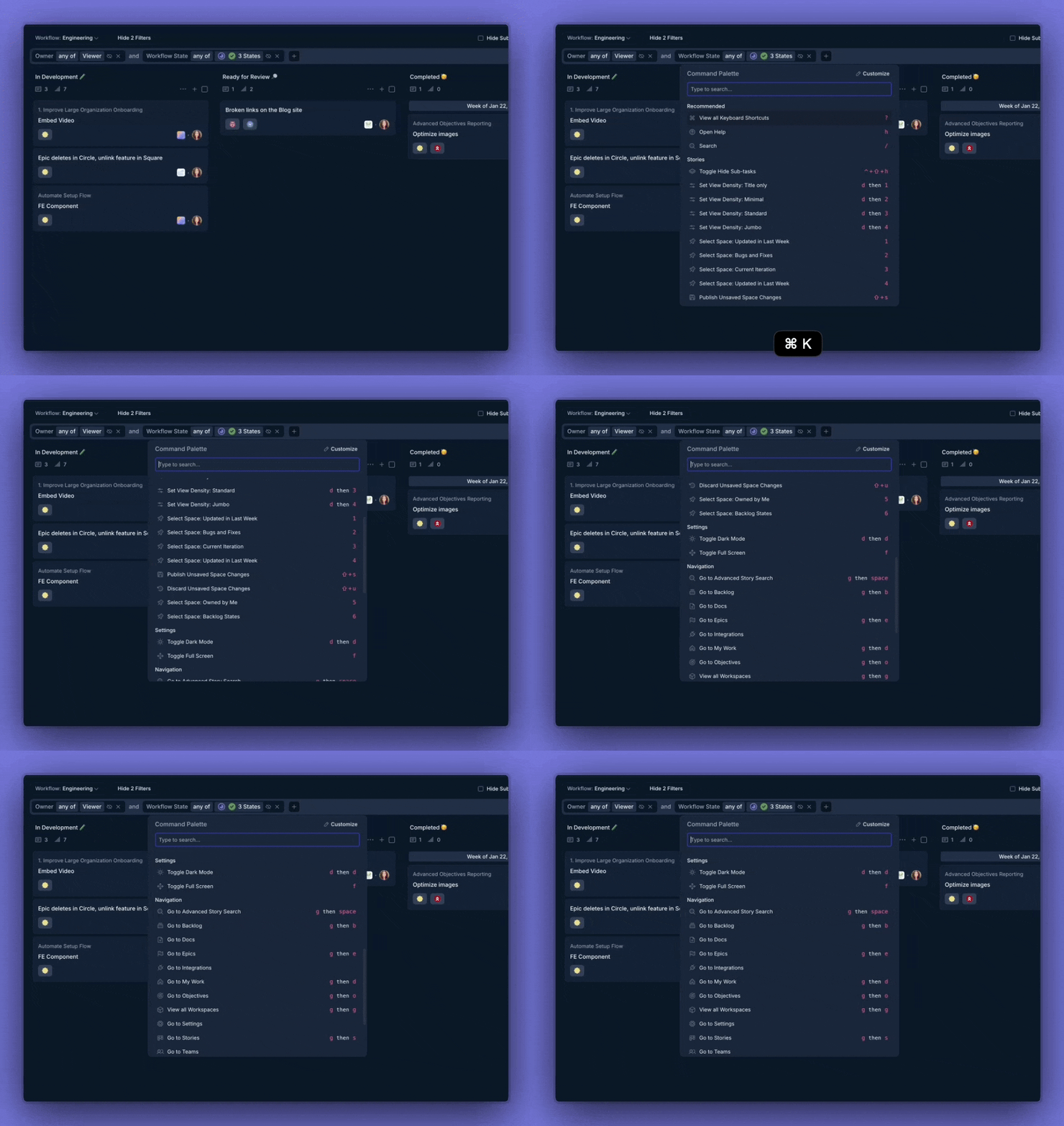
Shortcut (formerly Clubhouse) targets the middle ground between Jira's power and Linear's simplicity, offering agile-focused features in an approachable interface. Designed specifically for software teams, it provides sprint planning, story mapping, and release tracking without Jira's overwhelming configuration. Teams choose Shortcut when they need legitimate agile capabilities but want onboarding measured in hours, not weeks. The platform excels in small to mid-sized engineering organizations where structured development processes matter but heavyweight enterprise tools feel like overkill. Its focused scope and reasonable pricing make it the pragmatic choice for teams outgrowing Trello but not ready for Jira.
Pros
- Clean, intuitive interface that engineers adopt quickly
- Strong agile features without Jira-level complexity
- Excellent GitHub integration with automated linking
Cons
- Limited appeal for non-engineering teams
- Less customization than Jira for complex workflows
- Smaller integration ecosystem than established competitors
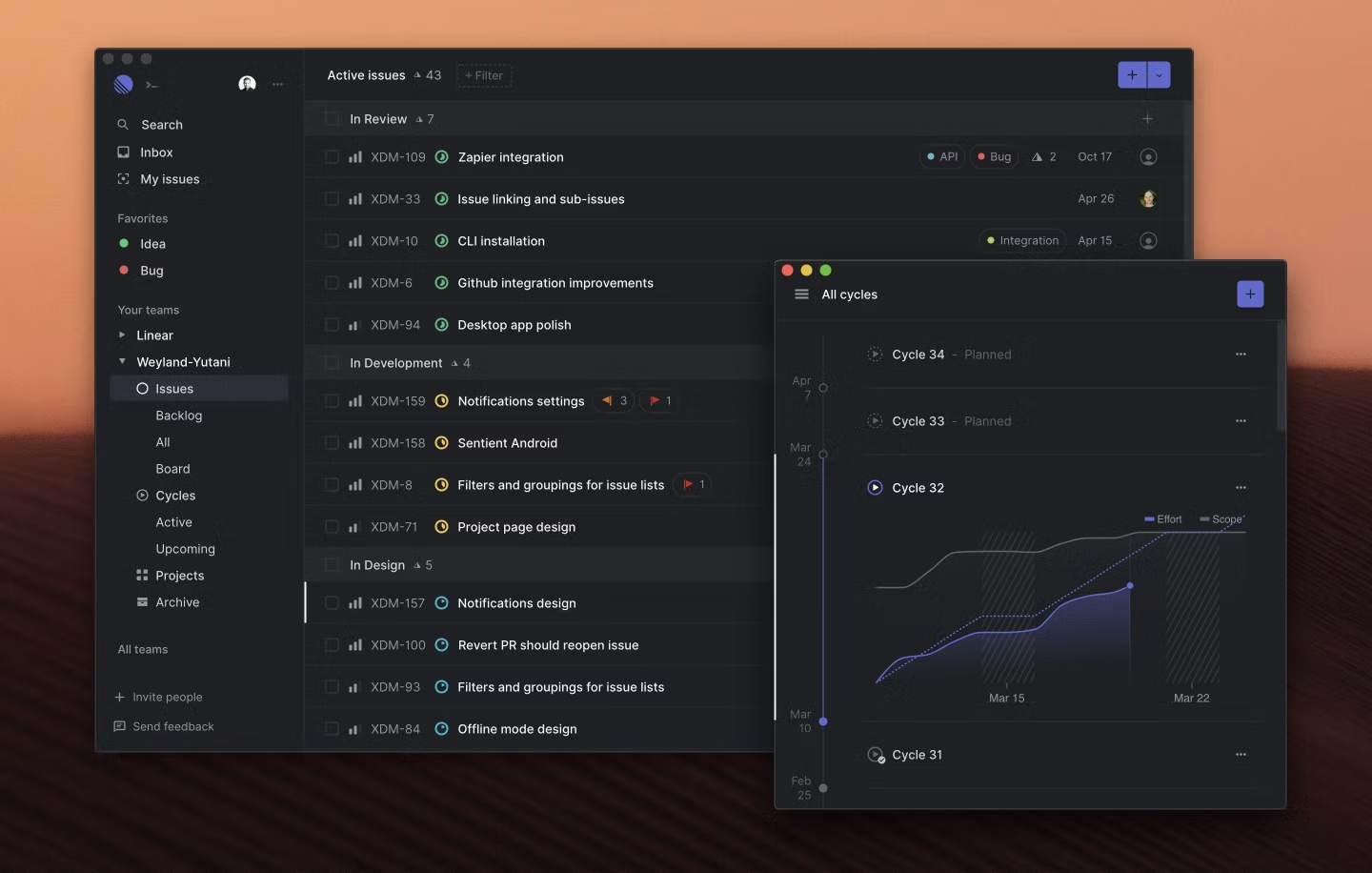
Linear
Blazingly fast issue tracking designed by and for modern product teams
By Find Your Martech Team 2026-02-16
Linear reimagines issue tracking for the modern product team, stripping away Jira's complexity in favor of speed, elegance, and opinionated workflows. Built by frustrated engineers, it optimizes for velocity through keyboard shortcuts, instant search, and minimal clicks. Teams choose Linear when they want purposeful constraints that enforce best practices rather than infinite customization. The platform excels in fast-moving product organizations where reducing friction matters more than supporting legacy processes. Its design-first approach and Git-native integrations make it the anti-Jira, though this opinionated stance limits flexibility for teams with diverse workflows.
Pros
- Fastest interface in category - feels instantaneous
- Opinionated workflow reduces decision fatigue and bikeshedding
- Beautiful design that developers actually enjoy using daily
Cons
- Limited customization frustrates teams wanting flexibility
- Lacks traditional PM features (time tracking, budgets, resources)
- Smaller ecosystem compared to Jira's 3000+ marketplace apps
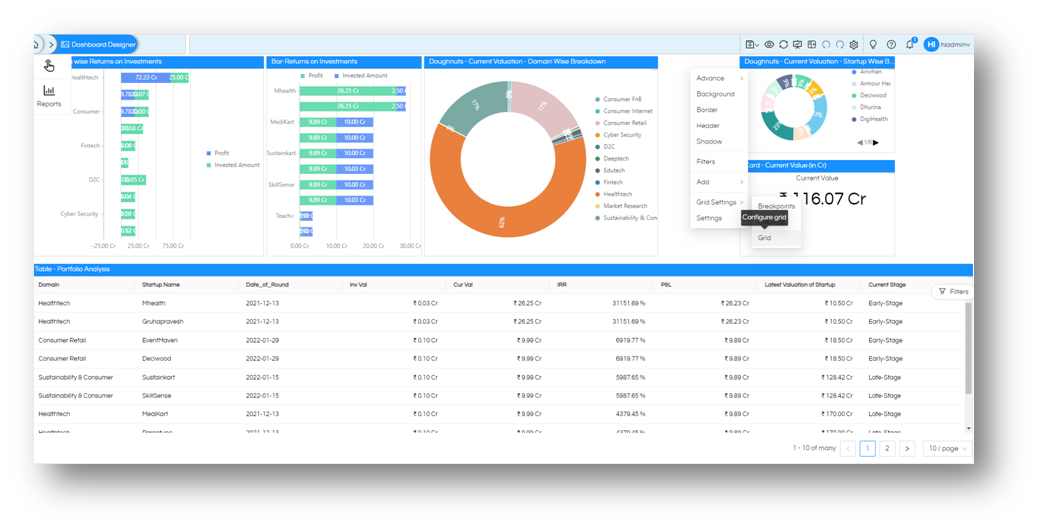
Height
AI-powered project collaboration that balances speed with flexibility
By Find Your Martech Team 2026-02-16
Height positions itself as the intelligent evolution of issue tracking, combining Linear's speed and elegance with AI-powered automation and greater flexibility. Unlike opinionated tools, Height adapts to team workflows while suggesting improvements through AI. Teams choose Height when they want modern UX without sacrificing customization, targeting the space between Linear's constraints and ClickUp's complexity. The platform's AI assistant handles routine work like task assignments and status updates, reducing manual overhead. As a newer entrant, Height attracts early adopters willing to bet on AI-enhanced workflows, though its smaller user base and limited track record create adoption risk.
Pros
- AI automation reduces repetitive manual task management
- Fast, modern interface rivals Linear while offering more flexibility
- Strong balance between opinionated workflows and customization
Cons
- Smaller user base and community compared to established tools
- Limited integrations ecosystem still maturing
- AI features sometimes miss context and make incorrect suggestions
Airtable
Collaborative databases made visual and accessible for non-technical teams
By Find Your Martech Team 2026-02-16
Airtable reimagines the database as a collaborative, visual tool that non-technical teams can actually use. Positioned between spreadsheets and proper databases, it offers relational data modeling through an approachable grid interface familiar to Excel users. Teams choose Airtable when they need structured data with relationships, lookups, and rollups but lack database expertise. The platform excels at content management, inventory tracking, and CRM use cases where flexibility trumps rigid project management. Its blocks, automations, and integrations transform static databases into dynamic workflows, though performance degrades with truly large datasets.
Pros
- Intuitive for spreadsheet users transitioning to databases
- Exceptional flexibility for custom workflows and data structures
- Beautiful interface makes complex data approachable
Cons
- Performance suffers with bases over 50,000 records
- Pricing ($20-$45/user) becomes expensive for large teams
- Not purpose-built for software development workflows
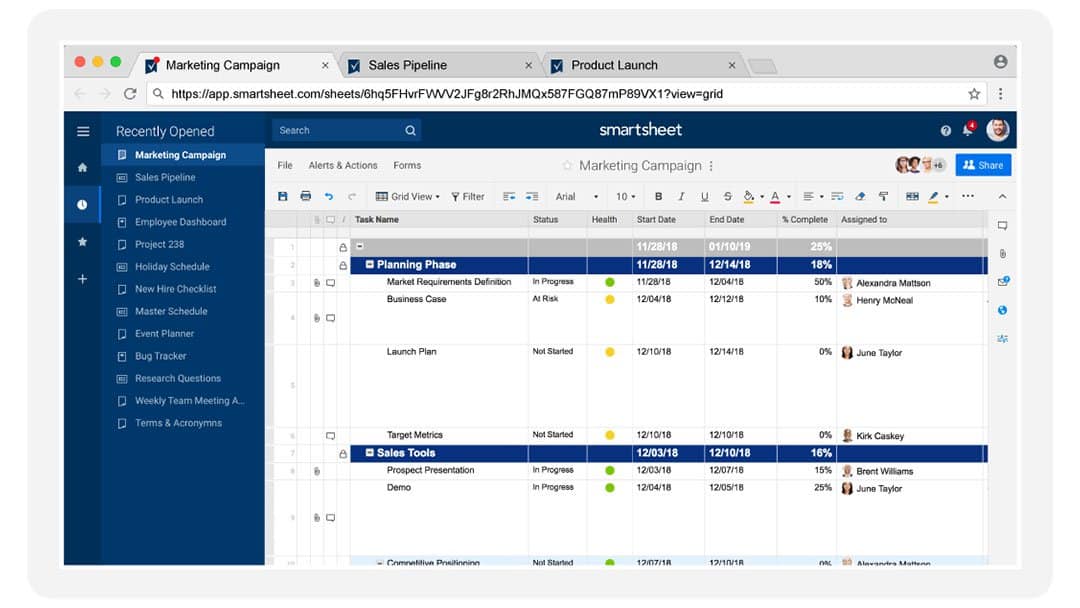
Smartsheet
Enterprise project management with spreadsheet familiarity
By Find Your Martech Team 2026-02-16
Smartsheet bridges the gap between Excel and enterprise project management, offering spreadsheet familiarity with collaborative PM capabilities. Targeting organizations where Excel is deeply embedded, it provides the grid interface teams know with Gantt charts, automations, and governance that Excel lacks. Teams choose Smartsheet when they need enterprise-grade project management without abandoning spreadsheet workflows. The platform excels in construction, manufacturing, and heavily regulated industries where detailed scheduling, resource management, and compliance matter. While powerful for traditional PM, its spreadsheet paradigm feels dated compared to modern visual tools.
Pros
- Excel-like familiarity reduces learning curve for spreadsheet users
- Enterprise-grade security and compliance certifications
- Powerful resource management rivals dedicated PPM tools
Cons
- Spreadsheet paradigm limits visual appeal and intuitiveness
- Expensive ($25-$39/user) with features locked behind tiers
- Not optimized for agile software development workflows
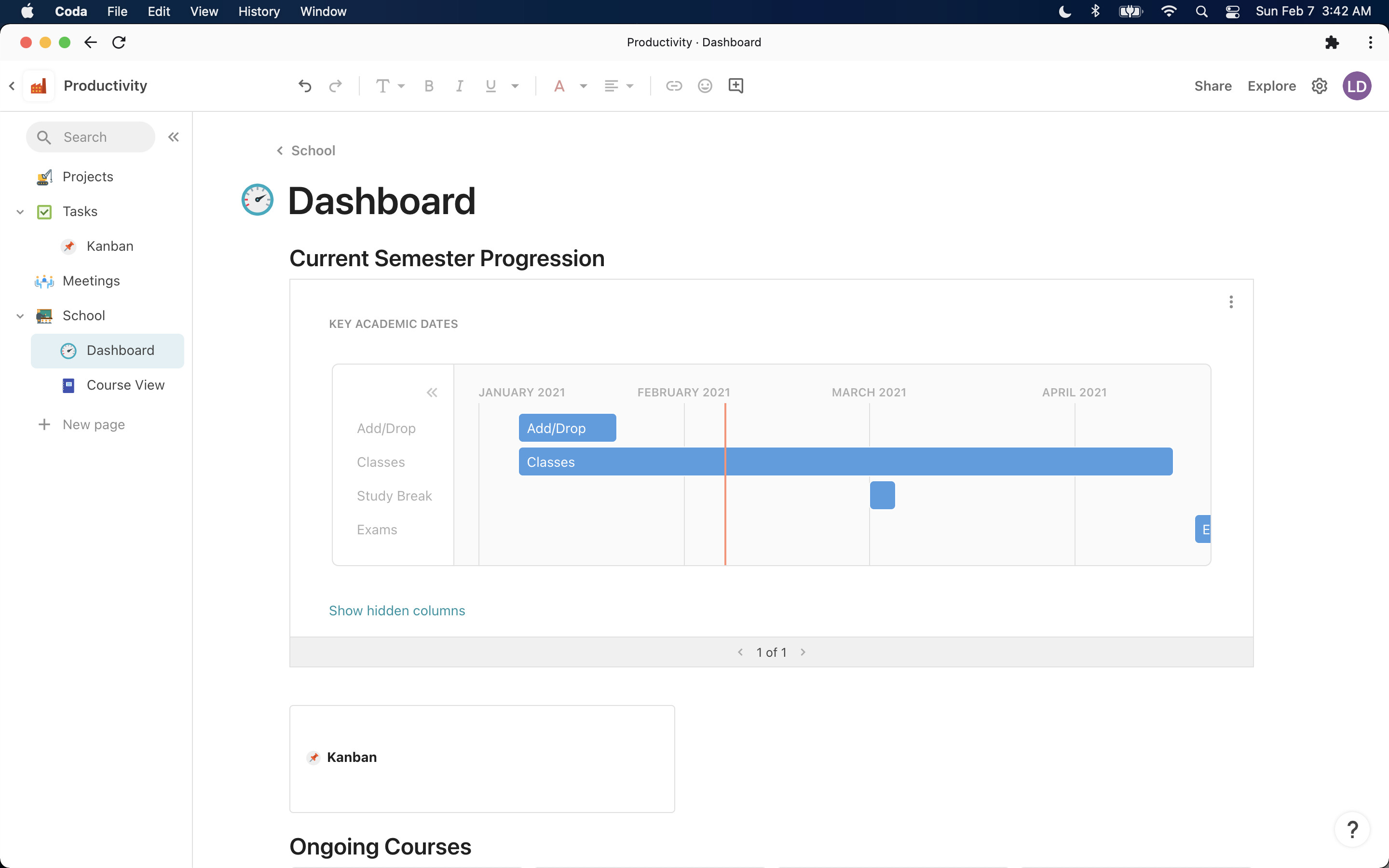
Coda
Docs that work like apps — for teams who think in formulas
By Find Your Martech Team 2026-02-16
Coda reimagines documents as interactive applications where text, databases, and automations coexist. Positioning itself beyond both Notion and traditional docs, Coda emphasizes powerful formulas, packs (integrations), and buttons that transform static pages into dynamic tools. Teams choose Coda when they want to build custom workflows without code, treating docs as a flexible canvas for apps. The platform excels for product managers and operations teams who think in formulas and want programmatic control over their workspace. While powerful for technical users, its formula-centric approach creates a steeper learning curve than visual alternatives.
Pros
- Unmatched formula power rivaling spreadsheets in doc format
- Flexible enough to build custom apps for unique workflows
- Strong for product managers writing specs with live data
Cons
- Steep learning curve for non-technical users and formula novices
- Performance degrades with large docs containing many tables
- Smaller community and fewer templates than Notion
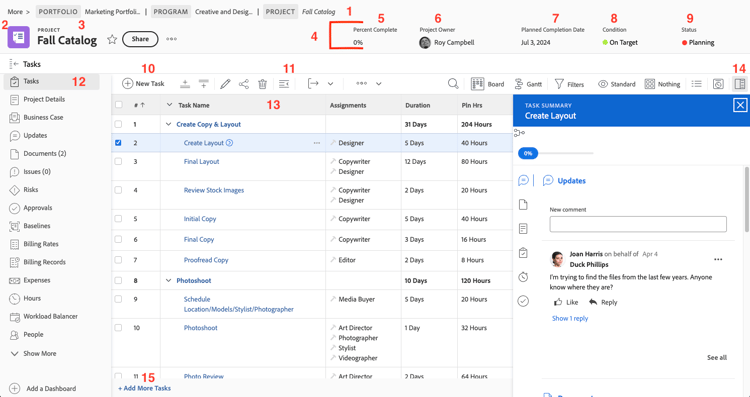
Workfront
Enterprise creative operations powered by Adobe integration
By Find Your Martech Team 2026-02-16
Workfront (acquired by Adobe in 2020) dominates enterprise marketing and creative operations, providing end-to-end work management for organizations where creative production is mission-critical. Unlike general PM tools, Workfront integrates deeply with Adobe Creative Cloud, offering seamless proofing, asset management, and creative workflows. Teams choose Workfront when they need to connect creative production, marketing operations, and digital asset management in one platform. The platform excels in large marketing organizations and agencies where managing creative at scale, tracking campaign budgets, and enforcing approval workflows justify enterprise investment. Its focus on creative operations makes it specialized and expensive for non-creative use cases.
Pros
- Best-in-class Adobe integration streamlines creative workflows
- Exceptional proofing and approval capabilities for creative assets
- Strong resource management for marketing capacity planning
Cons
- Extremely expensive with enterprise-only pricing model
- Complex implementation requires consultants and lengthy onboarding
- Overkill for small teams and non-creative workflows
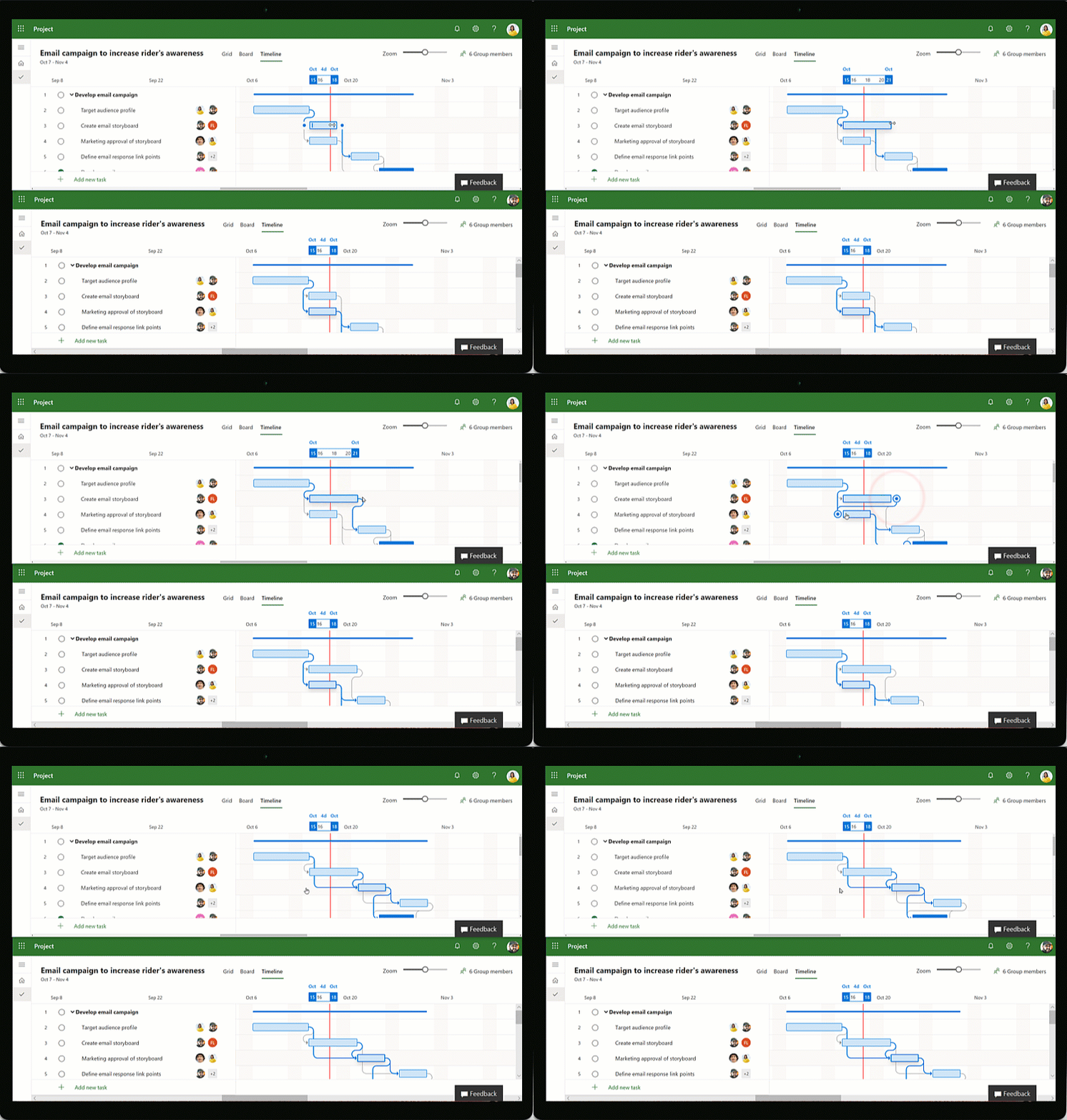
Microsoft Project
The enterprise standard for traditional project scheduling and control
By Find Your Martech Team 2026-02-16
Microsoft Project remains the enterprise standard for traditional project management, offering unmatched depth in scheduling, resource management, and earned value analysis. Built for certified project managers running complex, long-duration initiatives, it provides the rigorous planning and control required in construction, manufacturing, and government contracting. Teams choose Project when they need critical path analysis, resource leveling, and baseline variance tracking that satisfy PMO and regulatory requirements. The platform excels in waterfall environments where detailed upfront planning matters more than agile iteration. While powerful for traditional PM, its complexity and desktop-centric design make it overkill for modern knowledge work.
Pros
- Industry-leading scheduling and critical path analysis
- Unmatched resource management and capacity planning
- Deep integration with Microsoft ecosystem and Power BI
Cons
- Steep learning curve requires formal project management training
- Expensive ($30-$55/user) with desktop version adding costs
- Dated interface feels archaic compared to modern tools
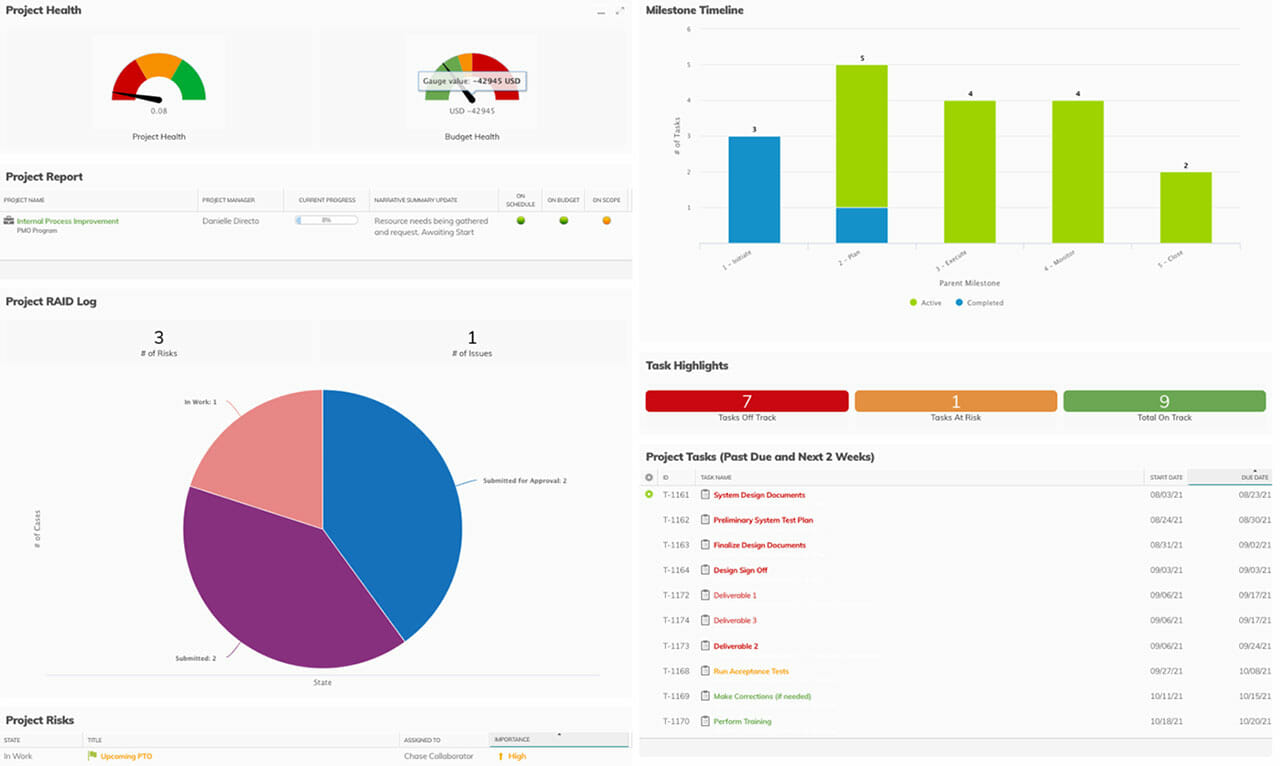
Planview
Enterprise portfolio management for executives and PMOs
By Find Your Martech Team 2026-02-16
Planview operates at the enterprise portfolio layer, helping executives and PMOs manage hundreds of projects, thousands of resources, and million-dollar budgets. Unlike team collaboration tools, Planview focuses on strategic planning, portfolio optimization, and capacity management across entire organizations. Companies choose Planview when they need to answer executive questions like "What initiatives should we fund?" and "Do we have capacity to deliver?" The platform excels in large IT organizations, manufacturing, and government agencies where portfolio governance, resource optimization, and financial tracking justify significant investment. Its enterprise focus makes it irrelevant for team-level project execution.
Pros
- Unmatched depth for enterprise portfolio and resource management
- Strategic planning capabilities connect executive vision to execution
- Powerful "what-if" scenario planning for portfolio optimization
Cons
- Extremely expensive with enterprise-only pricing (often $100K+ annually)
- Complex implementation requiring consultants and 6+ months
- Not designed for team-level collaboration or task management
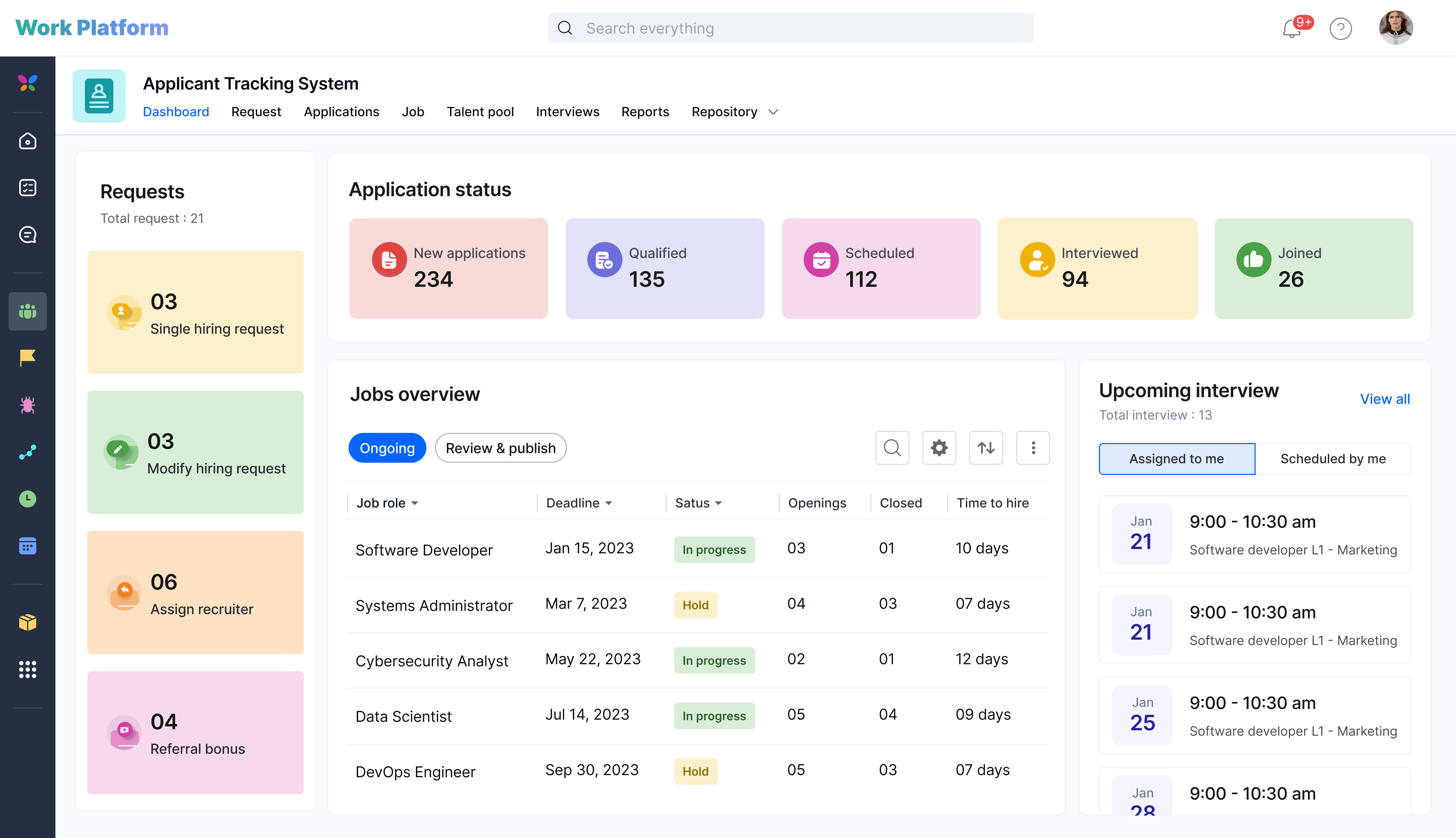
Kissflow
Low-code work platform for business teams building custom apps
By Find Your Martech Team 2026-02-16
Kissflow positions itself as a low-code platform where business users build custom workflow apps, process automation, and project management tools without coding. Targeting organizations tired of IT backlogs, it democratizes app building through visual designers and pre-built templates. Teams choose Kissflow when they need customization but lack technical resources, particularly in mid-market companies and emerging markets where affordability matters. The platform excels at digitizing manual processes—approvals, forms, routing—that don't warrant expensive enterprise software. While flexibility appeals to citizen developers, the low-code approach creates apps that lack polish and performance of purpose-built tools.
Pros
- Affordable pricing ($15-$20/user) competitive for mid-market
- Visual process designer empowers non-technical users
- Strong in emerging markets with localized support
Cons
- Apps built feel generic and lack sophistication of specialized tools
- Performance issues with complex workflows and large datasets
- Limited integration ecosystem compared to established platforms
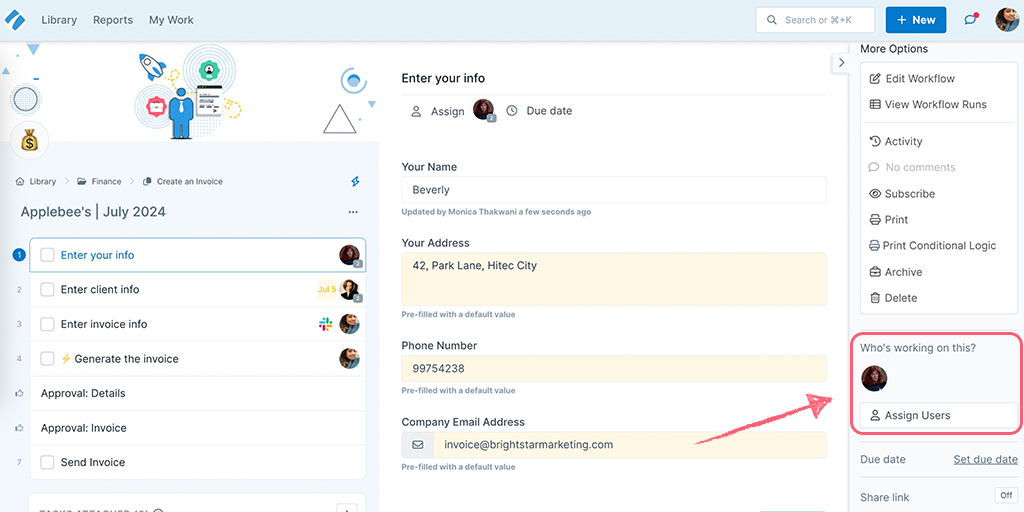
Process Street
Recurring workflows and SOPs turned into executable checklists
By Find Your Martech Team 2026-02-16
Process Street specializes in recurring workflows and standard operating procedures, transforming static documentation into executable checklists with automation. Unlike general PM tools, it focuses on process standardization where consistency and compliance matter more than flexibility. Teams choose Process Street when they need to ensure critical workflows—onboarding, audits, implementations—are completed correctly every time. The platform excels in operations, customer success, and compliance roles where reducing variability and maintaining audit trails justify the investment. Its process-centric approach makes it powerful for repeatable work but limiting for ad-hoc project management.
Pros
- Excellent for standardizing recurring processes and SOPs
- Conditional logic creates dynamic workflows based on responses
- Strong audit trail and compliance documentation capabilities
Cons
- Limited flexibility frustrates teams with variable workflows
- Pricing ($25-$50/user) expensive for what is essentially checklists
- Not suitable for general project management or ad-hoc work
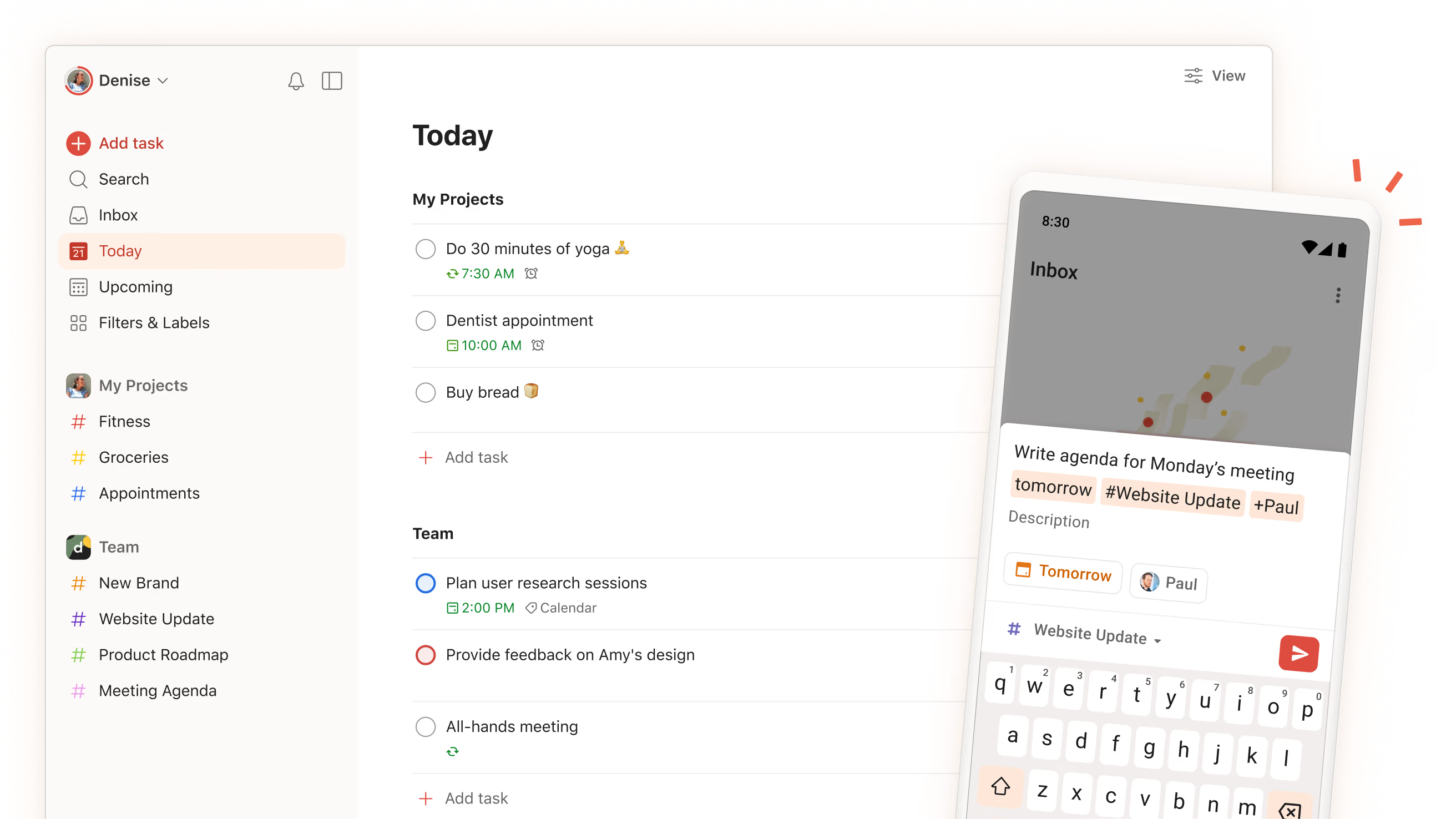
Todoist
Fast, focused personal task management that stays out of your way
By Find Your Martech Team 2026-02-16
Todoist excels as a personal task manager that stays out of your way, focusing on fast capture, natural language input, and ubiquitous access. Unlike project management platforms, it targets individuals and tiny teams who need reliable task lists, not collaboration features. Users choose Todoist when they want their task manager to be a trusted second brain—fast, simple, and always accessible across devices. The platform shines for GTD practitioners, knowledge workers, and freelancers who live in their task lists. While team features exist, Todoist's strength is personal productivity; teams outgrow it quickly when they need real collaboration and project management.
Pros
- Blazingly fast task capture with natural language processing
- Reliable cross-platform sync keeps tasks accessible everywhere
- Clean, distraction-free interface focuses on getting things done
Cons
- Minimal collaboration features make it unsuitable for real teams
- No time tracking, dependencies, or traditional PM features
- Team plan features lag competitors significantly
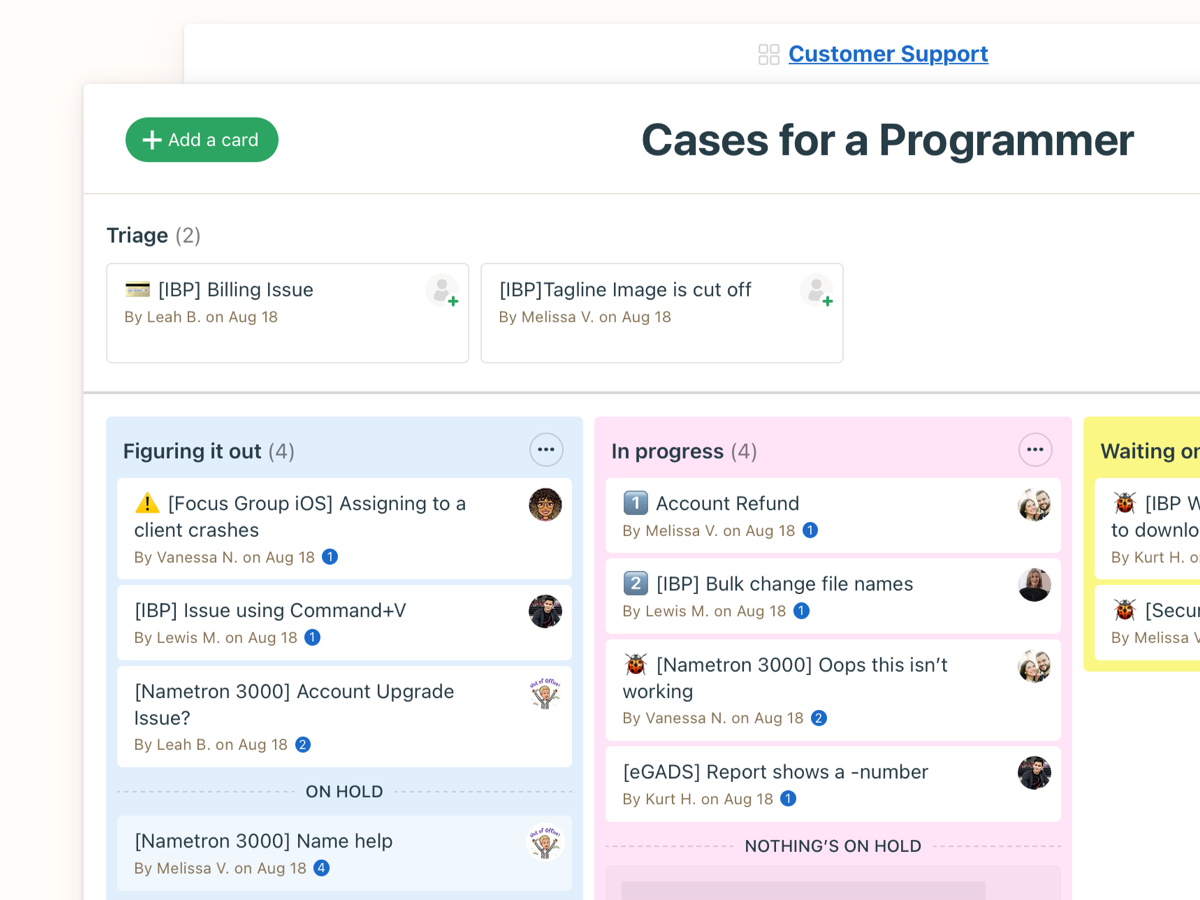
Basecamp
Opinionated simplicity and calm for teams tired of feature bloat
By Find Your Martech Team 2026-02-16
Basecamp champions simplicity and calm in project management, deliberately avoiding the feature arms race. Created by 37signals as an opinionated alternative to complex PM tools, it provides just enough structure—message boards, to-dos, schedules, docs—without overwhelming users. Teams choose Basecamp when they value communication and collaboration over sophisticated planning, making it ideal for agencies and small teams managing straightforward projects. The flat-rate pricing ($299/month unlimited users) appeals to growing teams tired of per-seat costs. While its simplicity reduces stress, the lack of advanced features and integrations frustrates teams with complex workflows.
Pros
- Flat pricing ($299/month unlimited users) economical for larger teams
- Radical simplicity reduces overwhelm and decision fatigue
- Excellent for async communication and remote team coordination
Cons
- Lacks critical PM features: dependencies, time tracking, resource management
- No automation, custom fields, or workflow customization
- Interface feels dated compared to modern competitors
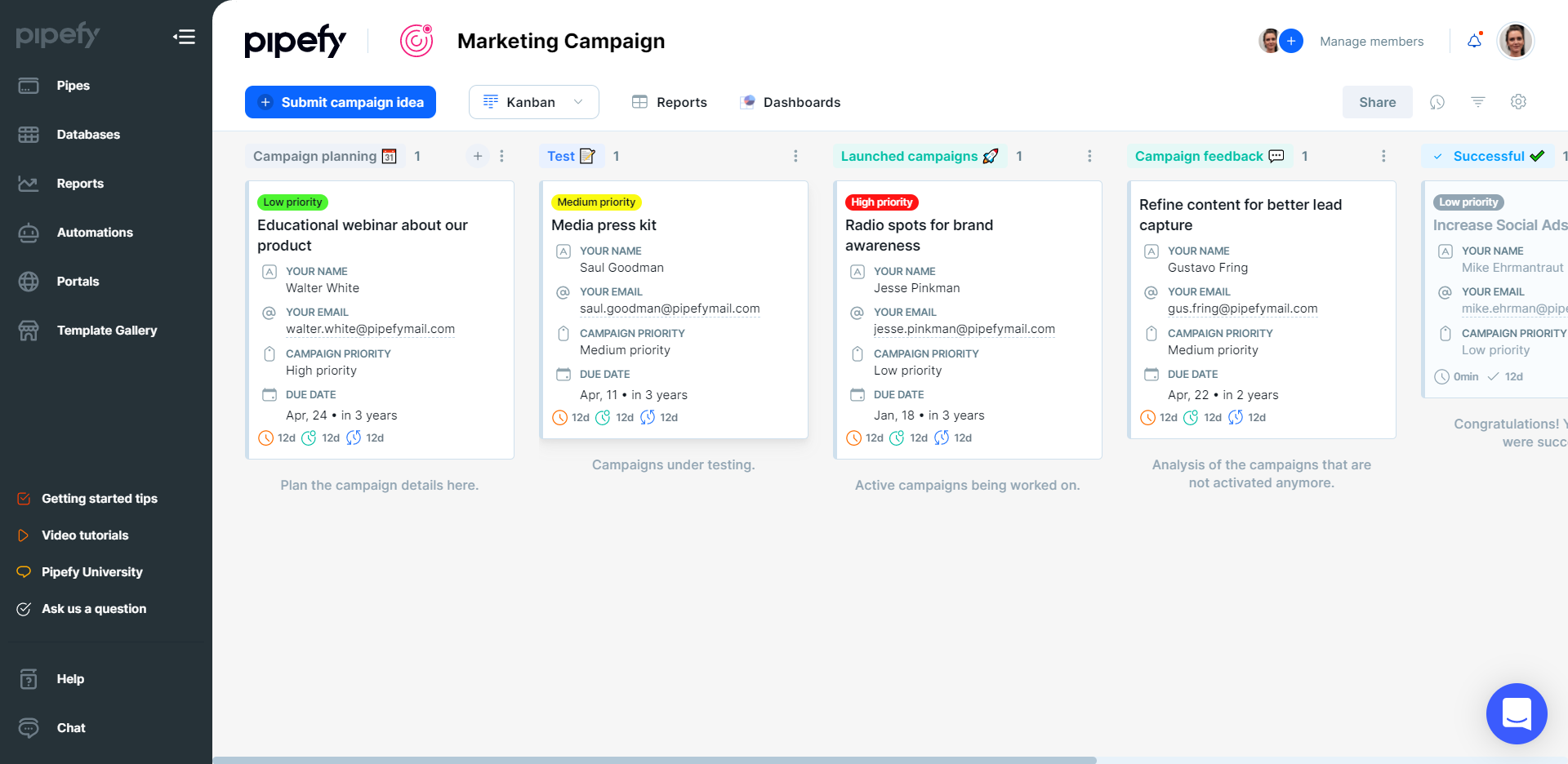
Pipefy
Structured process management using visual pipes and automation
By Find Your Martech Team 2026-02-16
Pipefy specializes in structured, repeatable processes using a "pipe" metaphor where work flows through defined stages with automation and controls. Unlike flexible PM tools, Pipefy enforces process discipline through templates, required fields, and approval gates. Teams choose Pipefy when they need to transform chaotic, email-based workflows into governed processes with visibility and compliance. The platform excels in operational departments—procurement, HR, IT service management—where standardization reduces errors and speeds throughput. Its Kanban-style pipes make processes visual while automation handles routing and notifications, though this structure limits flexibility for ad-hoc work.
Pros
- Intuitive pipe visualization makes process flows immediately clear
- Strong no-code automation reduces manual handoffs and routing
- Excellent for service desk and request management workflows
Cons
- Pipe structure feels restrictive for non-linear workflows
- Pricing ($20-$30/user) becomes expensive for large teams
- Limited flexibility frustrates teams with variable processes
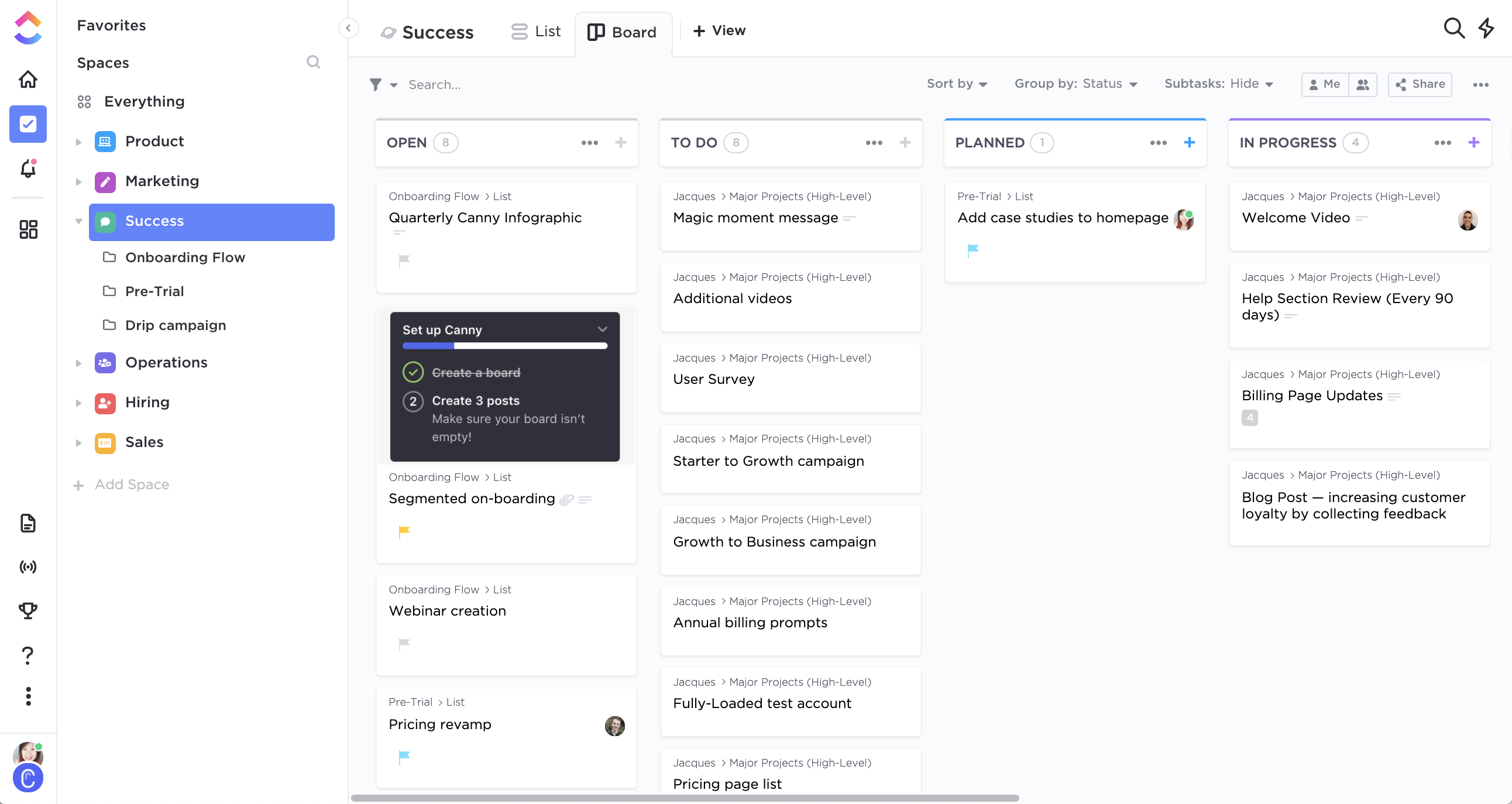
Canny
Feature voting and public roadmap for product teams
By Find Your Martech Team 2026-02-16
Canny centralizes feature requests and roadmap communication, transforming scattered feedback into prioritized product decisions. Unlike survey tools collecting one-time input, Canny builds ongoing dialogue where users vote, discuss, and track feature progress.
Pros
- Simple, focused interface reduces friction for user feedback
- Voting clearly prioritizes what customers actually want
- Roadmap transparency builds trust and sets expectations
- Automatic notifications close the loop with requesters
- Strong integrations sync feedback to dev tools
Cons
- Public boards expose roadmap and strategy to competitors
- Limited customization compared to full product management tools
- No private feedback channels for sensitive input
- Voting can create pressure to build popular but wrong features
- Pricing ($50-$200/month) adds up for multiple products

Typeform
Beautiful conversational forms that boost completion rates
By Find Your Martech Team 2026-02-16
Typeform revolutionized online forms by making them conversational, presenting one question at a time with smooth animations and thoughtful UX. Unlike utilitarian form builders, Typeform prioritizes respondent experience, transforming boring surveys into engaging interactions. Teams choose Typeform when form aesthetics and completion rates matter more than builder speed or advanced features.
Pros
- Exceptional respondent experience increases completion rates significantly
- Gorgeous design makes forms feel premium and brand-aligned
- Intuitive builder balances ease of use with customization
- Strong analytics show completion rates and drop-off points
- Mobile-optimized forms work beautifully on all devices
Cons
- Expensive compared to alternatives ($25-$83/user monthly)
- Response limits on lower tiers restrictive for growing businesses
- Logic capabilities limited compared to enterprise survey tools
- One-at-a-time format can frustrate respondents wanting speed
- Advanced features like calculations require premium tiers
Useberry
UX testing platform for prototype validation
By Find Your Martech Team 2026-02-16
Useberry provides purpose-built UX testing tools for validating prototypes and measuring usability with real users. Unlike general survey tools, Useberry focuses on design validation with task-based testing and usability metrics.
Pros
- Purpose-built for UX research methodologies
- Integrates with Figma, Sketch, Adobe XD for prototype testing
- Clear metrics (task success rate, time, clicks) validate designs
- Affordable compared to enterprise UX research platforms
- Professional reports help communicate findings to stakeholders
Cons
- Narrow focus limits use beyond UX testing
- Participant recruitment costs extra and panels are limited
- Lacks survey features and broader feedback capabilities
- Smaller user base means fewer community resources
- Not ideal for testing live websites vs. prototypes
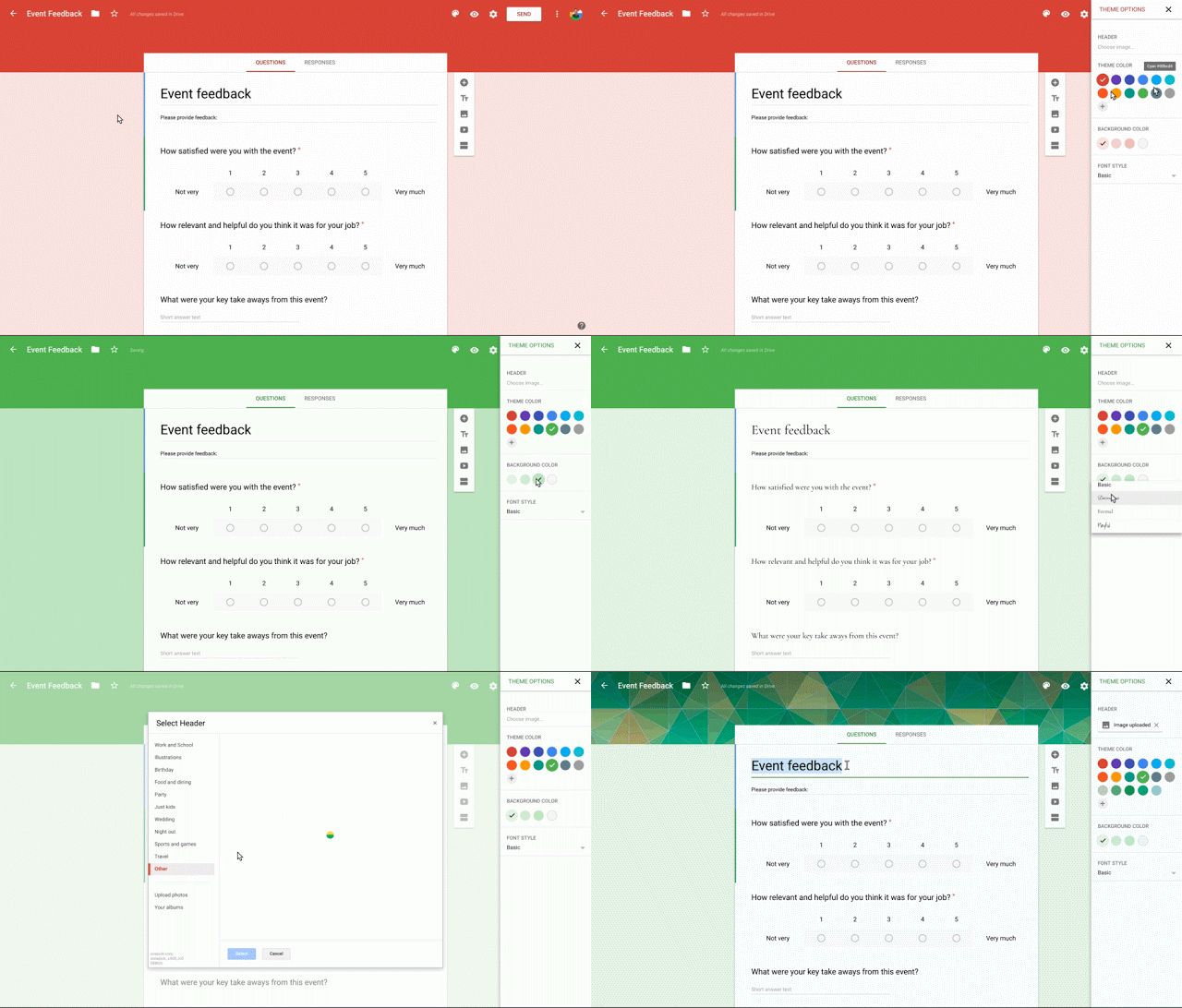
Google Forms
Free, simple forms with Google Workspace integration
By Find Your Martech Team 2026-02-16
Google Forms provides essential survey functionality at zero cost, making it the default choice for budget-conscious teams and individuals. Unlike premium form builders emphasizing design or features, Google Forms focuses on getting the job done without friction or fees.
Pros
- Completely free with unlimited forms and responses
- Seamless integration with Google Sheets for analysis
- Zero learning curve for Google Workspace users
- Reliable, fast, and works everywhere
- Real-time collaboration makes team form building easy
Cons
- Basic design options make forms look generic
- Limited logic capabilities frustrate complex surveys
- No payment processing or advanced integrations
- Analytics are basic compared to dedicated survey tools
- Lacks professional features for serious market research
Hotjar
Behavior analytics with heatmaps, recordings, and feedback
By Find Your Martech Team 2026-02-16
Hotjar bridges quantitative and qualitative analytics, showing not just what users do but why through recordings, heatmaps, and feedback. Unlike pure analytics tools, Hotjar emphasizes human behavior—watching sessions, seeing rage clicks, and hearing user voices.
Pros
- Session recordings provide "aha moments" that raw data cannot
- Intuitive interface makes behavior analytics accessible to everyone
- Combines multiple research methods in one affordable platform
- Strong filtering lets you segment recordings by user attributes
- GDPR-compliant with privacy controls and data masking
Cons
- Session recording limits based on pageviews can be restrictive
- Privacy concerns require careful implementation and consent
- Survey features basic compared to dedicated survey tools
- Performance impact on high-traffic sites requires monitoring
- Lacks advanced product analytics and event tracking depth
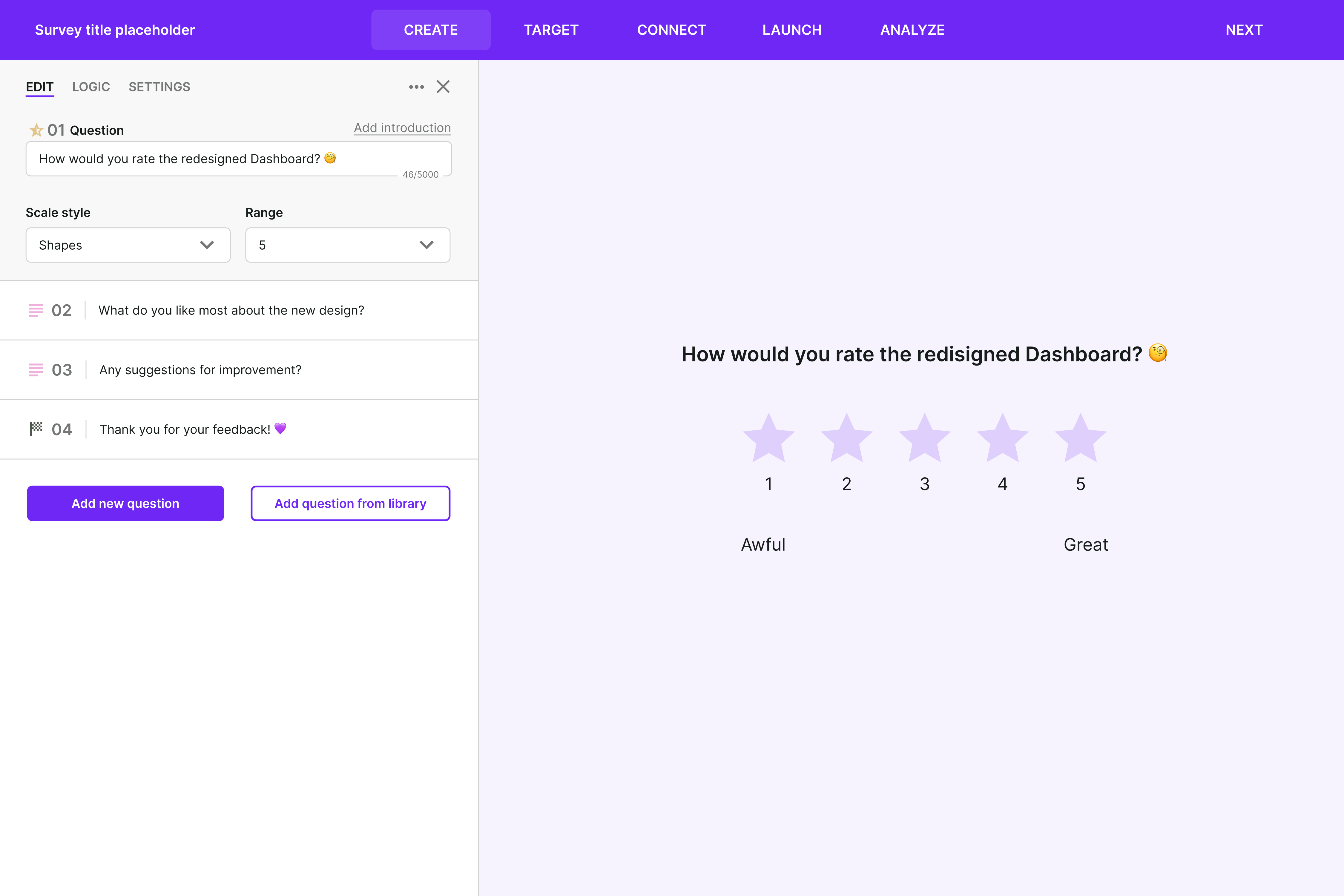
Survicate
Multi-channel surveys with behavioral targeting
By Find Your Martech Team 2026-02-16
Survicate specializes in targeted, contextual surveys across web, mobile, email, and link channels, enabling continuous feedback loops. Unlike one-off survey tools, Survicate emphasizes triggering the right survey to the right user at the right moment based on behavior.
Pros
- Excellent targeting delivers surveys at optimal moments
- Multi-channel coverage enables comprehensive feedback programs
- Strong integrations connect feedback to customer data
- Purpose-built for SaaS and product teams workflows
- Professional survey UX does not feel intrusive to users
Cons
- Pricing starts at $89/month, expensive for small teams
- Learning curve steeper than simple survey builders
- Limited behavior analytics compared to Hotjar or FullStory
- Survey design customization not as extensive as Typeform
- Response limits on lower tiers restrictive for growing companies
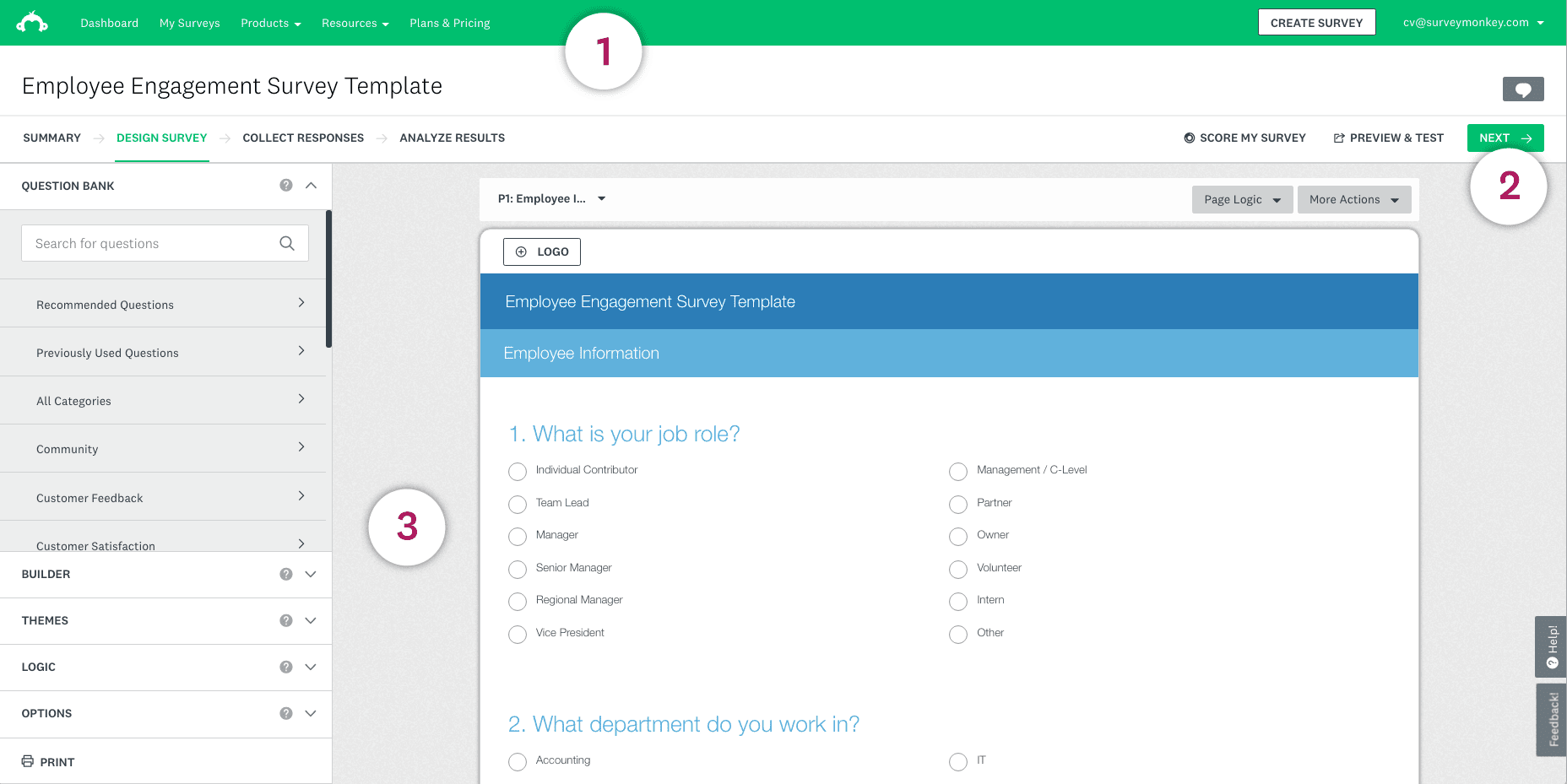
SurveyMonkey
Enterprise-grade survey platform with deep analytics
By Find Your Martech Team 2026-02-16
SurveyMonkey established the online survey category and remains the enterprise standard for organizations requiring methodological rigor and statistical analysis. Unlike simple form builders, SurveyMonkey emphasizes survey science—question banks, bias reduction, sampling, and advanced analytics.
Pros
- Unmatched depth for professional survey methodology
- Powerful analytics rival dedicated research platforms
- Strong enterprise features and compliance certifications
- Huge template library covers nearly every use case
- Audience panel access simplifies respondent recruitment
Cons
- Interface feels dated compared to modern form builders
- Pricing becomes expensive quickly ($25-$75+ per user)
- Steep learning curve for advanced features
- Free tier severely limited (10 questions, 40 responses)
- Mobile app experience lags web interface
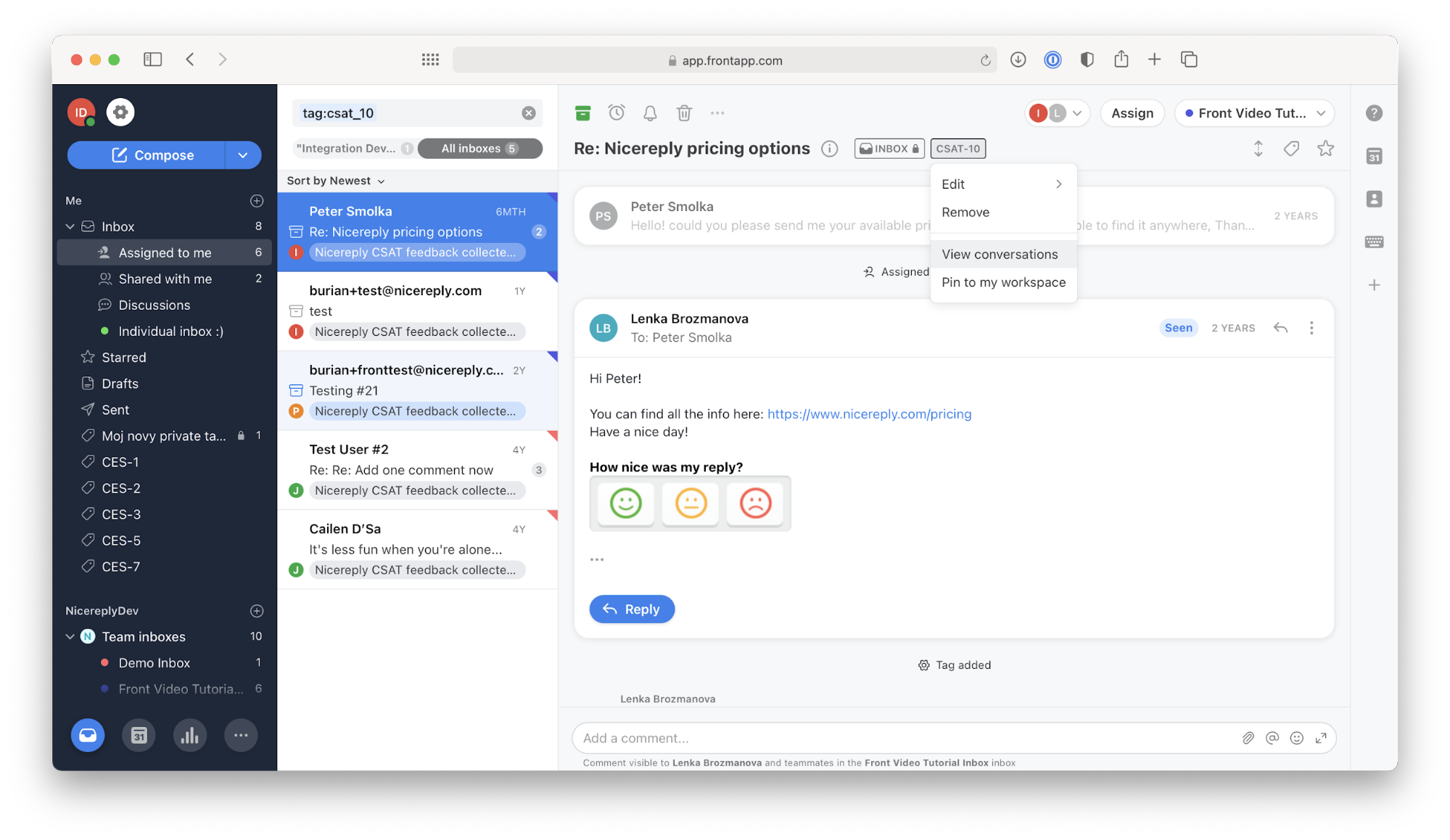
Nicereply
Customer service feedback with agent scorecards
By Find Your Martech Team 2026-02-16
Nicereply specializes in customer service feedback, automatically surveying customers after support interactions to measure agent and team performance. Unlike general survey tools, Nicereply integrates deeply with help desks.
Pros
- Purpose-built for support teams specific needs
- Seamless help desk integrations automate survey sending
- Agent-level insights enable targeted coaching
- Signature surveys make feedback collection effortless
- Industry benchmarking provides context for scores
Cons
- Narrow focus limits use beyond customer support
- Requires help desk integration for full value
- Limited survey customization vs. general tools
- Basic analytics compared to enterprise platforms
- Pricing ($59-$399/month) adds to help desk costs
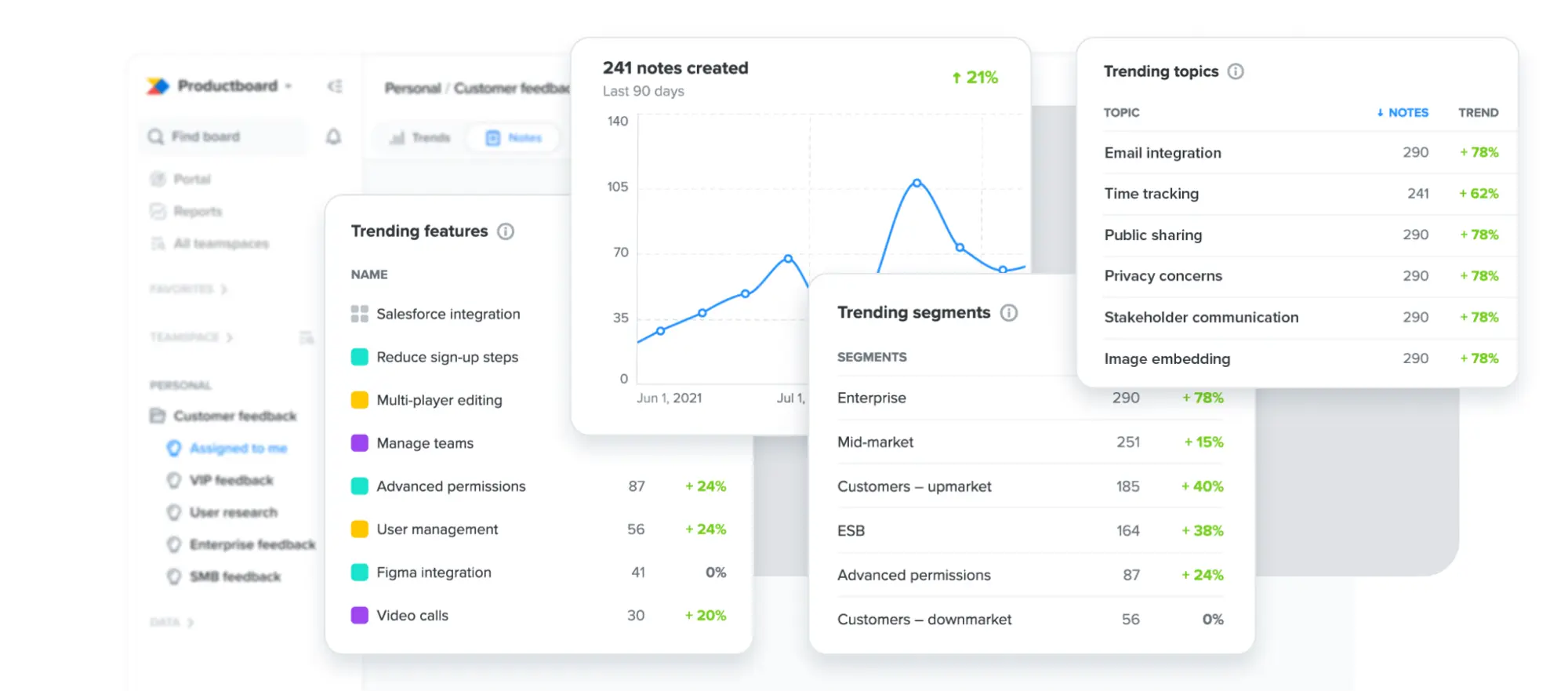
Productboard
Enterprise product management with feedback centralization
By Find Your Martech Team 2026-02-16
Productboard is enterprise product management infrastructure, connecting customer feedback, roadmapping, and prioritization in one system. Unlike simple feedback tools, Productboard emphasizes understanding customer needs at scale.
Pros
- Unmatched depth for enterprise product management workflows
- Excellent at connecting customer insights to roadmap decisions
- Flexible roadmap views serve different stakeholder needs
- Strong research repository capabilities
- Portal enables customer feedback without separate tools
Cons
- Expensive ($20-$60+ per user) for small teams and startups
- Complex setup and learning curve require dedicated onboarding
- Feature breadth can feel overwhelming for simple use cases
- Requires organizational discipline to maintain properly
- Overkill if you just need basic feature request management

Sleekplan
Affordable feedback widget for startups
By Find Your Martech Team 2026-02-16
Sleekplan offers Canny-like functionality at startup-friendly pricing, emphasizing embedded widgets over standalone portals. Unlike enterprise feedback platforms, Sleekplan targets bootstrapped founders and small teams wanting user feedback without complexity or cost.
Pros
- Extremely affordable ($15-$49/month) for startups
- Embedded widget keeps users in-product for feedback
- Simple setup gets you running in minutes
- Clean, modern interface users understand immediately
- Good value for basic feature request management
Cons
- Limited features compared to Canny or Productboard
- Smaller integration ecosystem
- Basic analytics and reporting capabilities
- May lack enterprise features as you scale
- Fewer customization options for branding and workflows
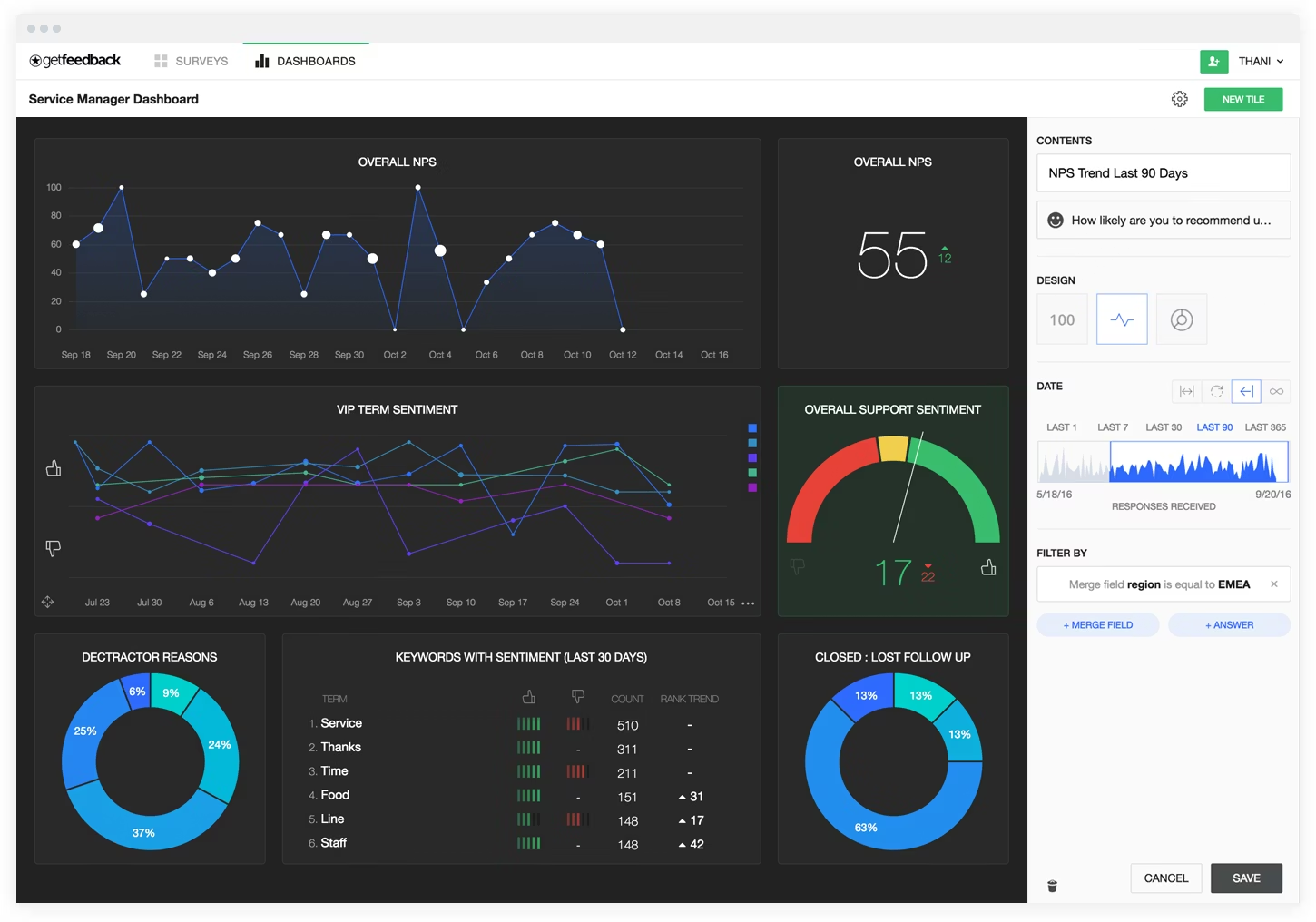
GetFeedback
Salesforce-native customer experience surveys
By Find Your Martech Team 2026-02-16
GetFeedback (by SurveyMonkey) specializes in Salesforce-native customer experience programs, making feedback collection and action seamless within CRM workflows. Unlike standalone survey tools, GetFeedback embeds directly in Salesforce.
Pros
- Seamless Salesforce integration eliminates manual data entry
- Automated triggering based on CRM events saves time
- Feedback data immediately available to sales and CS teams
- Mobile-first design ensures high response rates
- Purpose-built for Salesforce users workflows
Cons
- Requires Salesforce, limiting applicability outside ecosystem
- Expensive when combined with Salesforce costs
- Less flexible than standalone survey platforms
- Survey design capabilities lag Typeform or Qualtrics
- Analytics dependent on Salesforce reporting limitations

Delighted
Simple automated NPS and CSAT feedback
By Find Your Martech Team 2026-02-16
Delighted focuses exclusively on simple, automated feedback collection for NPS, CSAT, and CES metrics. Unlike comprehensive survey platforms, Delighted emphasizes ease and speed—getting feedback programs running in minutes with minimal configuration.
Pros
- Extremely fast setup gets feedback programs live in minutes
- High response rates from simple, focused surveys
- Autopilot automation requires minimal ongoing management
- Clean, intuitive interface anyone can understand
- Strong trend analysis shows satisfaction over time
Cons
- Limited to simple metrics (NPS, CSAT, CES)
- Expensive for volume ($224-$999/month based on responses)
- No complex survey building or advanced logic
- Basic analytics compared to enterprise platforms
- Lacks behavior analytics or qualitative research tools
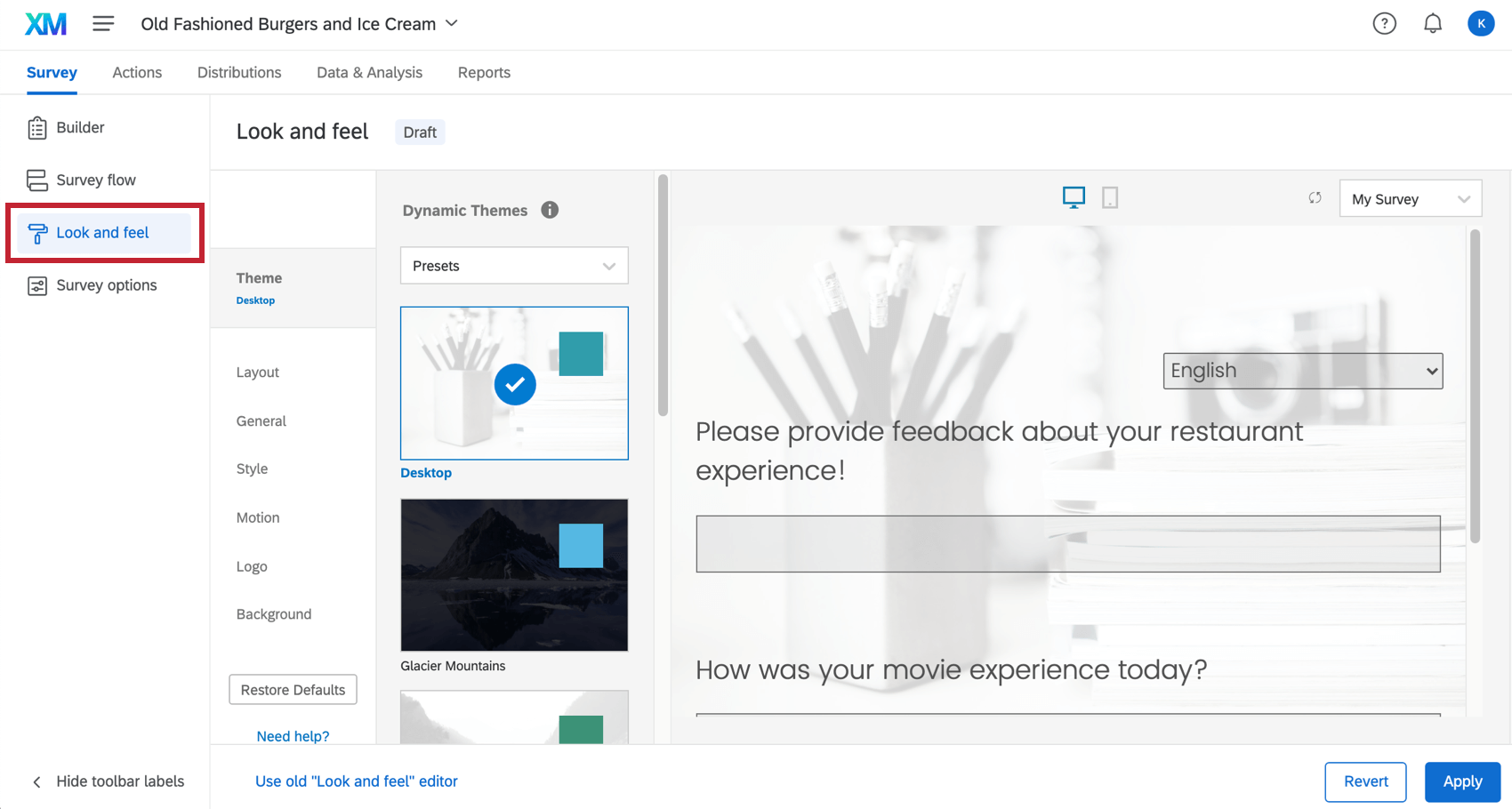
Qualtrics
Enterprise experience management for Fortune 500
By Find Your Martech Team 2026-02-16
Qualtrics dominates enterprise experience management, providing comprehensive survey, analytics, and action planning for customer, employee, product, and brand experiences. Unlike accessible survey tools, Qualtrics targets Fortune 500 companies requiring sophisticated research methodologies.
Pros
- Unmatched sophistication for enterprise XM programs
- Powerful analytics including predictive intelligence
- Comprehensive platform covers all experience types
- Enterprise-grade security and compliance certifications
- Dedicated support and services for implementation
Cons
- Extremely expensive (often $20K-$100K+ annually)
- Complex implementation requires consultants and training
- Overwhelming feature set for simple survey needs
- Overkill for small businesses and startups
- Steep learning curve for administrators and power users
Tally.so
Free Notion-like form builder with unlimited responses
By Find Your Martech Team 2026-02-16
Tally.so challenges the form builder market by offering unlimited forms and responses completely free with a Notion-inspired interface. Unlike freemium tools with restrictive limits, Tally provides genuinely useful functionality at zero cost.
Pros
- Completely free with no artificial limits on responses
- Beautiful, minimalist design appeals to modern sensibilities
- Notion-like block editor feels familiar and intuitive
- Fast performance and clean user experience
- No branding on free tier (rare for free tools)
Cons
- Limited advanced features compared to paid alternatives
- Smaller integration ecosystem than established players
- No payment processing built-in
- Basic analytics compared to SurveyMonkey or Typeform
- Newer platform with smaller community and resources

Userpilot
In-app onboarding and microsurveys for SaaS
By Find Your Martech Team 2026-02-16
Userpilot helps SaaS companies improve user activation and feature adoption through no-code in-app experiences and microsurveys.
Pros
- No engineering required for in-app experiences
- Strong segmentation triggers right messages to right users
- Combines onboarding, surveys, and analytics in one platform
- Good balance of power and usability for product teams
- Native integrations with product and analytics tools
Cons
- Pricing starts at $249/month, expensive for early startups
- Web-only, does not support native mobile apps
- Analytics less comprehensive than Amplitude or Mixpanel
- Can feel cluttered if too many in-app elements active
- Learning curve steeper than pure survey tools
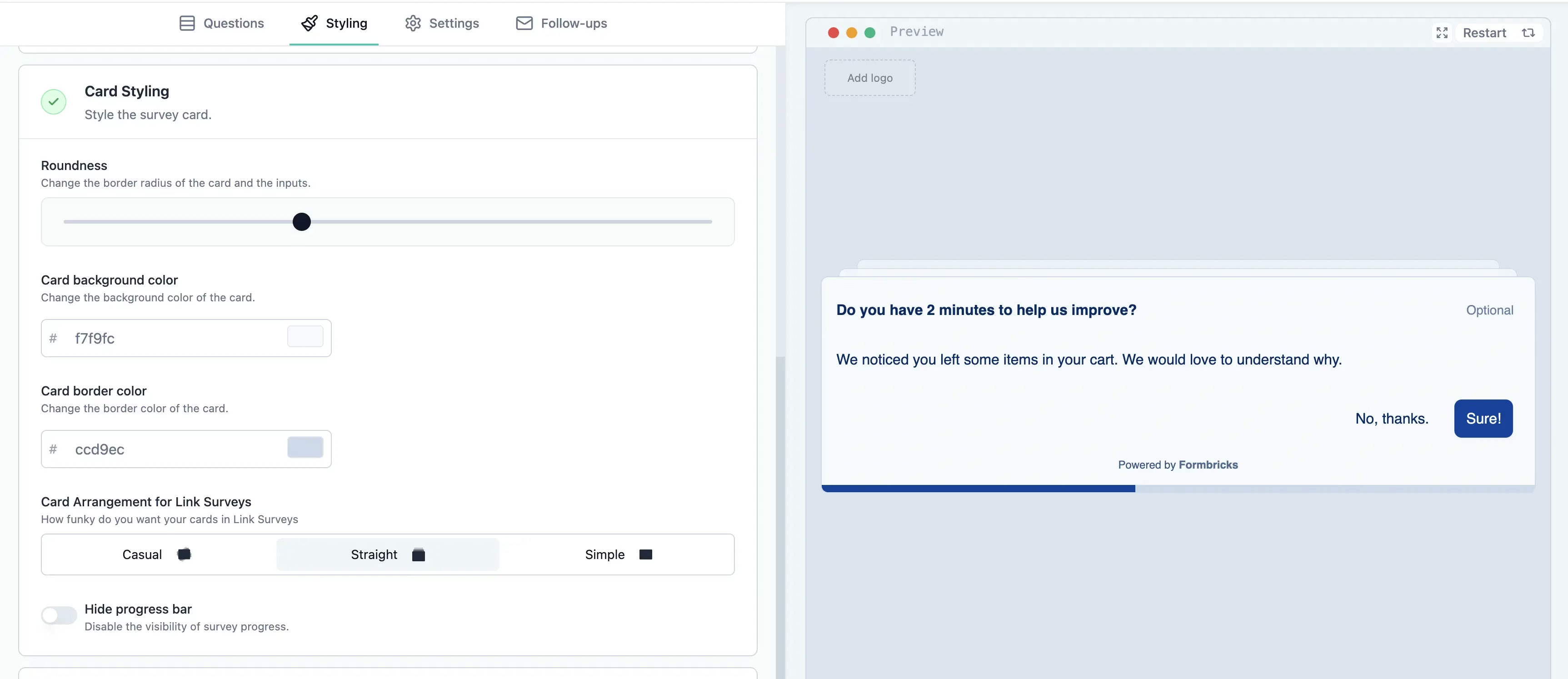
Formbricks
Open-source survey and experience management
By Find Your Martech Team 2026-02-16
Formbricks offers open-source survey and experience management infrastructure for teams prioritizing privacy, customization, and data ownership.
Pros
- Complete data ownership and privacy control
- Free for self-hosted deployments
- Customizable codebase for specific requirements
- No vendor lock-in or usage limits
- Active open-source community and contributions
Cons
- Requires technical expertise to deploy and maintain
- Self-hosting adds infrastructure costs and complexity
- Smaller feature set than mature commercial tools
- Limited templates and pre-built integrations
- No enterprise support unless paying for cloud version
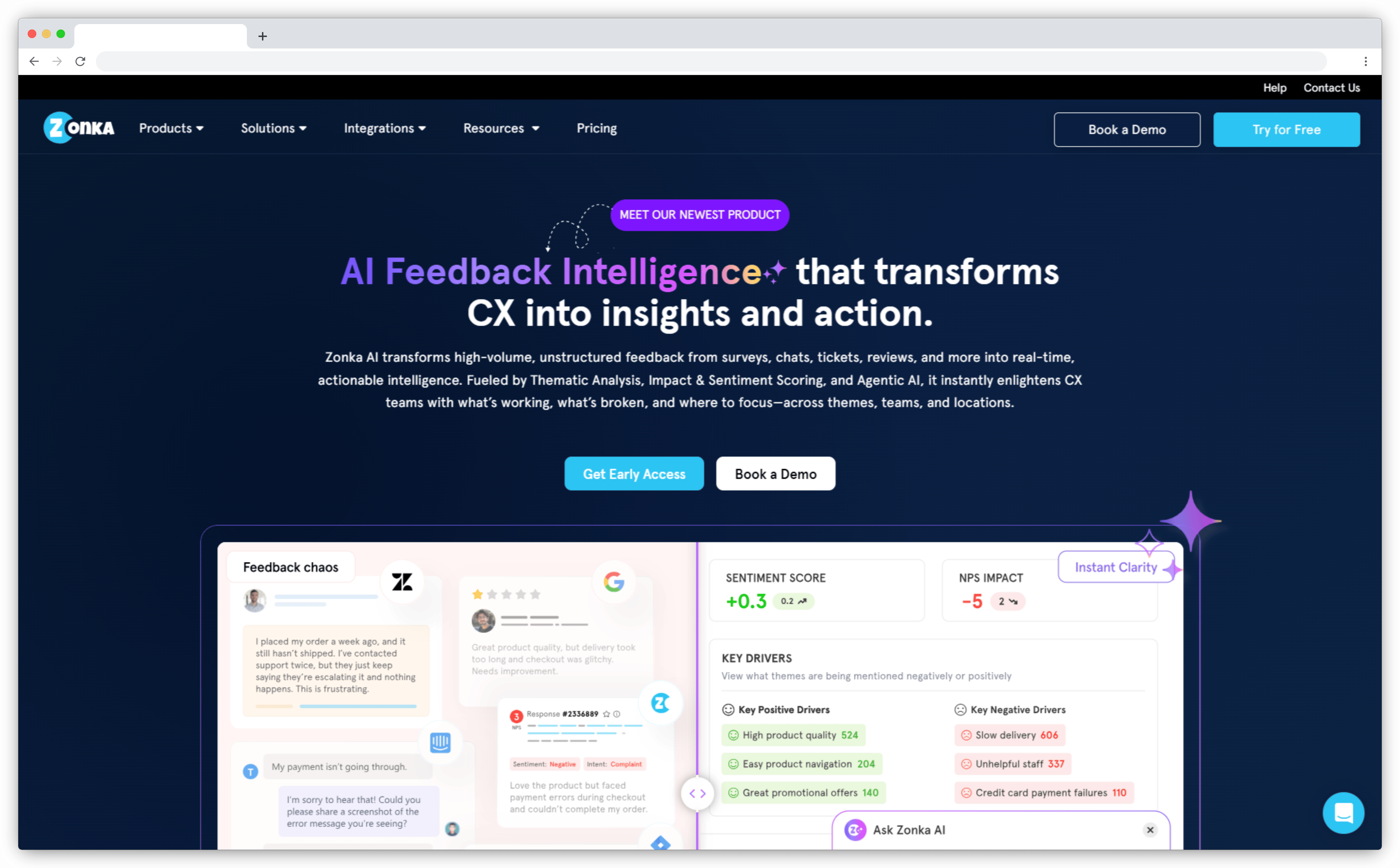
Zonka Feedback
Omnichannel CX with offline and kiosk support
By Find Your Martech Team 2026-02-16
Zonka focuses on omnichannel customer experience measurement across digital and physical touchpoints, particularly strong in offline and SMS surveys.
Pros
- Excellent offline survey capabilities for physical locations
- Multi-channel coverage including SMS and kiosks
- Affordable pricing competitive in emerging markets
- Good for businesses with both digital and physical touchpoints
- Location-based analytics help multi-site operations
Cons
- Interface feels dated compared to modern tools
- Limited product-specific features vs. CX focus
- Smaller integration ecosystem than established players
- Analytics less sophisticated than enterprise platforms
- May lack depth for purely digital SaaS companies
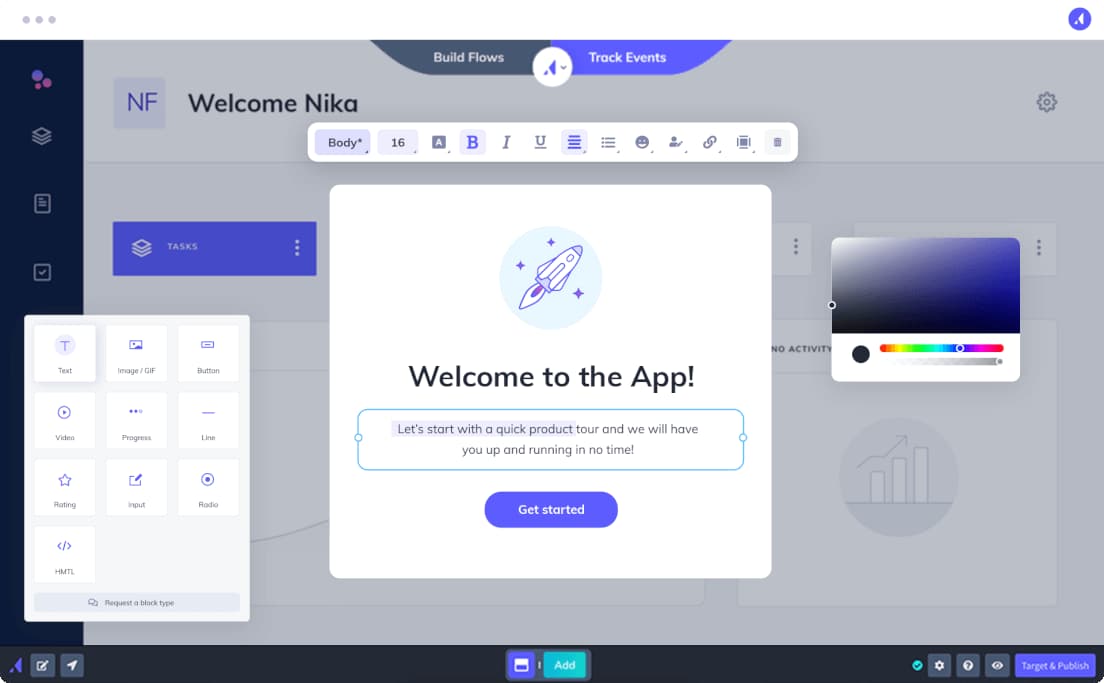
Appcues
Elegant no-code onboarding for web SaaS
By Find Your Martech Team 2026-02-16
Appcues specializes in elegant, code-free user onboarding and product adoption experiences for web-based SaaS.
Pros
- Beautiful, polished UI for onboarding experiences
- Excellent builder balances power and ease of use
- Strong A/B testing for onboarding optimization
- Good analytics focused on adoption metrics
- Thoughtful design prevents overwhelming users
Cons
- Expensive ($249-$879/month) for onboarding-only tool
- Limited to web applications, no native mobile support
- Narrower than platforms combining analytics + guidance
- Survey features basic compared to dedicated tools
- May need additional tools for complete product stack
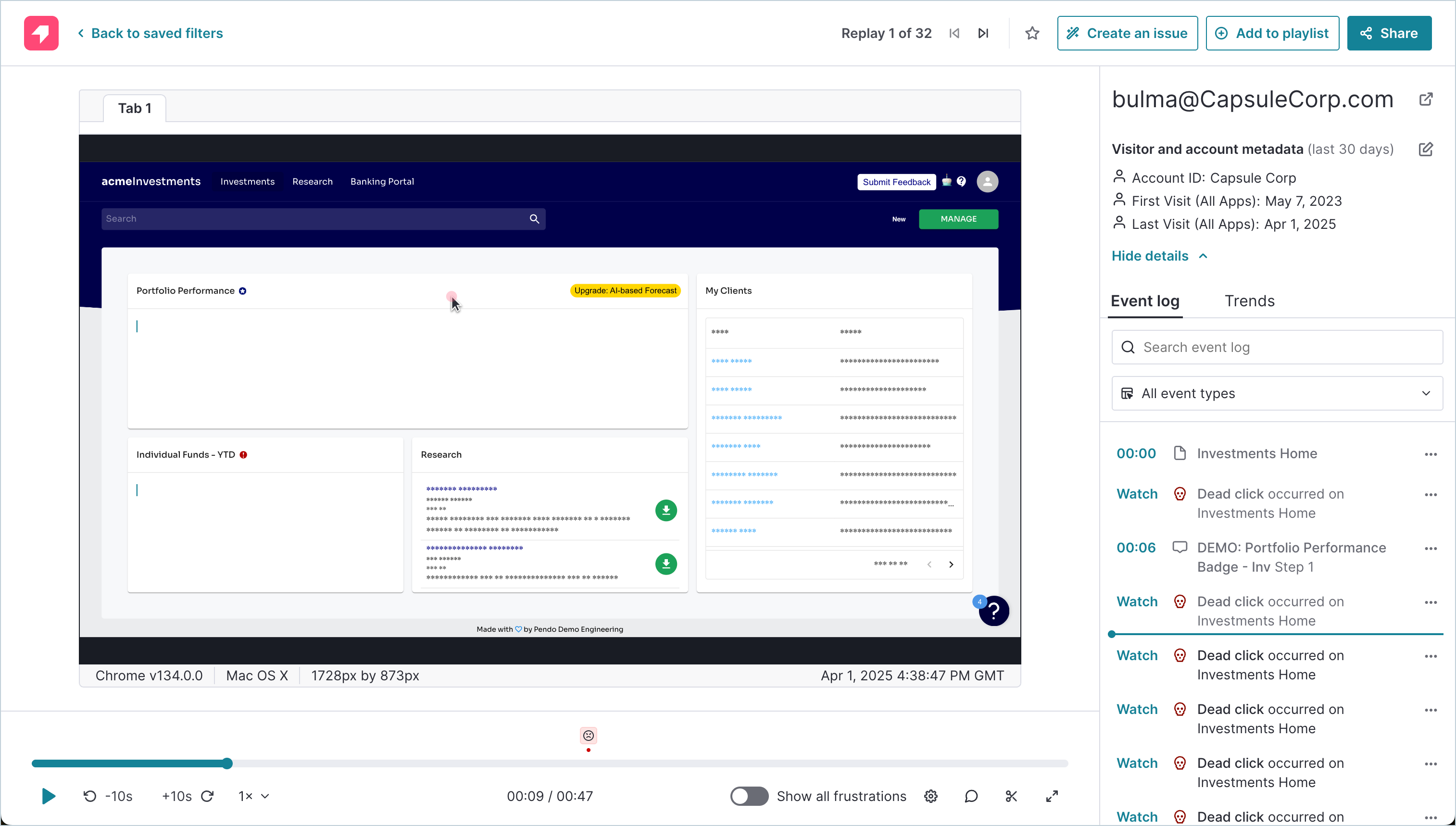
Pendo
Product analytics with in-app guidance and feedback
By Find Your Martech Team 2026-02-16
Pendo combines product analytics, in-app guidance, and user feedback into an enterprise platform for product-led organizations.
Pros
- Comprehensive platform reduces tool sprawl
- Strong B2B analytics with account-level insights
- Both web and mobile SDK coverage
- Enterprise features like SSO, permissions, governance
- Good integration between analytics, guidance, and feedback
Cons
- Expensive with enterprise-only pricing (often $20K+ annually)
- Complex implementation requires technical resources
- Analytics less powerful than dedicated tools like Amplitude
- Can feel overwhelming for teams wanting simple solutions
- Sales-driven process creates long buying cycles
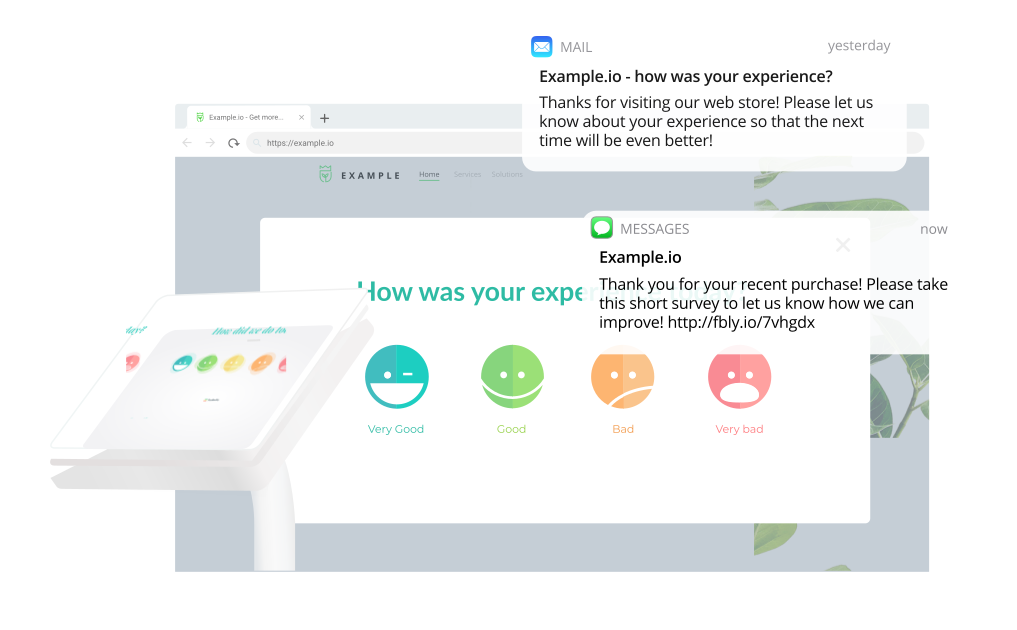
Feedbackly
Emotional customer intelligence and predictive CX
By Find Your Martech Team 2026-02-16
Feedbackly emphasizes customer intelligence through emotional analytics and predictive insights, going beyond basic satisfaction measurement.
Pros
- Unique focus on emotional customer intelligence
- Predictive analytics help anticipate customer behavior
- Good integration with analytics platforms
- Modern approach to CX beyond traditional metrics
- Real-time insights enable quick response to issues
Cons
- Smaller user base limits community and resources
- Emotional analytics may feel gimmicky to some organizations
- Pricing and positioning suggest premium cost
- Less established than category leaders
- May be overkill for straightforward feedback needs
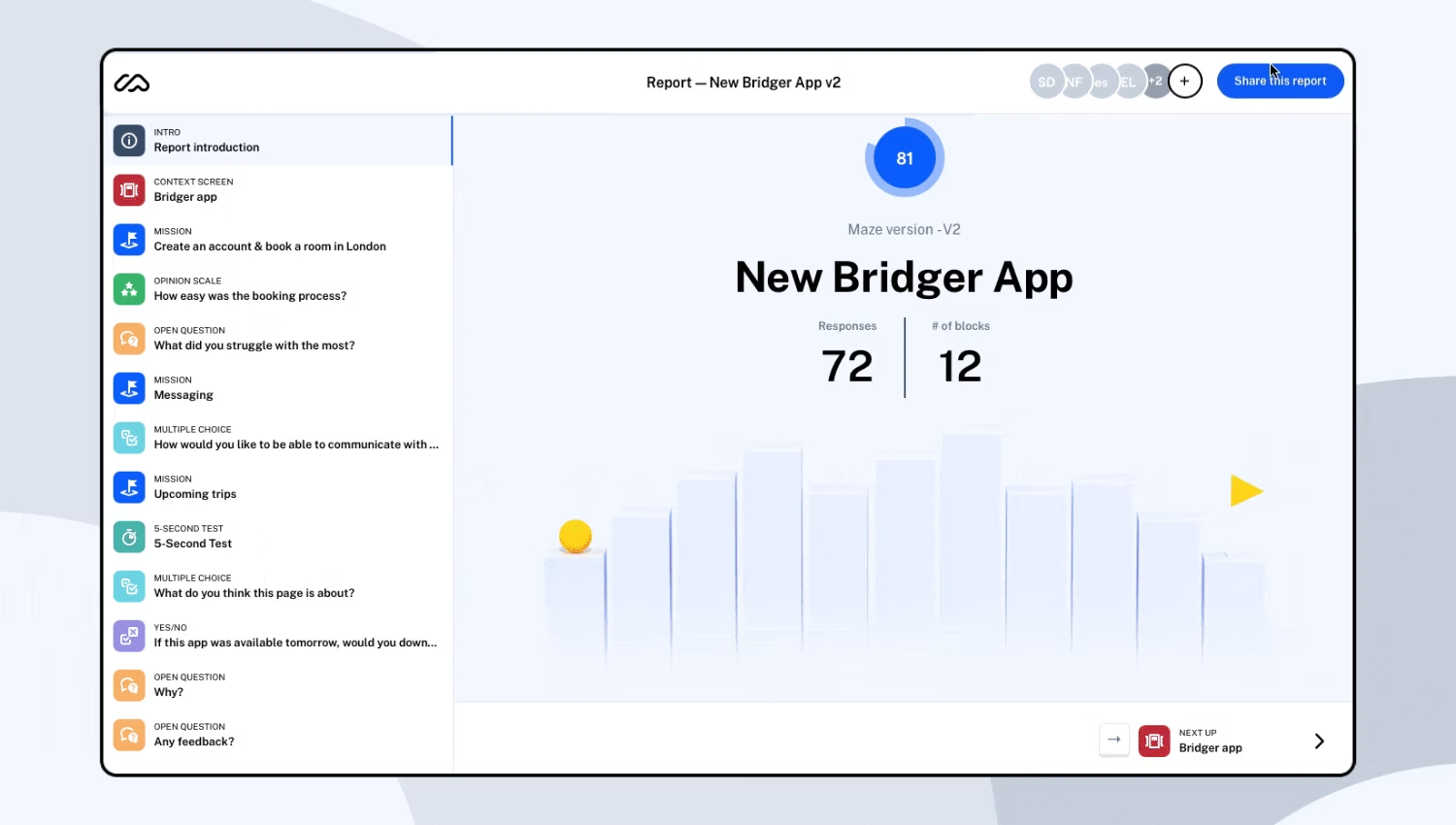
Maze
Rapid unmoderated user testing for designers
By Find Your Martech Team 2026-02-16
Maze enables rapid, unmoderated user testing to validate designs quickly with quantitative metrics.
Pros
- Extremely fast turnaround from test creation to insights
- Native Figma integration streamlines designer workflows
- Clear quantitative metrics make results actionable
- Affordable compared to traditional research platforms
- Intuitive interface requires minimal training
Cons
- Unmoderated only, lacks ability to probe deeper
- Limited for exploratory research vs. validation
- Participant quality variable when using panel
- Less comprehensive than full research platforms
- Primarily for prototypes, less suitable for live products
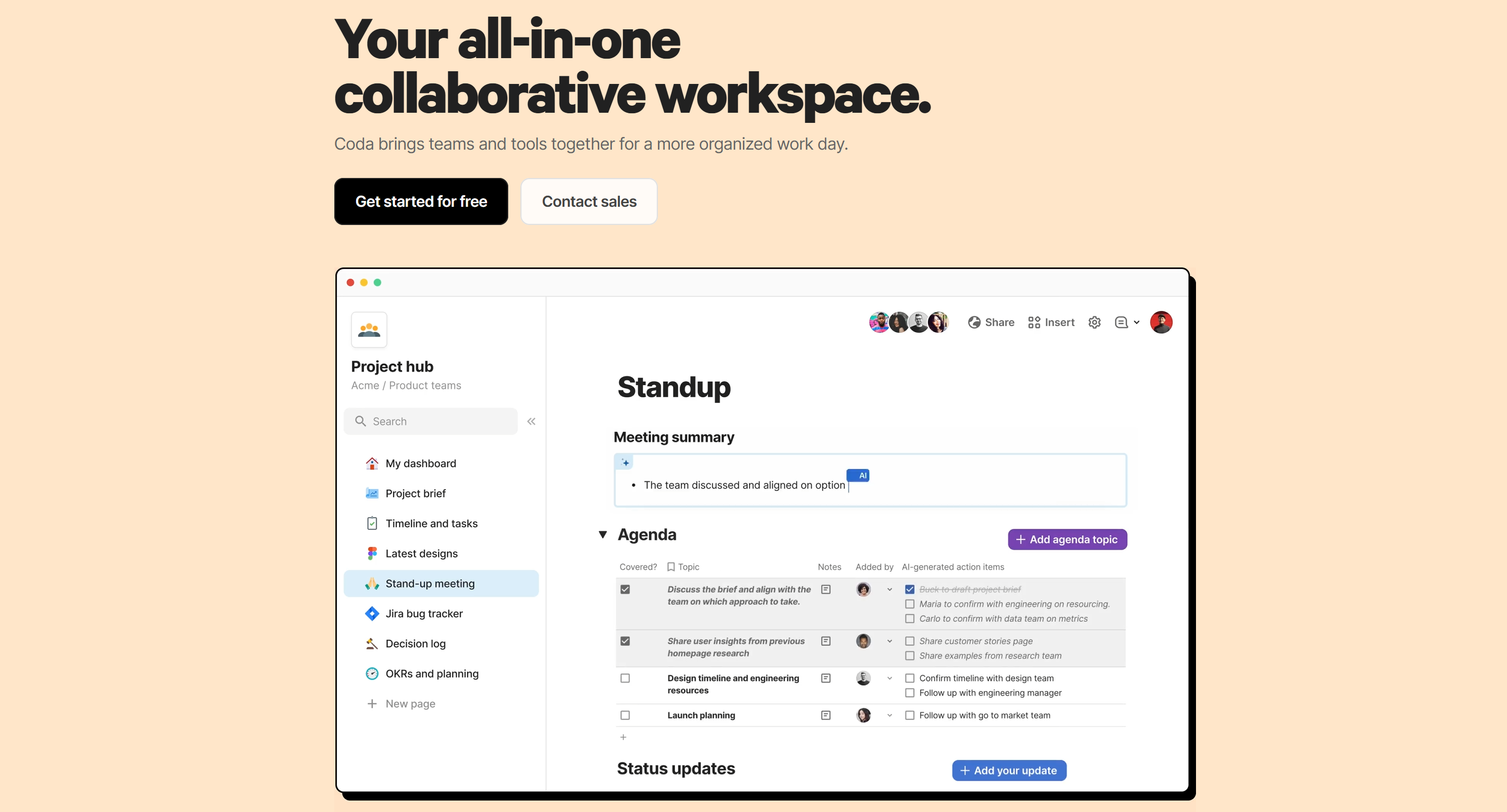
Coda
Build custom tools and workflows without coding
By Find Your Martech Team 2026-02-16
All-in-one doc platform combining documents, spreadsheets, and apps with formulas and automation for building custom workflows

Wire
End-to-end encrypted team collaboration
By Find Your Martech Team 2026-02-16
End-to-end encrypted team collaboration platform prioritizing security and privacy for enterprises with strict confidentiality requirements
Sprout Social
Premium social media management platform emphasizing analytics and reporting for marketing teams
By Find Your Martech Team 2026-02-16
Sprout Social positions itself as the premium social media platform for marketing teams who take social seriously and need data to prove ROI. Unlike simple schedulers or cluttered enterprise tools, Sprout emphasizes analytics quality and modern UX. It assumes organizations want comprehensive capabilities with interface refinement justifying premium pricing. Sprout targets mid-market and enterprise marketing teams where social media drives business outcomes requiring measurement and optimization. The platform excels when analytics depth, reporting quality, and user experience matter more than lowest cost. It struggles when budgets are tight or when teams need only basic scheduling without analytics investment.
Pros
- Best-in-class analytics and reporting capabilities
- Clean, modern interface easier to use than Hootsuite
- Strong customer service features through social inbox
- Excellent competitive intelligence and benchmarking
- Professional reporting for demonstrating social ROI
Cons
- Premium pricing expensive compared to alternatives
- Feature depth can overwhelm teams wanting simplicity
- Not optimized for specific platforms like Later is for Instagram
- Smaller team sizes make per-user pricing prohibitive
- Learning curve steeper than simple scheduling tools

Agorapulse
Full-featured social media management platform offering enterprise capabilities at competitive mid-market pricing
By Find Your Martech Team 2026-02-16
Agorapulse positions itself as the value alternative to Hootsuite and Sprout Social, offering comprehensive features without premium pricing. Unlike simple tools or expensive enterprise platforms, Agorapulse targets the sweet spot between capability and cost. It assumes mid-market teams need robust features but cannot justify Sprout Social premiums or tolerate Hootsuite dated interface. Agorapulse excels when feature completeness and value pricing matter more than cutting-edge innovation or brand prestige. The platform targets agencies and growing businesses needing professional capabilities affordably. It struggles when teams want simplest possible tools or when established platform reputation matters more than value proposition.
Pros
- Comprehensive features at competitive pricing
- Social inbox stronger than many alternatives
- Good balance of capabilities and usability
- Strong customer support and training resources
- Competitor tracking valuable for benchmarking
Cons
- Interface less polished than Sprout Social
- Instagram features trail specialized visual platforms
- Innovation pace slower than category leaders
- Brand recognition lower than Hootsuite or Sprout
- Some features catching up to competitors

Later
Visual-first social scheduling platform optimized for Instagram and visual content planning for creators and brands
By Find Your Martech Team 2026-02-16
Later exists specifically for visual content creators and brands where Instagram and TikTok drive business outcomes. Unlike general social tools treating all platforms equally, Later optimizes for visual planning and Instagram workflows. It assumes visual feed aesthetics and Instagram features matter more than cross-platform breadth or enterprise capabilities. Later targets creators, influencers, and e-commerce brands where visual content quality and Instagram performance are critical. The platform excels when Instagram focus, visual planning, and creator-friendly features outweigh comprehensive social management needs. It struggles when teams manage primarily text-based platforms or need enterprise features that Instagram-first design excludes.
Pros
- Best visual planning experience for Instagram
- Instagram features like stories and first comment supported
- Affordable pricing for creators and small businesses
- Linkin.bio tool valuable for Instagram commerce
- Clean, creator-friendly interface
Cons
- Limited functionality for non-visual platforms like Twitter
- Analytics basic compared to comprehensive platforms
- No social listening or monitoring capabilities
- Team collaboration features minimal
- Enterprise features essentially nonexistent

Hootsuite
Enterprise social media management platform for large organizations managing multiple brands and complex approval workflows
By Find Your Martech Team 2026-02-16
Hootsuite positions itself as the enterprise social media command center for large organizations managing complex social operations. Unlike simple schedulers, Hootsuite provides comprehensive features for multi-brand management, approval workflows, and social listening. It assumes enterprises need unified platform controlling all social activities despite complexity and cost. Hootsuite targets large organizations and agencies where social media management requires dedicated teams and sophisticated workflows. The platform excels when enterprise scale, comprehensive features, and brand governance outweigh cost and learning curve. It struggles when teams want simplicity, modern UX, or when simpler, cheaper tools adequately address needs without Hootsuite complexity.
Pros
- Most comprehensive feature set for enterprise social management
- Strong multi-brand and agency capabilities
- Robust approval workflows and governance tools
- Extensive integrations and app marketplace
- Social listening capabilities built into platform
Cons
- Expensive pricing scales quickly with users and features
- Interface dated and cluttered compared to modern alternatives
- Steep learning curve due to feature complexity
- Overkill for small teams and simple social scheduling needs
- Performance can be sluggish with complex setups
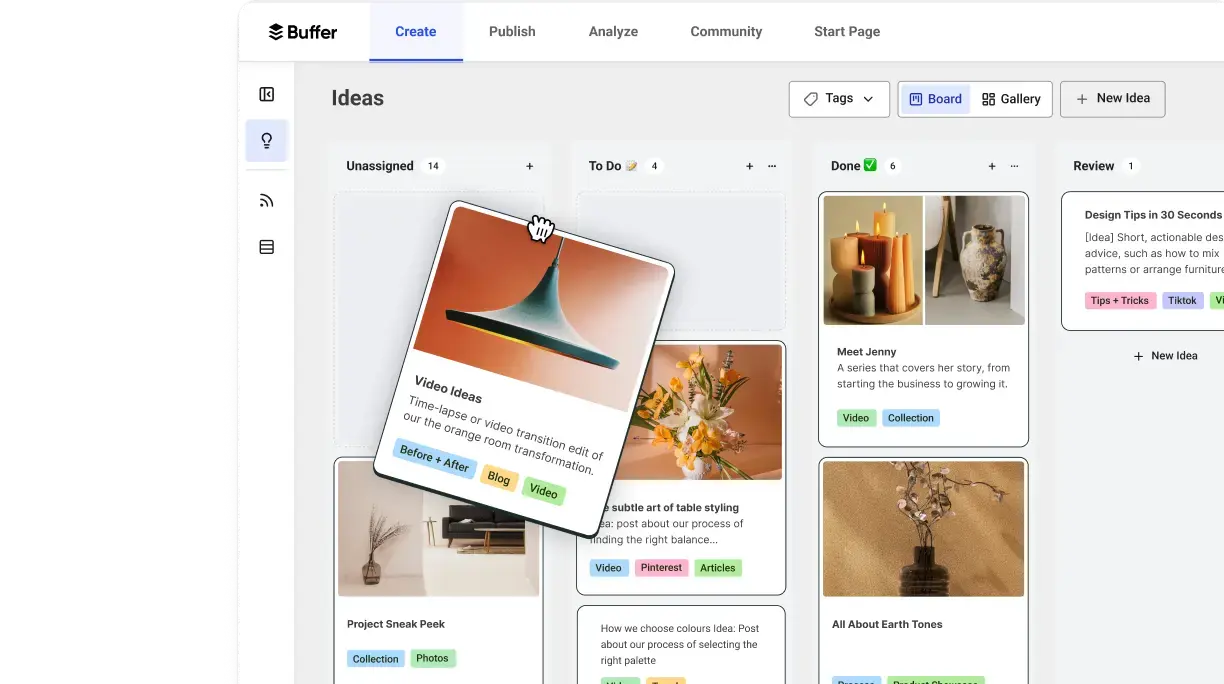
Buffer
Simple social media scheduling tool prioritizing ease of use and clean publishing workflow for small teams and creators
By Find Your Martech Team 2026-02-16
Buffer exists as the deliberately simple social media scheduler for teams overwhelmed by complex enterprise platforms. Unlike comprehensive tools offering everything, Buffer focuses exclusively on making publishing easy and affordable. It assumes most small teams need straightforward scheduling without analytics depth or social listening complexity. Buffer targets solopreneurs and small businesses wanting to maintain social presence without dedicated resources or learning curve. The platform excels when publishing simplicity and clean UX matter more than feature breadth or advanced capabilities. It struggles when teams need sophisticated analytics, social listening, or comprehensive features that Buffer's simplicity-first philosophy deliberately excludes.
Pros
- Extremely simple and intuitive interface
- Affordable pricing for small teams and individuals
- Fast, focused workflow for scheduling posts
- Clean design without overwhelming features
- Reliable publishing across major platforms
Cons
- Limited analytics compared to comprehensive platforms
- No social listening or monitoring capabilities
- Basic team collaboration versus enterprise workflow tools
- Missing advanced features like unified inbox
- Instagram scheduling requires mobile notifications for some post types

Loomly
Content calendar and workflow platform with post ideas and optimization tips for organized social media planning
By Find Your Martech Team 2026-02-16
Loomly positions itself as the content calendar platform helping teams plan and collaborate on social media content through structured workflows. Unlike simple schedulers or analytics-focused tools, Loomly emphasizes content planning, inspiration, and team collaboration. It assumes marketing teams need organized workflows and creative guidance more than advanced analytics or social listening. Loomly targets agencies and marketing teams wanting to professionalize content planning without enterprise complexity. The platform excels when content workflow, collaboration, and planning calendar matter more than deep analytics or social monitoring. It struggles when teams need sophisticated analytics, social listening, or when simple scheduling without workflow overhead adequately addresses needs.
Pros
- Strong content calendar and planning workflow
- Post ideas feature helpful for content inspiration
- Good collaboration tools for team coordination
- Approval workflows ensure content quality control
- Clean interface focused on content planning
Cons
- Analytics capabilities basic compared to comprehensive platforms
- No social listening or monitoring features
- Limited automation compared to specialized tools
- Pricing can add up for smaller teams
- Not optimized for specific platforms like Later for Instagram
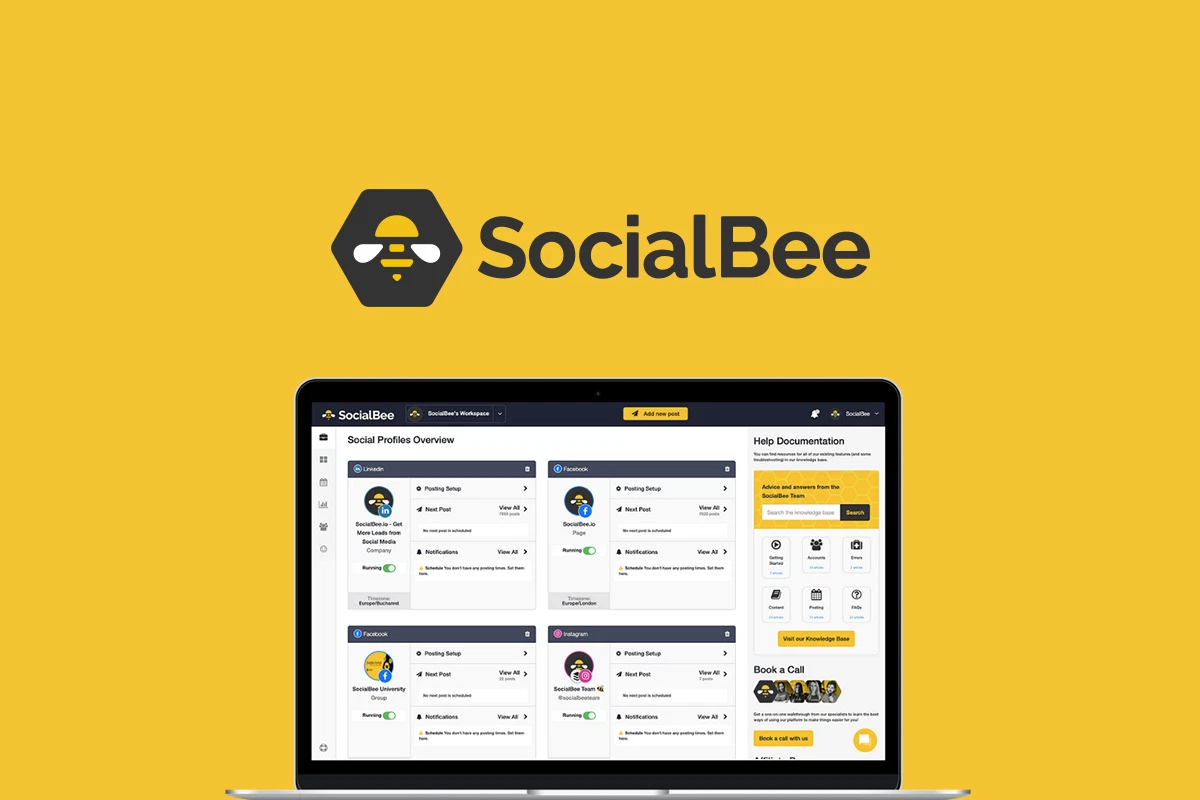
SocialBee
Content categorization and recycling platform designed for maximizing evergreen content value through automated posting
By Find Your Martech Team 2026-02-16
SocialBee exists to help small teams maintain consistent social presence by maximizing evergreen content value through categorization and recycling. Unlike platforms requiring constant new content, SocialBee assumes teams have content libraries worth reusing systematically. It targets solopreneurs and small businesses wanting automation reducing daily social media burden. SocialBee excels when content recycling, categorization, and posting automation matter more than real-time engagement or advanced analytics. The platform succeeds for evergreen content strategies where automated rotation makes sense. It struggles when content is time-sensitive, when teams need sophisticated features, or when recycling approach does not fit content strategy.
Pros
- Unique content categorization and recycling approach
- Automation reduces daily social media workload
- Good for maximizing evergreen content value
- Affordable for small teams and individuals
- Helps maintain consistency without constant creation
Cons
- Recycling approach not suitable for all content strategies
- Analytics basic compared to comprehensive platforms
- Limited team collaboration features
- No social listening or monitoring capabilities
- Interface can feel complex for simple scheduling needs

eClincher
Comprehensive social media management platform combining scheduling, automation, and unified inbox for power users
By Find Your Martech Team 2026-02-16
eClincher positions itself as the power user platform for teams wanting maximum automation and efficiency features. Unlike simple schedulers, eClincher provides extensive automation, bulk operations, and smart queues for managing high volumes. It assumes social media managers want efficiency through automation rather than simplicity. eClincher targets agencies and dedicated social media managers handling substantial workloads. The platform excels when automation depth, bulk features, and efficiency tools matter more than interface simplicity or budget constraints. It struggles when teams want straightforward tools or when feature density creates complexity outweighing efficiency benefits.
Pros
- Extensive automation features for efficiency
- Strong unified inbox with smart capabilities
- Bulk operations save time for high-volume users
- Comprehensive feature set covers most needs
- Good for agencies managing multiple accounts
Cons
- Interface complex due to feature density
- Learning curve steep for new users
- Pricing higher than simpler alternatives
- Can feel overwhelming for basic scheduling needs
- Feature breadth creates complexity for small teams
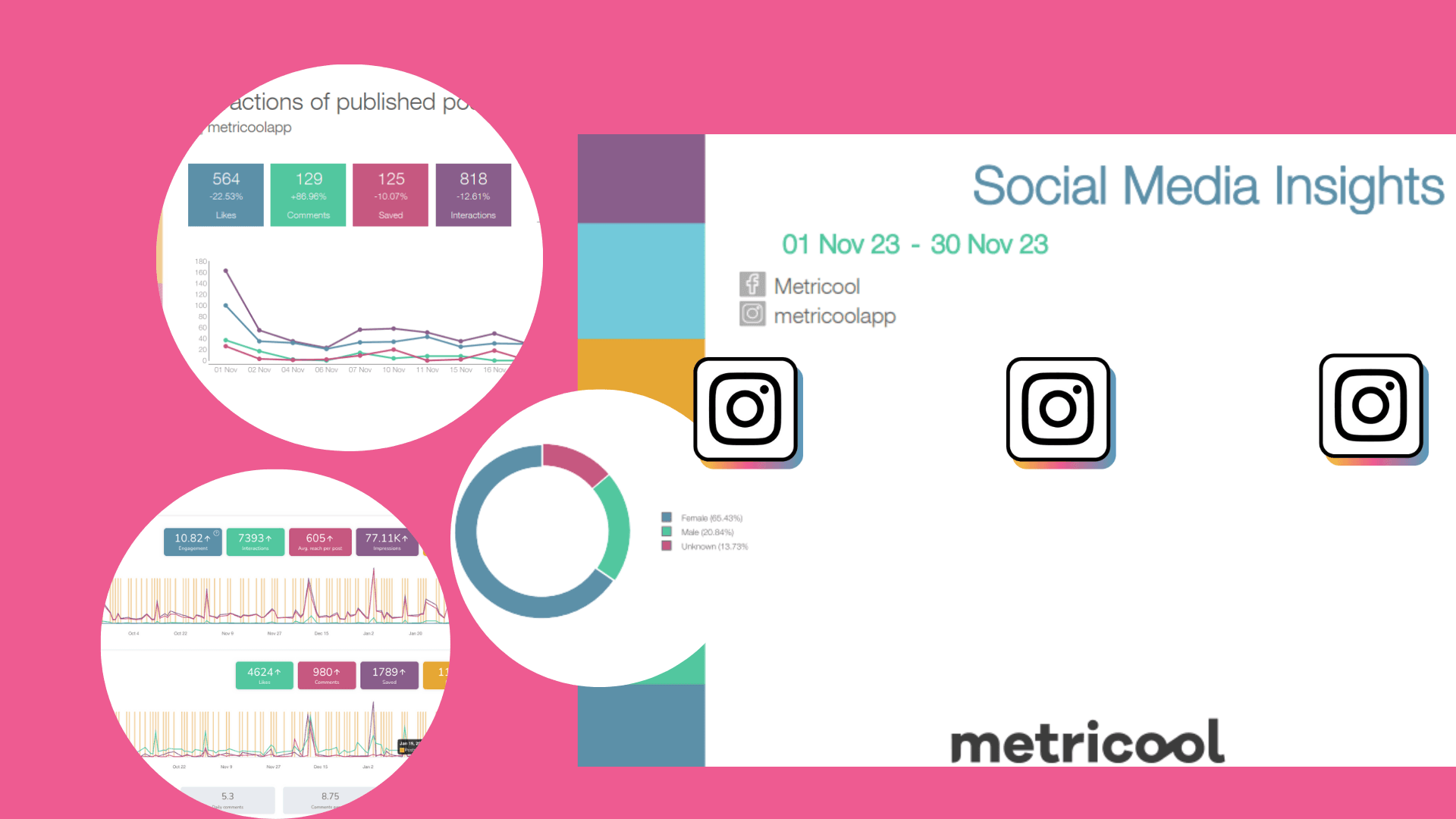
Metricool
Analytics-focused social media tool with generous free tier emphasizing data visualization and cross-platform metrics
By Find Your Martech Team 2026-02-16
Metricool exists as the free-tier analytics platform for budget-conscious teams wanting data visualization without premium costs. Unlike expensive analytics tools, Metricool provides comprehensive metrics through generous free offering. It assumes teams need visual analytics and cross-platform tracking without paying enterprise premiums. Metricool targets small businesses and startups where budget constraints make free tier valuable despite feature limitations. The platform excels when analytics visualization and free access matter more than advanced features or enterprise capabilities. It struggles when teams need sophisticated collaboration, social listening, or premium support that freemium model does not prioritize.
Pros
- Generous free tier provides real value
- Strong analytics visualization and dashboards
- Competitive analysis included at low tiers
- Covers many platforms including newer ones
- Good value for budget-conscious teams
Cons
- Team collaboration features basic
- Enterprise capabilities limited
- No social listening or monitoring
- Support quality varies at free tier
- Interface can feel cluttered with features

Sendible
Agency-focused social media management platform with white-label capabilities and multi-client workflow features
By Find Your Martech Team 2026-02-16
Sendible positions itself as the agency-specific social media platform with white-label capabilities and multi-client workflows. Unlike general tools, Sendible optimizes for agency needs including client management, branded reporting, and workflow separation. It assumes agencies need professional platform for client delivery without building custom solutions. Sendible targets digital marketing agencies and freelancers managing multiple client social accounts. The platform excels when agency-specific features, white-labeling, and multi-client management matter more than cutting-edge innovation. It struggles when single-brand teams do not need agency capabilities or when simpler tools adequately serve freelancer needs.
Pros
- Strong agency-specific features and workflows
- White-label capabilities for professional client delivery
- Good value for agencies managing multiple clients
- Comprehensive reporting for client presentations
- Solid feature set covering most agency needs
Cons
- Interface less modern than newer platforms
- Feature innovation slower than category leaders
- Not optimized for single-brand use cases
- Analytics depth trails analytics-focused platforms
- Learning curve steeper for agency-specific features

Falcon.io
Enterprise social media marketing platform (now part of Brandwatch) for large organizations requiring unified customer engagement
By Find Your Martech Team 2026-02-16
Falcon.io (now Brandwatch Engage) positions itself as the enterprise platform unifying social marketing, customer care, and listening for large organizations. Unlike SMB tools or point solutions, Falcon emphasizes integration across social functions at enterprise scale. It assumes large organizations need consolidated platform over separate best-of-breed tools. Falcon targets global enterprises where unified data, governance, and workflows justify platform investment. The platform excels when enterprise scale, cross-functional integration, and unified operations outweigh costs and complexity. It struggles when organizations lack enterprise needs or when specialized tools better serve specific functions without platform overhead.
Pros
- Comprehensive enterprise platform unifying social functions
- Strong multi-market and brand capabilities
- Customer care integration differentiates from pure marketing tools
- Robust governance and compliance features
- Now benefits from Brandwatch listening capabilities
Cons
- Expensive enterprise pricing prohibitive for SMBs
- Complex implementation requires significant resources
- Interface can feel overwhelming with feature breadth
- Overkill for organizations without enterprise complexity
- Platform transition to Brandwatch creates uncertainty

CoSchedule
Marketing calendar platform combining social scheduling with content marketing and project management for integrated campaigns
By Find Your Martech Team 2026-02-16
CoSchedule exists as the unified marketing calendar for teams managing content across multiple channels beyond just social media. Unlike pure social tools, CoSchedule integrates social scheduling with blog content, email campaigns, and project management. It assumes marketing teams need holistic view across channels rather than social-specific depth. CoSchedule targets content marketing teams where campaign coordination and calendar visibility drive success. The platform excels when integrated marketing calendar and cross-channel planning matter more than social-specific features or advanced automation. It struggles when teams need only social scheduling or when specialized tools better serve individual channel needs.
Pros
- Unified calendar across social, blog, and email
- Strong content marketing workflow features
- ReQueue automation for evergreen content recycling
- Good for teams managing multiple marketing channels
- Project management integration helpful for campaigns
Cons
- Expensive if only using for social media scheduling
- Social features basic compared to dedicated platforms
- Analytics less comprehensive than social-focused tools
- Learning curve steep for full feature utilization
- Overkill if social media is only channel managed
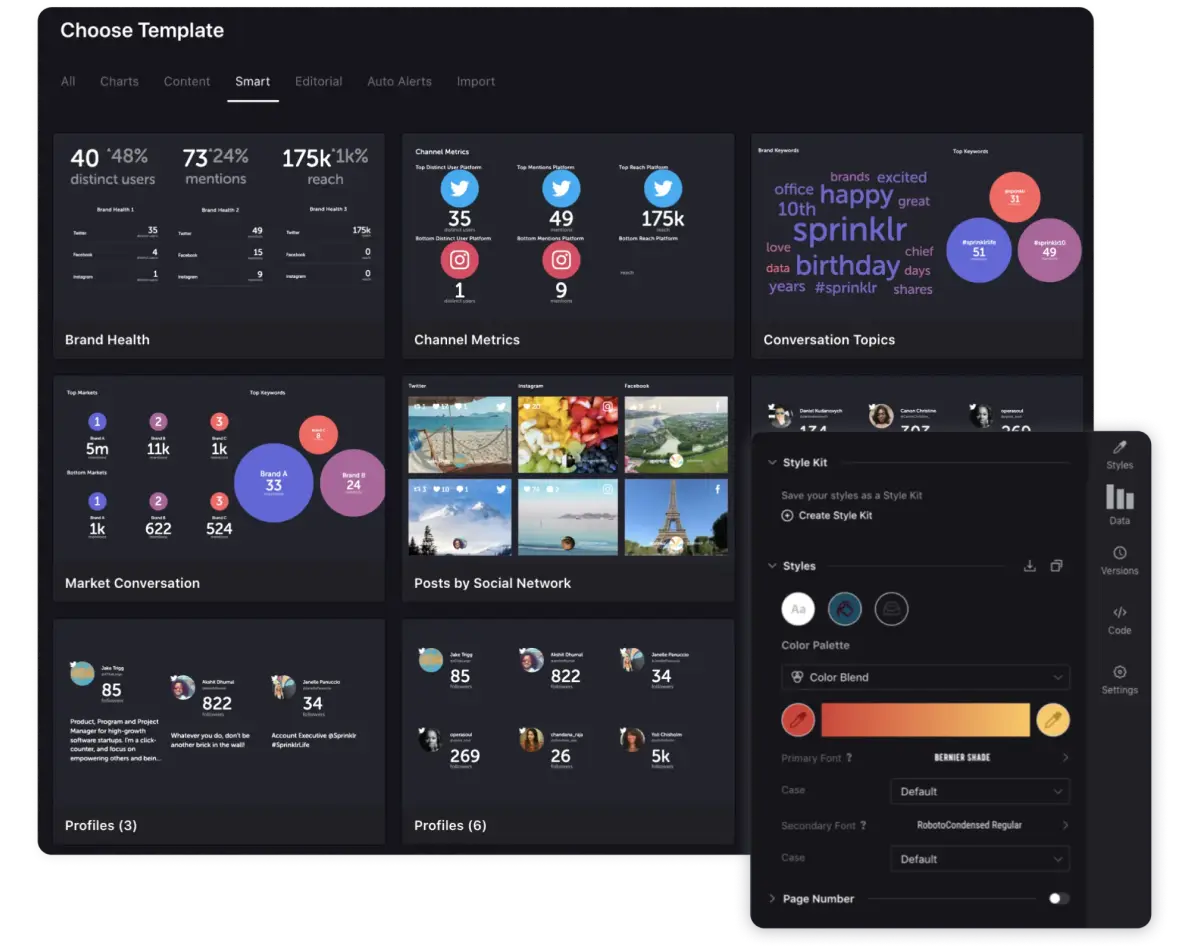
Sprinklr
Enterprise unified customer experience management platform handling social media within broader digital engagement ecosystem
By Find Your Martech Team 2026-02-16
Sprinklr exists as the ultimate enterprise unified CXM platform for Fortune 500 companies managing customer experience across every digital channel. Unlike social-only tools, Sprinklr encompasses social, advertising, messaging, reviews, and more in single platform. It assumes global enterprises need unified customer data and workflows across all touchpoints despite massive costs. Sprinklr targets the largest enterprises where platform consolidation and unified operations justify seven-figure investments. The platform excels when enterprise scale, channel unification, and global governance outweigh extraordinary costs and complexity. It struggles with anything except largest enterprises or when focused social tools better serve needs without platform scope.
Pros
- Most comprehensive unified CXM platform available
- Handles massive enterprise scale and complexity
- AI capabilities industry-leading for automation
- Unified customer data across all digital touchpoints
- Proven with largest global enterprises
Cons
- Extremely expensive with seven-figure annual costs typical
- Massive complexity requires dedicated teams and consultants
- Implementation measured in quarters or years
- Complete overkill for non-enterprise organizations
- Vendor lock-in significant with platform investment required
SocialPilot
Budget-friendly social media scheduling platform offering agency features at aggressive pricing for cost-conscious teams
By Find Your Martech Team 2026-02-16
SocialPilot exists to undercut established platforms on price while offering essential agency features like client management and white-labeling. Unlike premium tools, SocialPilot prioritizes affordability and basic functionality over interface refinement or innovation. It assumes agencies and small businesses need core scheduling and reporting without paying for advanced features they will not use. SocialPilot targets cost-conscious teams where budget constraints make premium platforms unjustifiable. The platform excels when price sensitivity and essential features matter more than modern UX or cutting-edge capabilities. It struggles when teams want polished interfaces, advanced automation, or when value justifies paying more for better experience.
Pros
- Very affordable pricing compared to competitors
- Good value for agencies managing multiple clients
- Bulk scheduling saves time for high-volume posting
- White-label reporting at budget price point
- Covers essential features without premium costs
Cons
- Interface dated and less intuitive than modern platforms
- Analytics basic compared to analytics-focused tools
- No social listening or advanced monitoring
- Feature innovation slower than well-funded competitors
- User experience polish trails category leaders
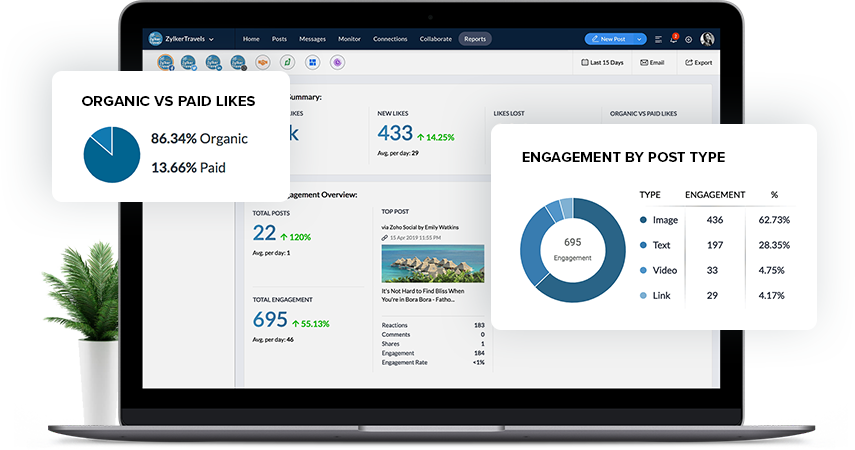
Zoho Social
Social media management platform within Zoho ecosystem offering comprehensive features at competitive pricing for Zoho users
By Find Your Martech Team 2026-02-16
Zoho Social positions itself as the affordable, feature-rich social media platform for Zoho ecosystem users wanting integrated workflows. Unlike standalone tools, Zoho Social prioritizes ecosystem integration and value pricing over best-of-breed capabilities. It assumes businesses using Zoho suite want consolidated platform rather than separate social tools. Zoho Social targets cost-conscious SMBs already invested in Zoho wanting to extend ecosystem. The platform excels when Zoho integration, affordable pricing, and comprehensive features outweigh interface limitations and ecosystem constraints. It struggles when teams are not Zoho users or when modern UX and social-specific optimization justify premium alternatives.
Pros
- Seamless integration with Zoho CRM and ecosystem
- Comprehensive features at competitive pricing
- Good value for feature set compared to alternatives
- Social listening included at lower price tiers
- Strong presence in emerging markets with local support
Cons
- Interface less polished than modern alternatives
- Less valuable without Zoho ecosystem investment
- Feature depth trails specialized platforms
- Smaller user community than category leaders
- Innovation pace slower than well-funded competitors

Planoly
Visual-first Instagram planning tool with grid preview and aesthetic planning features for creators and visual brands
By Find Your Martech Team 2026-02-16
Planoly exists specifically for Instagram creators and brands where visual feed aesthetics directly impact success. Unlike general social tools, Planoly optimizes exclusively for Instagram visual planning and grid layout preview. It assumes Instagram feed cohesion matters enough to justify platform-specific tool. Planoly targets influencers, visual brands, and e-commerce businesses where Instagram is primary channel. The platform excels when Instagram focus and visual planning features outweigh multi-platform breadth or advanced analytics. It struggles when teams manage multiple platforms equally or when comprehensive features justify tools like Later or Hootsuite despite Instagram-specific advantages Planoly provides.
Pros
- Best visual grid planning experience for Instagram
- Clean, Instagram-creator focused interface
- Strong for brands prioritizing feed aesthetics
- Affordable for individual creators and small teams
- Linkin.bio feature valuable for Instagram-first brands
Cons
- Instagram-only focus limits multi-platform teams
- Analytics basic compared to comprehensive platforms
- Team collaboration features minimal
- No social listening or monitoring
- Limited automation compared to specialized tools

Kontentino
Collaboration-focused social media tool emphasizing approval workflows and client communication for agencies and brands
By Find Your Martech Team 2026-02-16
Kontentino exists for agencies and brands where content approval workflows and collaboration matter more than advanced scheduling or analytics features. Unlike simple schedulers or analytics-focused tools, Kontentino emphasizes structured approval processes and stakeholder communication. It assumes content quality control and accountability through approvals justify platform focus. Kontentino targets agencies with formal client processes and brands with compliance requirements. The platform excels when approval workflows, collaboration, and content accountability outweigh scheduling simplicity or analytics depth. It struggles when teams want straightforward publishing or when approval overhead feels unnecessary for content processes.
Pros
- Best-in-class approval workflow capabilities
- Strong client collaboration features
- Clear approval tracking and accountability
- Good for agencies with formal processes
- Structured workflow reduces approval bottlenecks
Cons
- Analytics basic compared to analytics-focused platforms
- No social listening or monitoring
- Approval focus creates overhead for simple workflows
- Limited automation compared to specialized tools
- Interface focused on workflows not scheduling efficiency
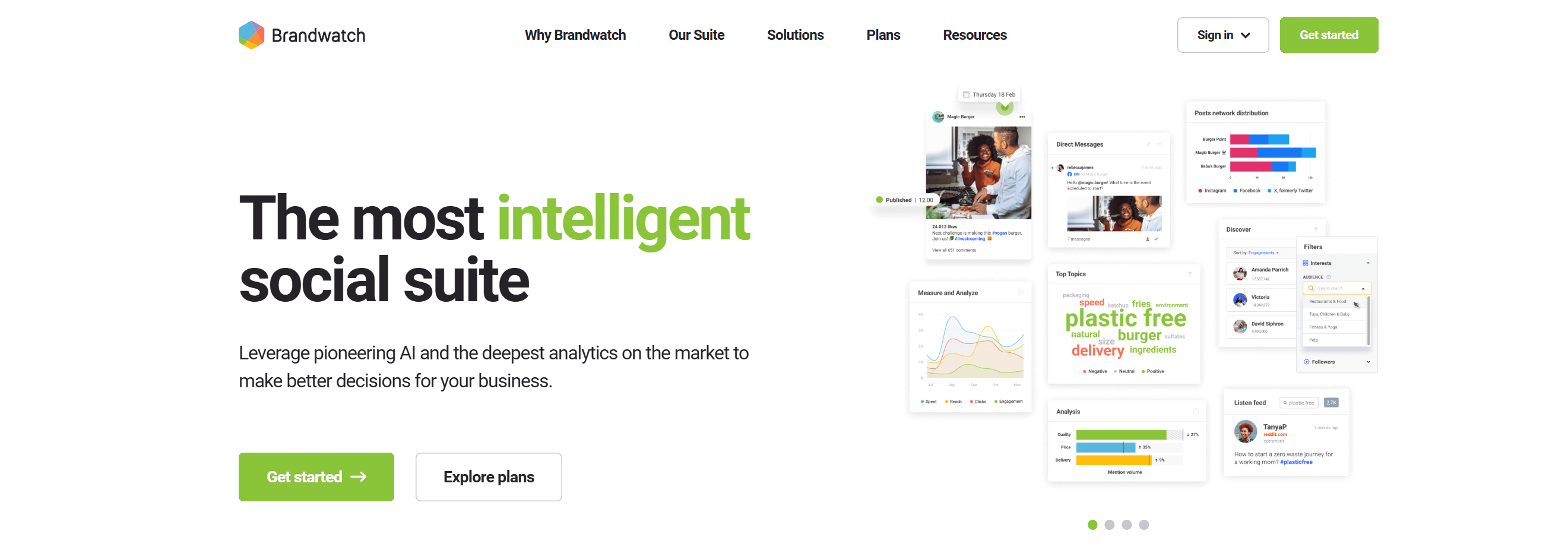
Brandwatch
Enterprise social listening and analytics platform providing deep consumer insights and market intelligence at scale
By Find Your Martech Team 2026-02-16
Brandwatch exists as the enterprise-grade social listening platform transforming social data into strategic business intelligence. Unlike scheduling tools with basic monitoring, Brandwatch focuses exclusively on deep analytics and consumer insights. It assumes enterprises need sophisticated listening and AI-powered analysis justifying significant investment. Brandwatch targets Fortune 500 brands and market research teams where social insights drive strategy. The platform excels when listening depth, AI capabilities, and market intelligence matter more than publishing features or cost considerations. It struggles outside enterprise contexts or when teams need scheduling alongside listening rather than pure insights platform.
Pros
- Industry-leading social listening and analytics depth
- AI capabilities strongest in category for insights
- Handles massive data volumes and global scale
- Image and video analysis differentiate from competitors
- Now integrated with Falcon.io for unified platform
Cons
- Extremely expensive enterprise pricing
- Listening-only focus means separate tools needed for publishing
- Complexity requires dedicated analysts and training
- Overkill for SMB monitoring needs
- Implementation and onboarding resource-intensive

Publer
Affordable multi-platform social media scheduler with generous free tier and AI content assistance for budget-conscious creators
By Find Your Martech Team 2026-02-16
Publer exists as the generous free alternative for creators and small businesses unable or unwilling to pay for social media tools. Unlike premium platforms, Publer prioritizes accessibility through freemium model with AI features. It assumes many users need basic scheduling without budget for Hootsuite or Buffer subscriptions. Publer targets creators and bootstrapped startups where free tier provides adequate functionality. The platform excels when budget constraints and AI assistance matter more than advanced features or premium support. It struggles when teams need enterprise capabilities, comprehensive analytics, or when free tier limitations become restrictive as usage scales.
Pros
- Very generous free tier for budget-conscious users
- AI content assistance included at free tier
- Multi-platform support covers major networks
- Simple, straightforward interface
- Good value at paid tiers compared to alternatives
Cons
- Analytics limited compared to comprehensive platforms
- Team collaboration features basic
- No social listening or monitoring
- Free tier has posting limits and restrictions
- Support quality varies at free tier

Hypefury
Twitter/X-focused growth and automation tool designed for building audience and monetizing through scheduled threads and engagement
By Find Your Martech Team 2026-02-16
Hypefury exists for Twitter creators treating the platform as primary audience-building and monetization channel. Unlike general social tools, Hypefury provides aggressive automation and growth tactics specifically for Twitter. It assumes users want maximum Twitter growth and engagement through automated strategies. Hypefury targets solopreneurs, thought leaders, and creators where Twitter audience directly drives business outcomes. The platform excels when Twitter-specific growth and automation outweigh brand safety concerns or multi-platform needs. It struggles when brands require conservative approaches, when teams need collaboration features, or when Twitter is one channel among many rather than primary focus.
Pros
- Best Twitter-specific automation and growth features
- Thread scheduling and formatting optimized for Twitter
- Recycling features maximize content value
- Strong for creators monetizing Twitter audience
- Affordable for individual creators
Cons
- Twitter-only focus excludes other platforms completely
- Aggressive automation may violate platform policies or brand guidelines
- No team collaboration or enterprise features
- Limited analytics beyond Twitter metrics
- Automation approach not suitable for all brands
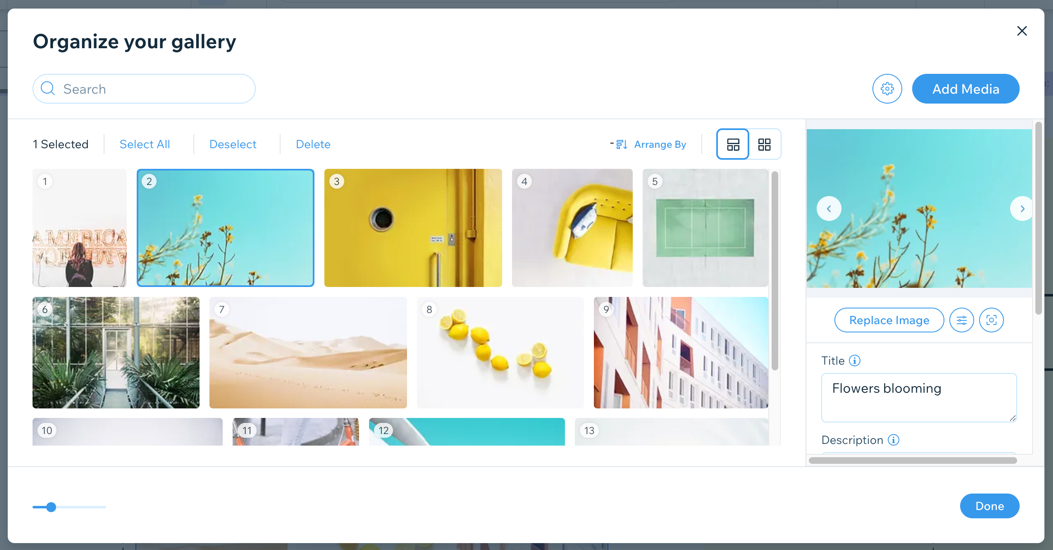
Wix
Drag-and-drop website builder for non-technical users
By Find Your Martech Team February 17, 2026
Wix exists to give non-technical business owners a professional web presence without developer dependency. Unlike code-based platforms, Wix removes technical barriers entirely through visual drag-and-drop. It assumes users value design flexibility and speed over scalability and code control. Wix targets small businesses, freelancers, and creatives wanting to launch fast without managing hosting, domains, or code. The platform excels when ease of use, all-in-one hosting, and quick launch matter more than performance, SEO control, or migration flexibility. It struggles when businesses outgrow its constraints or when technical users need capabilities beyond what visual builders provide.
Pros
- Lowest barrier to entry for non-technical website creation
- Extensive template library covering most business types
- All-in-one platform eliminates third-party hosting requirements
- App Market extends functionality without coding
- Fast time to launch for simple business websites
Cons
- Cannot migrate site to another platform without rebuilding
- Page speed and performance lag code-built alternatives
- SEO capabilities limited compared to WordPress
- E-commerce features underpowered versus Shopify at scale
- Vendor lock-in significant once site is built on platform

Framer
Design-to-website platform for interactive sites
By Find Your Martech Team February 17, 2026
Framer evolved from prototyping tool to website builder targeting designers who want to publish interactive, high-quality sites directly from design tools. Unlike traditional builders separating design and development, Framer assumes design is the development process. It targets product designers, startups, and design-forward teams wanting fast, visually premium websites. The platform excels when design quality, motion design, and speed to publish matter more than CMS depth, e-commerce, or enterprise features. It struggles when sites require complex content management, when non-designers need to maintain content, or when projects outgrow single-page marketing site patterns.
Pros
- Fastest path from design concept to published website
- Strongest motion and animation capabilities in category
- Clean, performance-optimized output
- Familiar design tool interface for Figma users
- Rapid iteration speed for marketing and landing pages
Cons
- CMS limited compared to Webflow for content-heavy sites
- E-commerce capabilities minimal versus dedicated platforms
- Content editing difficult for non-designers
- SEO track record shorter than established platforms
- Non-designer maintainers struggle with design-oriented interface

Squarespace
Design-focused website builder for creatives and small brands
By Find Your Martech Team February 17, 2026
Squarespace positions itself as the design-forward website builder for creatives and small brands where visual excellence matters. Unlike feature-heavy builders, Squarespace prioritizes template quality and aesthetic consistency over flexibility. It assumes users will trade customization depth for guaranteed visual polish. Squarespace targets photographers, designers, and small brands where site aesthetics directly reflect brand quality. The platform excels when design quality, ease of use, and premium appearance matter more than technical control or extensive features. It struggles when businesses need e-commerce scale, extensive customization, or the plugin ecosystem that WordPress provides.
Pros
- Best-in-class template design quality
- Consistent visual output regardless of user design skill
- All-in-one platform covering hosting, domains, and e-commerce
- Clean, modern interface easy to learn and use
- Strong for creative portfolios and brand websites
Cons
- Limited customization compared to WordPress or Webflow
- E-commerce features basic compared to Shopify at scale
- Plugin and integration ecosystem much smaller than WordPress
- Less flexible for complex custom layouts and functionality
- Cannot export and self-host site if leaving platform
Webflow
Visual web development platform with code-level control
By Find Your Martech Team February 17, 2026
Webflow bridges professional web design and development by giving designers visual tools producing clean, exportable code. Unlike template builders limiting creativity or code editors requiring development skills, Webflow assumes designers want control without coding. The platform targets design-forward agencies and marketing teams wanting custom websites without engineering dependency. Webflow excels when design quality, custom interactions, and clean code output matter more than simplicity or e-commerce depth. It struggles when users lack design skills, when simple sites make visual complexity unnecessary, or when large e-commerce operations need Shopify ecosystem breadth.
Pros
- Design freedom without template constraints or coding
- Produces clean, exportable code unlike other visual builders
- CMS powerful enough for complex content architectures
- Strong for custom animations and interactive experiences
- Used by design-forward agencies for professional client work
Cons
- Steep learning curve compared to Wix or Squarespace
- Expensive for hosting compared to self-hosting alternatives
- E-commerce limited versus Shopify for large catalogues
- Overkill for simple brochure sites and basic web presence
- Non-designers struggle with CSS box model concepts required
WordPress.org
Open source CMS with unlimited extensibility
By Find Your Martech Team February 17, 2026
WordPress.org exists as the open source foundation for websites requiring complete ownership, unlimited extensibility, and maximum SEO control. Unlike hosted platforms trading flexibility for convenience, WordPress assumes users want total control over code, hosting, and data. The platform targets developers, agencies, and businesses where vendor independence and customization depth justify managing self-hosted infrastructure. WordPress excels when content complexity, technical SEO control, and plugin ecosystem breadth outweigh maintenance overhead. It struggles when teams lack technical resources for hosting management or when simpler platforms adequately address needs without WordPress infrastructure burden.
Pros
- Complete ownership and no vendor lock-in
- Largest plugin ecosystem providing unlimited extensibility
- Maximum SEO control and technical optimization freedom
- Powers 40%+ of web proving scalability and reliability
- No transaction fees or platform costs beyond hosting
Cons
- Requires ongoing maintenance for updates and security
- Self-hosting infrastructure adds operational overhead
- Plugin conflicts and bloat can cause performance issues
- Security vulnerabilities require active monitoring
- Steeper learning curve than hosted website builders

Shopify
Leading e-commerce platform for scaling online retail
By Find Your Martech Team February 17, 2026
Shopify exists as the default e-commerce platform for merchants prioritizing sales operations over content flexibility or code control. Unlike website builders with e-commerce added on, Shopify builds everything around selling products. It assumes merchants want proven infrastructure, extensive app ecosystem, and multi-channel selling without managing servers. Shopify targets e-commerce businesses where conversion, inventory management, and payment reliability matter more than design freedom or low transaction costs. The platform excels when e-commerce features, app ecosystem, and scalability outweigh platform fees, customization constraints, and content limitations. It struggles for content-heavy businesses or merchants where Shopify transaction fees make margins difficult.
Pros
- Best e-commerce feature set and reliability in category
- Largest app ecosystem for extending store functionality
- Multi-channel selling unified in single platform
- Proven scalability from startup to enterprise
- Shop Pay checkout increases conversion rates
Cons
- Transaction fees on top of payment processing costs
- App costs add up quickly making total cost unpredictable
- Limited content management beyond products and basic blog
- Theme customization constrained by Liquid template system
- Monthly costs significant for early-stage stores with low revenue
Strapi
Open source headless CMS for developers building custom frontends with flexible content APIs
By Find Your Martech Team 2026-02-17
Strapi exists as the open source headless CMS for development teams wanting full control over content structure and delivery without proprietary platform constraints. Unlike traditional CMS platforms bundling frontend and backend, Strapi separates content management from presentation allowing any frontend framework. It assumes teams have development resources and want maximum flexibility for multi-channel content delivery. Strapi targets agencies and engineering teams choosing headless architecture for performance and flexibility. The platform excels when API flexibility, self-hosting, and custom content models outweigh editorial simplicity or time to launch. It struggles when non-technical teams need intuitive editing or when simple websites do not justify headless complexity.
Pros
- Most customizable open source headless CMS available
- Self-hosted with full data ownership and control
- REST and GraphQL APIs support any frontend framework
- Active community and plugin ecosystem growing steadily
- Free self-hosted option with reasonable cloud pricing
Cons
- Requires developer resources for setup and maintenance
- Admin panel less polished than commercial alternatives
- Self-hosting demands DevOps knowledge for production
- Content editing experience basic compared to visual editors
- Breaking changes between major versions create upgrade friction
Contentful
Enterprise headless CMS with proven reliability and robust APIs for large organizations at scale
By Find Your Martech Team 2026-02-17
Contentful positions itself as the enterprise-grade headless CMS for large organizations needing proven reliability, support, and integration depth at scale. Unlike open source alternatives requiring self-hosting or newer platforms proving enterprise credentials, Contentful targets organizations where reliability, SLAs, and enterprise support justify premium pricing. It assumes enterprises want managed headless CMS without infrastructure management overhead. Contentful excels when enterprise scale, localization, and proven reliability outweigh cost or desire for self-hosting flexibility. It struggles when budget constraints make enterprise pricing impractical or when organizations want open source control that proprietary SaaS cannot provide.
Pros
- Enterprise-grade reliability and SLA guarantees
- Best localization and multi-language support in category
- Extensive integration ecosystem with enterprise tools
- Proven at massive scale with large enterprise deployments
- Strong support and customer success for enterprise accounts
Cons
- Expensive pricing scales aggressively with content and usage
- Vendor lock-in with proprietary platform and APIs
- Less flexible than open source alternatives like Strapi
- Smaller teams find features excessive without commensurate value
- Content modelling less powerful than Sanity for complex use cases

Ghost
Open source publishing platform for creators monetizing content through memberships and newsletters
By Find Your Martech Team 2026-02-17
Ghost exists as the focused publishing platform for creators monetizing content through memberships and newsletters without WordPress complexity. Unlike bloated CMS platforms, Ghost strips publishing to essentials while adding native membership, subscription, and email newsletter capabilities. It assumes creators want clean writing tools and audience monetization without plugin overhead or platform intermediaries taking revenue cuts. Ghost targets independent journalists, newsletter writers, and content creators where publishing quality and membership monetization matter more than CMS flexibility. The platform excels when focused publishing, native memberships, and clean UX outweigh plugin ecosystem breadth or page-building capabilities WordPress provides.
Pros
- Best native membership and newsletter integration for publishers
- Exceptionally clean editor and reading experience
- Fast performance compared to WordPress by default
- Open source with managed hosting option for both audiences
- No transaction fees on membership revenue unlike Substack
Cons
- Limited to publishing use case, poor for general websites
- Plugin ecosystem tiny compared to WordPress
- Theme customization requires developer skills
- Not suitable for e-commerce beyond digital memberships
- Smaller community means fewer resources and third-party integrations
Sanity
Structured content platform with real-time collaboration and flexible GROQ querying for content-as-data teams
By Find Your Martech Team 2026-02-17
Sanity positions itself as the platform for teams treating content as structured data rather than pages or documents. Unlike traditional CMS platforms organizing content as pages, Sanity models content as flexible data queryable by any application. It assumes organizations want content reusability across channels and treat structured data as a competitive advantage. Sanity targets product teams and enterprises where content architecture flexibility and real-time collaboration outweigh editorial simplicity. The platform excels when structured content, omnichannel delivery, and developer customization matter more than out-of-the-box page building. It struggles when teams want traditional editorial experience or when structured content thinking creates friction for non-technical editors.
Pros
- Most flexible content modelling in headless CMS category
- Real-time collaboration sets it apart from competitors
- GROQ querying powerful for complex content relationships
- Fully customizable Studio for editorial workflows
- Strong developer experience with extensive documentation
Cons
- GROQ learning curve for teams accustomed to GraphQL or REST
- Pricing scales quickly with API usage at large volumes
- Structured content approach unfamiliar to traditional editors
- No built-in frontend requiring separate development investment
- Complexity overkill for simple content publishing needs

WordPress.com
Managed WordPress hosting with zero-maintenance experience from beginner plans to enterprise VIP
By Find Your Martech Team 2026-02-17
WordPress.com exists for users wanting WordPress familiarity and ecosystem without self-hosting technical overhead. Unlike WordPress.org requiring server management, WordPress.com handles infrastructure, updates, and security automatically. It assumes non-technical users and publishers want WordPress power without DevOps complexity. WordPress.com targets bloggers, publishers, and organizations where managed convenience justifies limited plugin freedom and higher costs than self-hosting. The platform excels when WordPress ecosystem familiarity and zero-maintenance operation outweigh customization restrictions. It struggles when teams need full plugin access, custom code, or when WordPress.org with managed hosting offers better value for technical users.
Pros
- Zero server management with automatic updates and security
- WordPress ecosystem familiarity without infrastructure knowledge
- WordPress VIP provides enterprise-grade scalability
- Built-in CDN and performance optimization
- Automatic backups and restoration included
Cons
- Plugin restrictions on lower plans limit functionality
- More expensive than self-hosting WordPress.org with managed host
- Less control and flexibility than WordPress.org
- Custom code and theme modifications require higher plan tiers
- Vendor dependency on Automattic platform decisions

HubSpot CMS
Marketing-integrated CMS combining website management with HubSpot CRM for conversion-focused teams
By Find Your Martech Team 2026-02-17
HubSpot CMS exists as the website platform for marketing teams already committed to HubSpot wanting native CRM integration without connecting separate tools. Unlike standalone CMS platforms, HubSpot CMS integrates website management with contact data, personalization, and marketing automation. It assumes organizations want website performance measured through pipeline impact not just traffic. HubSpot CMS targets B2B marketing teams where lead generation, personalization, and CRM integration outweigh CMS flexibility or cost efficiency. The platform excels when HubSpot ecosystem integration and conversion focus justify premium pricing. It struggles for organizations outside HubSpot ecosystem or when simpler CMS options adequately address website needs.
Pros
- Deepest CRM and marketing automation integration available
- Smart content personalization without third-party tools
- Built-in analytics connecting website to pipeline outcomes
- A/B testing and SEO tools without plugin dependencies
- Both marketer-friendly and developer-extensible
Cons
- Expensive especially when bundled with HubSpot Marketing Hub
- Limited value without existing HubSpot CRM investment
- Plugin and theme ecosystem far smaller than WordPress
- Vendor lock-in significant once site built in HubSpot
- Design flexibility trails Webflow for custom creative work
Gatsby
React-based static site generator for performance-critical marketing sites and headless CMS frontends
By Find Your Martech Team 2026-02-17
Gatsby exists for development teams treating page performance as competitive advantage and wanting React-based static site generation with rich plugin ecosystem. Unlike traditional CMS or hosted builders, Gatsby pre-renders pages at build time producing optimized static output served from CDN. It assumes teams have React expertise and performance optimization justifies static build workflow. Gatsby targets performance-obsessed engineering teams and agencies where Core Web Vitals scores directly impact SEO and conversion. The platform excels when maximum performance, React ecosystem familiarity, and headless CMS integration outweigh build complexity and developer requirements. It struggles when frequent content updates make rebuild times impractical or when simpler frameworks like Next.js better suit the use case.
Pros
- Best-in-class page performance through static generation
- Rich plugin ecosystem covering most headless CMS platforms
- React ecosystem familiarity for JavaScript developers
- Built-in image optimization significantly improves performance
- GraphQL data layer elegantly handles multiple data sources
Cons
- Build times slow for large sites with frequent content changes
- Requires React expertise limiting non-developer usability
- Complex configuration and plugin management overhead
- Next.js increasingly preferred for its flexibility and SSR capabilities
- Overkill for simple sites not needing performance optimization depth

Storyblok
Visual headless CMS bridging developer flexibility and editor-friendly visual editing
By Find Your Martech Team 2026-02-17
Storyblok bridges the gap between headless CMS flexibility and traditional CMS editorial experience through visual component editing. Unlike pure API-first platforms where editors work blind in forms, Storyblok gives editors real-time visual preview while developers retain headless architecture freedom. It assumes organizations need both developer flexibility and editor-friendly experience without compromise. Storyblok targets teams where headless architecture is required but editor adoption depends on visual context. The platform excels when visual editing and headless flexibility must coexist. It struggles when pure API focus matters more than editorial UX or when simpler self-hosted alternatives fit technical requirements.
Pros
- Best visual editing experience in headless CMS category
- Bridges developer and editor needs better than pure API tools
- Component system enables flexible content without developer involvement
- Strong multi-language capabilities for global teams
- Growing ecosystem and active community
Cons
- Pricing scales quickly at enterprise usage levels
- No self-hosted option for data sovereignty requirements
- Less flexible content modelling than Sanity for complex data structures
- Visual layer adds complexity developers may not need
- Smaller ecosystem than Contentful among enterprise buyers

WooCommerce
Open source e-commerce plugin for WordPress giving complete store ownership within the largest CMS ecosystem
By Find Your Martech Team 2026-02-17
WooCommerce exists as the e-commerce layer for WordPress users wanting store functionality without abandoning their CMS investment or paying Shopify fees. Unlike hosted platforms locking merchants in, WooCommerce gives complete ownership of store data, code, and hosting decisions. It assumes merchants already in WordPress ecosystem or developers wanting maximum customization at lower platform cost. WooCommerce targets content-driven brands and cost-conscious developers where WordPress integration and ownership outweigh managed platform convenience. The platform excels when WordPress content ecosystem, cost control, and code ownership matter more than managed reliability and simpler onboarding. It struggles when merchants need managed platform without technical overhead or when Shopify ecosystem depth better serves specific use cases.
Pros
- No platform transaction fees on any payment processing
- Complete ownership of store code and data
- Deep WordPress integration for content-driven commerce
- Largest extension ecosystem in self-hosted e-commerce
- Free core plugin keeps base costs minimal
Cons
- Hosting, security, and updates require technical management
- Performance optimization needs expertise at high volume
- Extension costs accumulate quickly for feature-rich stores
- Support relies on community without guaranteed vendor response
- Scaling infrastructure for traffic spikes requires planning
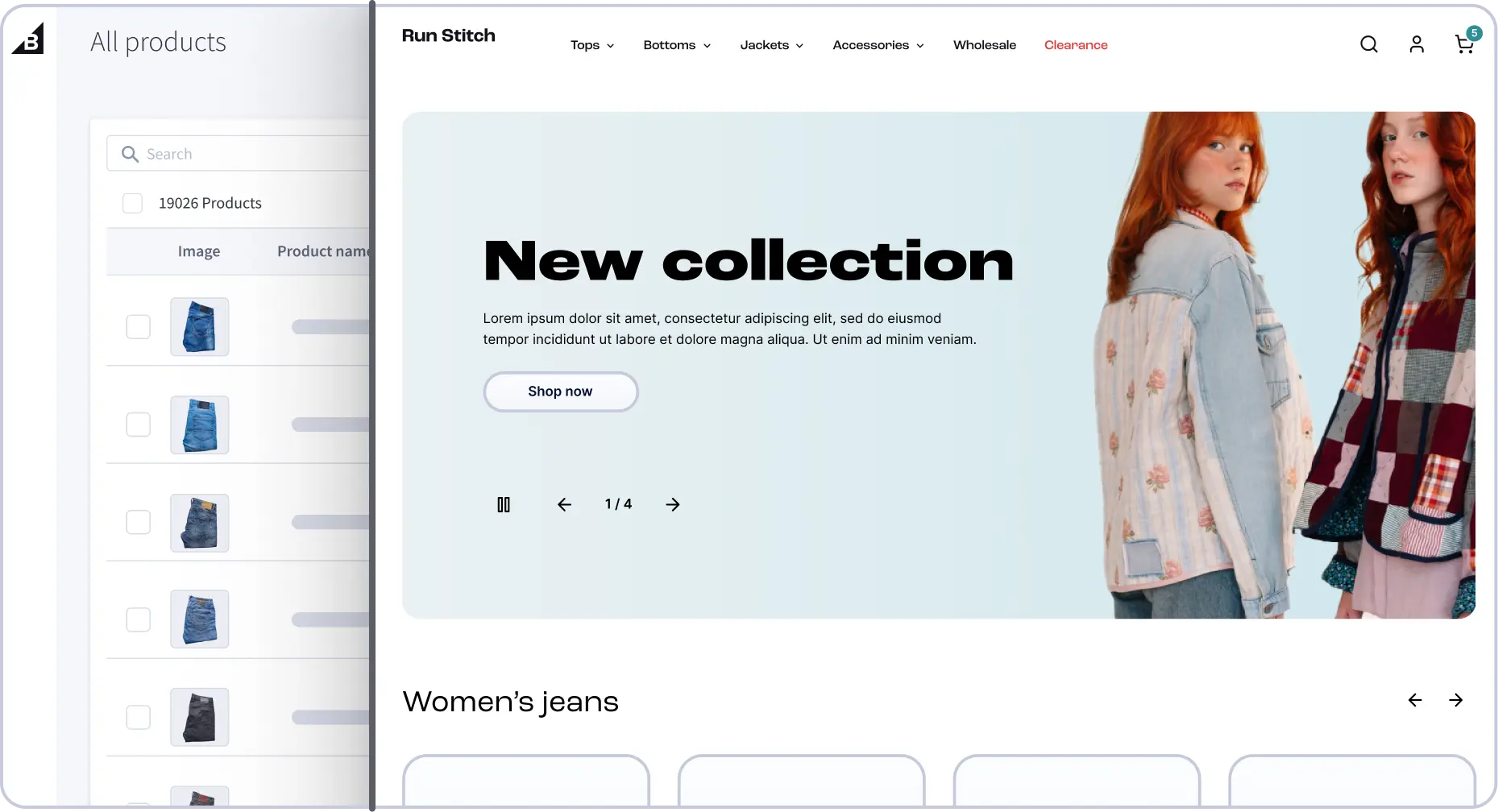
BigCommerce
Enterprise e-commerce alternative to Shopify with stronger native features and no transaction fees
By Find Your Martech Team 2026-02-17
BigCommerce positions itself as the enterprise e-commerce alternative to Shopify with stronger native features and no transaction fees. Unlike Shopify charging transaction fees encouraging its own payment gateway, BigCommerce allows any payment provider without penalty. It assumes growing merchants need enterprise-grade features without Shopify tax on payment choice. BigCommerce targets mid-market retailers and B2B businesses where total cost of ownership, native feature depth, and headless flexibility justify switching from Shopify. The platform excels when transaction fee elimination, B2B capabilities, and enterprise features outweigh Shopify app ecosystem and brand familiarity. It struggles when beginners need simpler onboarding or when Shopify app marketplace solves needs BigCommerce cannot natively.
Pros
- No transaction fees regardless of payment gateway choice
- Stronger native features reducing reliance on expensive apps
- Better B2B e-commerce capabilities than Shopify
- Headless commerce flexibility for custom frontends
- More predictable total cost of ownership at scale
Cons
- Smaller app marketplace than Shopify ecosystem
- Less brand recognition and community resources for beginners
- Theme and design ecosystem narrower than Shopify
- Sales thresholds trigger mandatory plan upgrades
- Steeper learning curve for merchants new to e-commerce
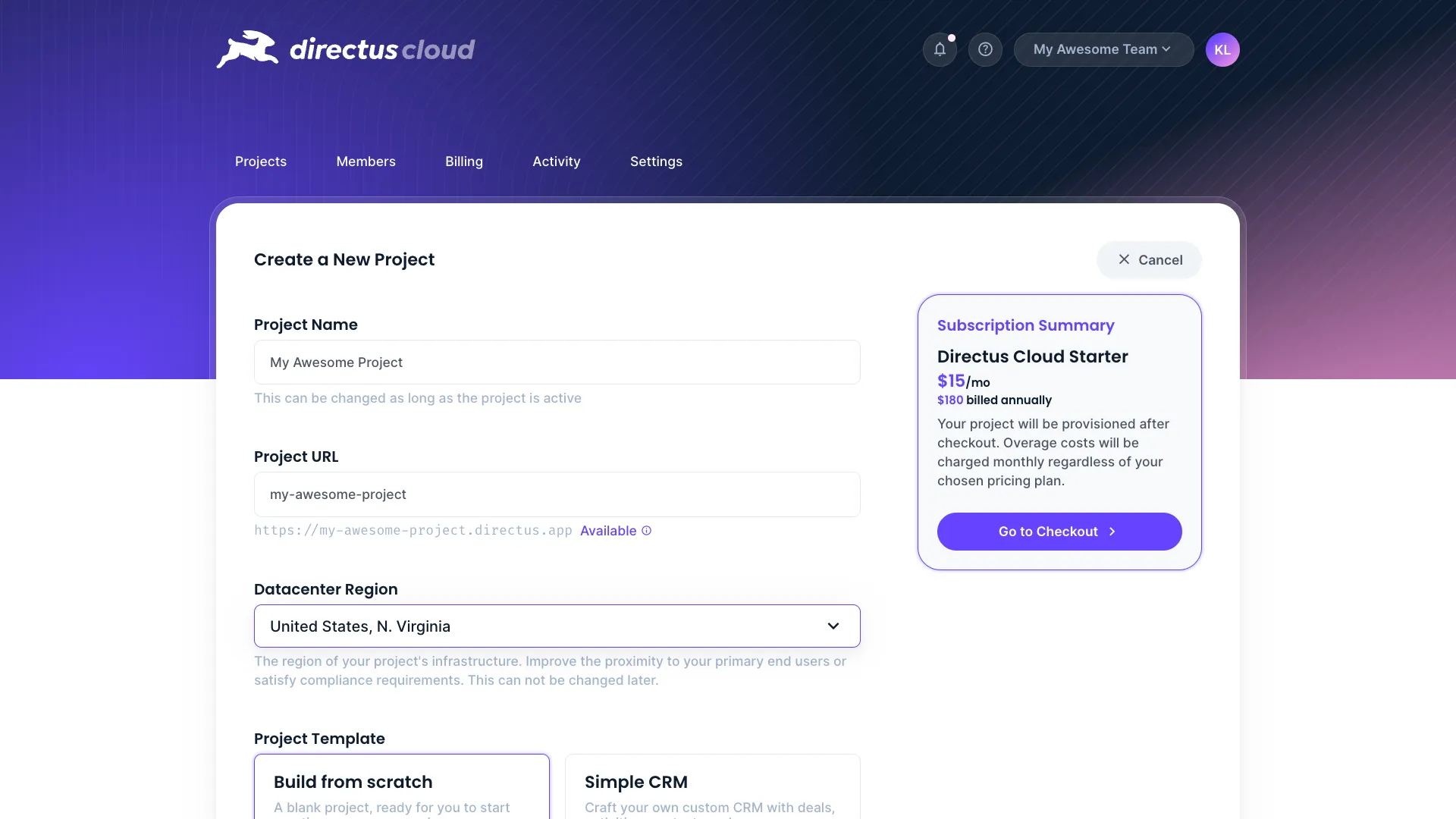
Directus
Open source data platform wrapping any SQL database with instant API and no-code admin interface
By Find Your Martech Team 2026-02-17
Directus positions itself as the open source data platform turning any SQL database into instant API and admin interface without proprietary data structures. Unlike traditional headless CMS storing content in custom schemas, Directus wraps your existing database giving API access and no-code admin UI. It assumes developers want data ownership and schema control without surrendering to CMS-imposed structures. Directus targets technical teams where database flexibility and open source principles matter more than editorial workflow polish. The platform excels when existing database investment, self-hosting requirements, and API flexibility outweigh specialized CMS features. It struggles when non-technical editors need intuitive content management without database exposure.
Pros
- Works directly with existing database without data migration
- Complete open source flexibility and self-hosting control
- No proprietary data lock-in unlike purpose-built CMS platforms
- Powerful for internal tools and admin interfaces
- Active open source community with strong development pace
Cons
- Requires technical expertise for setup and maintenance
- Editorial experience basic compared to purpose-built CMS tools
- Not optimized for content publishing workflow and editorial teams
- Self-hosting operational overhead significant
- Less specialized than headless CMS for content-specific needs

Carrd
Minimalist one-page website builder for ultra-simple landing pages and link-in-bio pages at near-zero cost
By Find Your Martech Team 2026-02-17
Carrd exists as the fastest, cheapest way to put something on the internet for individuals who need a simple online presence without building a full website. Unlike feature-rich builders adding complexity, Carrd strips website creation to absolute minimum: one page, simple sections, affordable pricing. It assumes users need presence not platform, and that most personal sites do not require anything beyond a well-designed single page. Carrd excels when simplicity, near-zero cost, and speed to publish outweigh feature breadth or scalability. It struggles the moment users need multiple pages, blog content, or anything beyond a simple static landing page.
Pros
- Cheapest credible website builder available
- Fastest time from idea to published page
- Clean output that looks professional for simple needs
- No technical skills required whatsoever
- Perfect for validating ideas before committing to full build
Cons
- Strictly limited to one-page format
- No blogging, e-commerce, or dynamic content
- Outgrown almost immediately as needs grow
- Limited design customization beyond templates
- No team features or content management

Lovable
AI web app builder that turns prompts into real React code for rapid MVPs and prototypes
By Find Your Martech Team 2026-02-17
Lovable exists to collapse the gap between idea and working application for people without engineering skills. Unlike no-code tools constrained by visual builders, Lovable generates actual React code from natural language making the output portable and extendable. It assumes non-technical builders want functional applications, not just mockups, and are willing to accept generated code quality for speed to prototype. Lovable targets founders and product people where validation speed outweighs code craftsmanship. The platform excels when getting to functional quickly matters more than engineering best practices. It struggles when applications need complex backend logic, security rigor, or when generated code becomes a maintenance liability.
Pros
- Fastest path from idea to functional application for non-developers
- Generated code is real React exportable to GitHub
- Iterative prompting allows refinement without starting over
- Supabase integration handles auth and data without extra setup
- Active development with rapidly improving generation quality
Cons
- Generated code quality inconsistent and can accumulate technical debt
- Complex applications exceed what AI generation handles reliably
- Debugging AI-generated code requires developer expertise
- Client-side rendering default creates SEO limitations
- Not suitable for security-sensitive or enterprise-grade applications
Payload
Code-first, TypeScript-native headless CMS that can run inside a Next.js app for teams that want full ownership
By Find Your Martech Team 2026-02-17
Payload exists as the code-first headless CMS for TypeScript developers who want configuration in code not GUI, and want CMS embedded in their application rather than running separately. Unlike database-wrapping tools or GUI-configured platforms, Payload lets developers define collections and fields in TypeScript files alongside application code. It assumes developers want type safety, code ownership, and zero impedance mismatch between CMS and frontend. Payload targets Next.js developers and TypeScript teams where developer experience and type safety outweigh editorial polish or ecosystem maturity. The platform excels when code-first configuration, type safety, and Next.js integration align with team skills. It struggles when non-developers need to configure content structure or when mature ecosystem matters more than code purity.
Pros
- Best TypeScript integration in headless CMS category
- Native Next.js embedding eliminates separate service overhead
- Complete open source with no licensing costs
- Code-first approach gives developers full control and auditability
- Rapidly growing community with strong developer enthusiasm
Cons
- Requires TypeScript expertise making it inaccessible to non-developers
- Newer platform with smaller community than Strapi or Directus
- Editorial interface less polished than purpose-built CMS tools
- Self-hosting operational overhead significant
- Configuration complexity for teams wanting simple setup
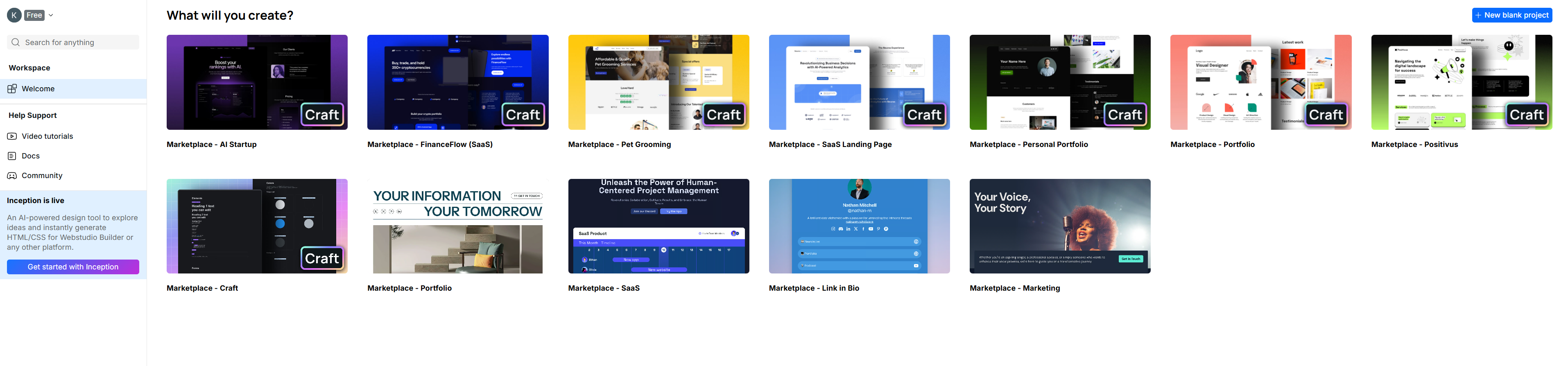
Webstudio
Open source, Webflow-like visual builder that outputs portable HTML/CSS and can be self-hosted
By Find Your Martech Team 2026-02-17
Webstudio positions itself as the open source answer to Webflow for teams wanting visual design power without proprietary hosting and vendor lock-in. Unlike Webflow where sites live on Webflow infrastructure, Webstudio outputs standard HTML and CSS deployable anywhere. It assumes developers want visual building speed with code ownership and self-hosting flexibility. Webstudio targets developers and design-forward agencies tired of Webflow hosting costs and lock-in. The platform excels when visual building capability and self-hosting freedom must coexist. It struggles against Webflow for mature features, community resources, and CMS capabilities that open source development pace has not yet matched.
Pros
- Open source eliminates vendor lock-in unlike Webflow
- Standard code output deployable to any hosting environment
- Self-hosting option for complete infrastructure control
- Webflow-inspired UX familiar to design-first developers
- Community-driven development with transparent roadmap
Cons
- Less mature than Webflow with smaller community and resources
- CMS capabilities early stage compared to established platforms
- Fewer integrations and ecosystem extensions than alternatives
- Enterprise features and support not yet fully developed
- Documentation and learning resources sparser than Webflow
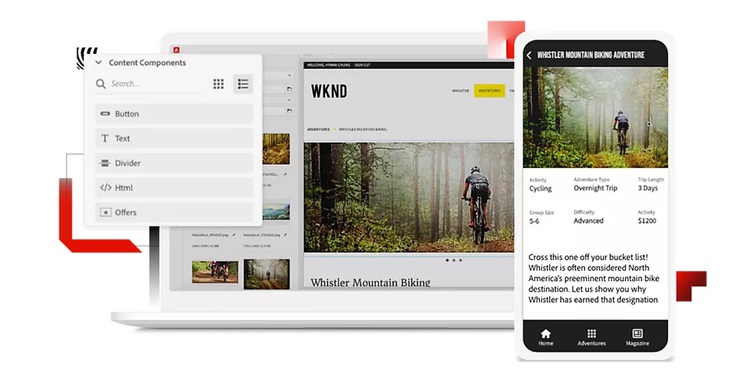
Adobe Experience Manager
Enterprise digital experience suite (CMS + DAM + personalization) for global organizations already invested in Adobe
By Find Your Martech Team 2026-02-17
Adobe Experience Manager exists as the enterprise digital experience platform for global organizations where content management, digital asset management, and personalization must operate at massive scale under unified governance. Unlike headless CMS tools or mid-market platforms, AEM handles the complexity of global enterprise content operations with multi-brand, multi-market, multi-team workflows. It assumes organizations have dedicated digital experience teams and Adobe ecosystem investment justifying significant cost. AEM targets the largest enterprises where unified experience management and Adobe integration outweigh extraordinary costs and implementation complexity. The platform excels when enterprise scale, Adobe ecosystem depth, and organizational governance requirements justify investment. It struggles outside enterprise context where cost and complexity dwarf value delivered.
Pros
- Unmatched enterprise content management at global scale
- Unified CMS and DAM eliminates separate platform overhead
- Deep Adobe Experience Cloud integration for personalization and analytics
- Enterprise governance handles thousands of users across markets
- Proven at massive scale with largest global enterprise deployments
Cons
- Extremely expensive with total cost often in seven figures annually
- Implementation measured in years requiring certified consultants
- Complexity demands dedicated AEM specialists for ongoing management
- Complete overkill for any organization below enterprise threshold
- Vendor lock-in profound given investment and integration depth

Craft CMS
Developer-friendly CMS for custom sites that avoids WordPress bloat while staying client-editable
By Find Your Martech Team 2026-02-17
Craft CMS exists for developers who find WordPress bloated and opinionated but need a proper CMS their clients can manage. Unlike WordPress imposing its structure, Craft lets developers define content architecture precisely while providing clean editorial interface non-technical clients can navigate confidently. It assumes professional web projects deserve CMS built around content modeling rather than blog-first legacy. Craft targets agencies and developers building custom sites where content flexibility and developer experience outweigh plugin ecosystem size. The platform excels when clean code, custom content modeling, and client-friendly editing matter more than WordPress ecosystem breadth. It struggles when projects need specific WordPress plugins with no Craft equivalent or when licensing costs make it less attractive than free alternatives.
Pros
- Best content modeling flexibility among traditional CMS platforms
- Clean editorial UI clients use confidently without developer help
- Significantly less bloated than equivalent WordPress installation
- Developer experience praised consistently in agency communities
- Strong headless capabilities for modern architecture
Cons
- Commercial licensing costs unlike free WordPress core
- Smaller plugin ecosystem than WordPress for specific needs
- Smaller developer community means fewer resources and tutorials
- Not suitable for teams wanting free open source CMS
- Less brand recognition making client sell-in harder than WordPress
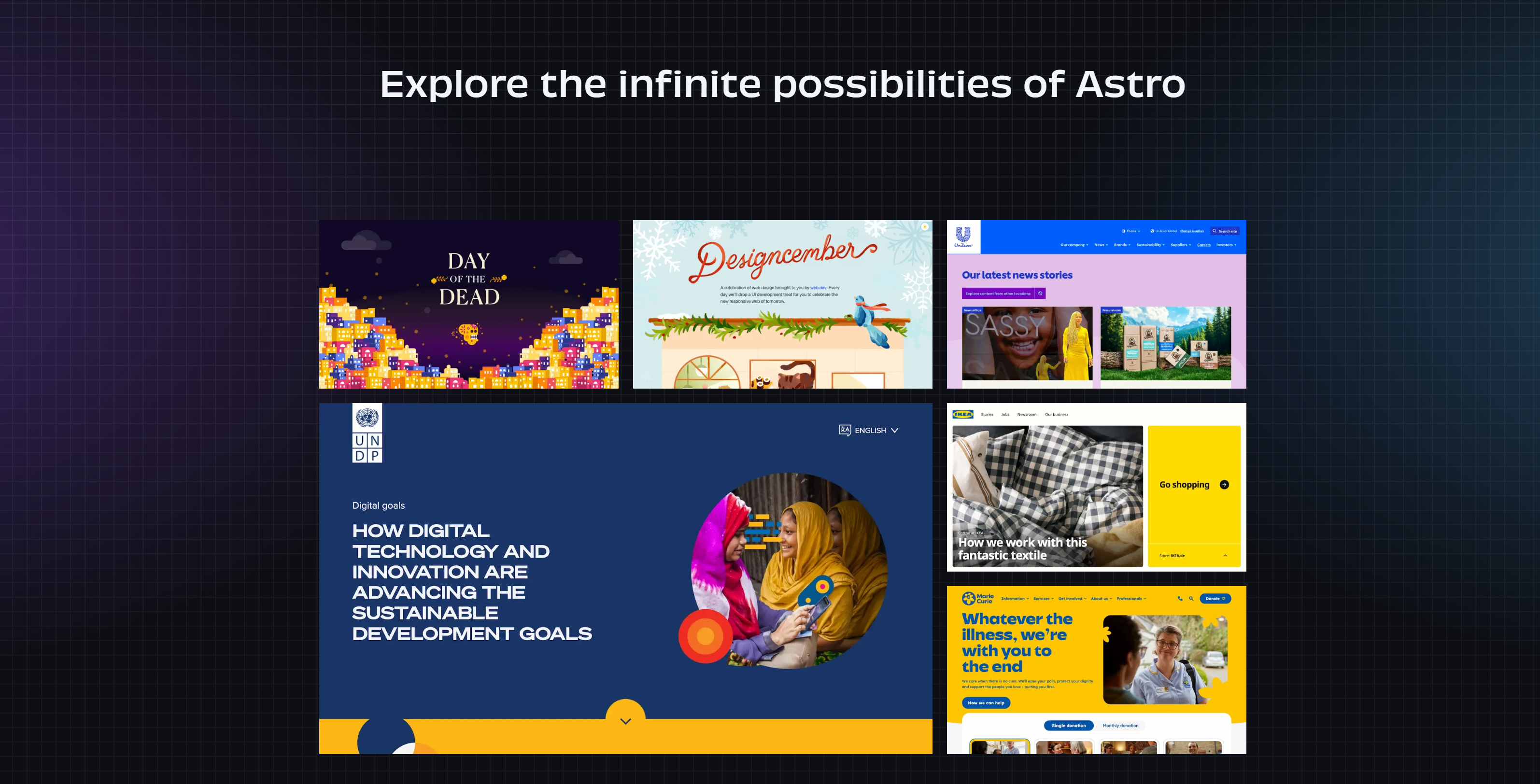
Astro
Performance-first static framework that ships zero JS by default and hydrates only interactive islands
By Find Your Martech Team 2026-02-17
Astro exists for developers who believe most websites send too much JavaScript and pay unnecessary performance costs for it. Unlike React frameworks defaulting to hydrating entire pages, Astro ships zero JavaScript by default and hydrates only interactive components through its islands architecture. It assumes content sites and marketing pages need performance and simplicity more than React ecosystem benefits. Astro targets performance-obsessed teams and developers frustrated by Gatsby complexity or Next.js overhead for content sites. The platform excels when zero-JS default, framework flexibility, and content performance outweigh interactive application needs. It struggles when applications need significant client-side state or when team investment in React ecosystem makes framework-agnostic approach less appealing.
Pros
- Best default performance of any modern web framework
- Framework flexibility avoids ecosystem lock-in
- Simpler mental model than Next.js for content-focused sites
- Rapidly growing community with strong momentum
- Content collections provide type-safe content management
Cons
- Not suitable for highly interactive applications needing client-side state
- Smaller ecosystem than Next.js with fewer third-party integrations
- Islands architecture requires different thinking from traditional SPAs
- Newer framework means fewer production case studies than Gatsby or Next.js
- Server-side features less mature than Next.js for dynamic applications
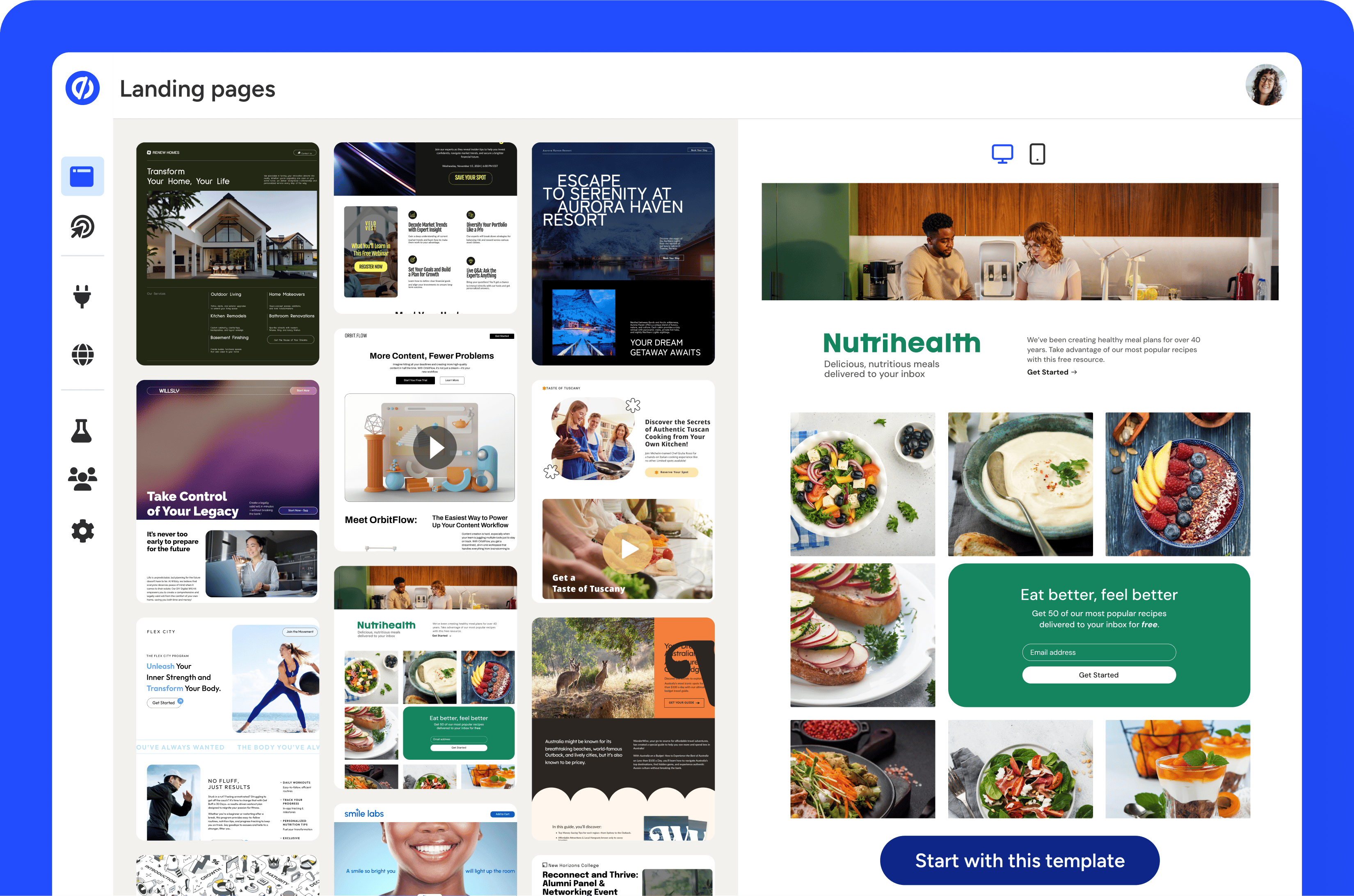
Unbounce
Conversion-first landing pages with A/B testing and AI optimization for paid media teams
By Find Your Martech Team 2026-02-17
Unbounce exists for performance marketing teams where landing page conversion rates directly determine campaign profitability. Unlike general website builders treating landing pages as an afterthought, Unbounce optimizes everything around conversion: fast builders, A/B testing, AI optimization, and dynamic text replacement matching ad copy. It assumes teams running paid media need dedicated infrastructure for campaign pages separate from main website. Unbounce excels when conversion optimization, A/B testing speed, and campaign-specific landing pages outweigh general website capabilities or cost sensitivity. It struggles when campaigns are too small to justify platform costs or when existing CMS handles landing pages adequately without conversion rate limitations.
Pros
- Purpose-built for conversion with best-in-class A/B testing
- Smart Traffic AI automatically optimizes without manual analysis
- Dynamic text replacement connects ad messaging to landing page
- Fast page builder designed for marketers not developers
- Strong agency features for managing multiple client campaigns
Cons
- Expensive for landing page-only platform compared to alternatives
- Limited beyond landing pages and campaign assets
- Not a full website builder or CMS replacement
- Overkill for small campaigns without sufficient traffic for testing
- Design flexibility limited compared to general website builders

Magento
Enterprise open-source commerce platform for complex catalogs, B2B workflows, and maximum customization
By Find Your Martech Team 2026-02-17
Magento exists as the enterprise open source e-commerce platform for large retailers whose business complexity exceeds what Shopify and BigCommerce can accommodate without heavy customization. Unlike hosted platforms constraining merchants to predefined features, Magento assumes enterprises need full code control over their commerce infrastructure. It targets large retailers, B2B manufacturers, and brands where catalog complexity, custom workflows, and total ownership justify significant engineering investment. Magento excels when business logic complexity, customization depth, and open source control outweigh platform simplicity and managed convenience. It struggles when teams underestimate operational complexity or when Shopify Plus adequately serves needs without Magento infrastructure burden.
Pros
- Maximum customization flexibility for complex business requirements
- Open source eliminates per-transaction fees and vendor dependency
- Best B2B e-commerce capabilities among self-hosted platforms
- Multi-store management at scale with shared catalog
- Large developer ecosystem with certified specialists
Cons
- Requires significant developer expertise and ongoing maintenance budget
- Hosting and infrastructure costs add substantially to total ownership
- Slow implementation timelines compared to hosted alternatives
- Performance optimization requires expertise and infrastructure investment
- Complexity often underestimated leading to project overruns
Next.js
Production React framework with flexible rendering (SSG/SSR/ISR) plus routing and API routes
By Find Your Martech Team 2026-02-17
Next.js exists as the de facto React framework for production web applications, offering rendering flexibility that no other solution matches. Unlike pure static site generators or client-only React, Next.js lets teams choose per-page whether to statically generate, server render, or stream from edge. It assumes React teams need production-grade framework handling performance, SEO, and routing without building custom infrastructure. Next.js targets engineering teams where React is the chosen stack and rendering flexibility justifies framework adoption. The platform excels when hybrid rendering, React ecosystem familiarity, and Vercel integration align with team needs. It struggles when teams do not need React, when simpler frameworks handle content sites more efficiently, or when framework complexity exceeds project requirements.
Pros
- Most flexible rendering options of any React framework
- Largest React framework ecosystem and community
- Vercel deployment deeply optimized for Next.js features
- React Server Components enable new performance patterns
- Full-stack capability combines frontend and API in one project
Cons
- React expertise required making it inaccessible to non-developers
- Overkill for content sites not needing React or dynamic rendering
- Rapid API changes create upgrade complexity between major versions
- Vercel hosting costs accumulate at scale versus self-hosting
- Build times and cold starts can be significant for large applications
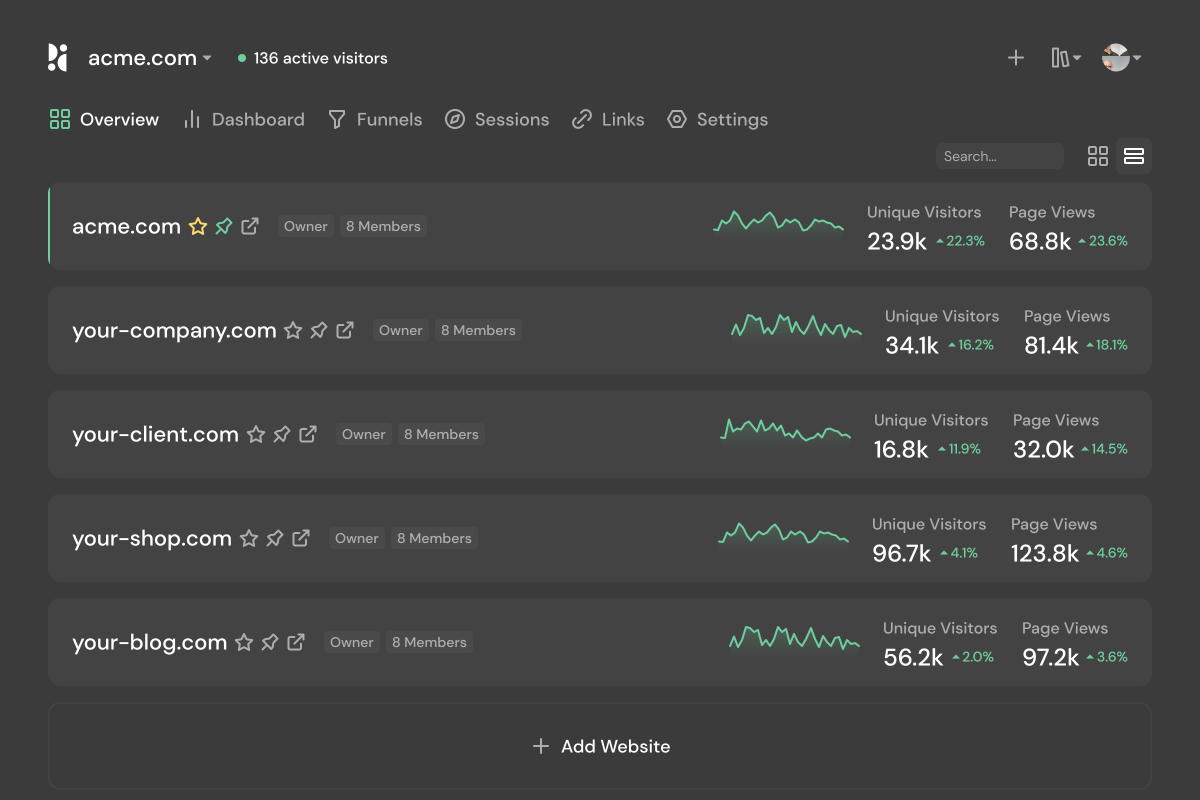
Pirsch
Privacy-first cookieless analytics without cookie consent banners
By FYM Editorial February 2026
Pirsch is a privacy-first, cookieless web analytics tool built for organizations that want clean traffic insights without GDPR consent banners or cookie compliance overhead. It uses privacy-preserving fingerprinting that meets legal requirements while keeping implementation lightweight and simple.
Pros
- No cookie consent banners required simplifying UX and compliance
- Privacy-first approach aligns with ethical data collection
- Lightweight implementation with negligible performance impact
- Simple interface without Google Analytics overwhelming complexity
- Affordable pricing for privacy-focused analytics
Cons
- Limited advanced features compared to comprehensive analytics platforms
- No integration with advertising platforms due to privacy focus
- Cannot track detailed user journeys across multiple sessions
- Fingerprinting less accurate than cookie-based tracking
- Small ecosystem means limited third-party integrations
FullStory
Enterprise session replay and digital experience analytics platform
By FYM Editorial February 2026
FullStory combines session replay with robust product analytics, allowing teams to watch real user behavior while linking it to quantitative funnel data. It is built for enterprise product and UX teams where understanding the "why" behind user actions directly impacts business outcomes.
Pros
- Best-in-class session replay quality and search capabilities
- Frustration detection automatically surfaces problematic interactions
- Powerful combination of quantitative funnels and qualitative replays
- Enterprise-grade security and compliance features
- Strong for understanding complex user journeys and debugging issues
Cons
- Expensive enterprise pricing prohibitive for small companies
- Privacy concerns around session recording in regulated industries
- Can feel overwhelming with extensive features and data volume
- Recording impact on performance requires monitoring
- Session replay requires careful PII redaction and handling
Smartlook
Affordable session replay and event analytics for startups and SMBs
By FYM Editorial February 2026
Smartlook is a budget-friendly session replay and event analytics platform that gives product and mobile teams qualitative and quantitative insights without enterprise pricing. It covers session recordings, heatmaps, and funnel tracking, making it a practical starting point for teams exploring session replay.
Pros
- Significantly more affordable than FullStory for similar core features
- Cross-platform support for both web and mobile applications
- Good balance of quantitative and qualitative analytics
- Easy setup without extensive technical implementation
- Suitable for smaller teams and startups with limited budgets
Cons
- Analytics features less sophisticated than dedicated platforms
- Session replay quality behind category leaders like FullStory
- Smaller company means less certain long-term stability
- Enterprise features limited compared to category leaders
- Integration ecosystem smaller than established alternatives

LogRocket
Frontend monitoring and session replay built for engineering teams
By FYM Editorial February 2026
LogRocket is a frontend monitoring and session replay platform designed for engineering teams who need full technical context when debugging production issues. It combines session recordings with console logs, network requests, and state management inspection — giving developers everything needed to reproduce and fix bugs faster.
Pros
- Best technical debugging context in session replay category
- Full console logs and network requests alongside replay
- Strong for frontend error tracking and resolution
- Integrates well with development workflows and issue trackers
- Reduces support burden by enabling quick issue reproduction
Cons
- More expensive than basic session replay tools
- Overkill if primary need is UX insights not debugging
- Recording technical data raises privacy considerations
- Steeper learning curve for non-technical team members
Stop Wasting Time on the Wrong Tools
Stop wasting time (and budget) testing endless marketing tools that don't actually fit your needs. Every business is different, your goals, team size, workflow, and growth stage all require a tailored solution, not a generic "top 10 tools" list. Our service helps you cut through the noise: a simple questionnaire-style quiz analyzes how you work and delivers clear, practical recommendations for the marketing tech that truly suits you.